
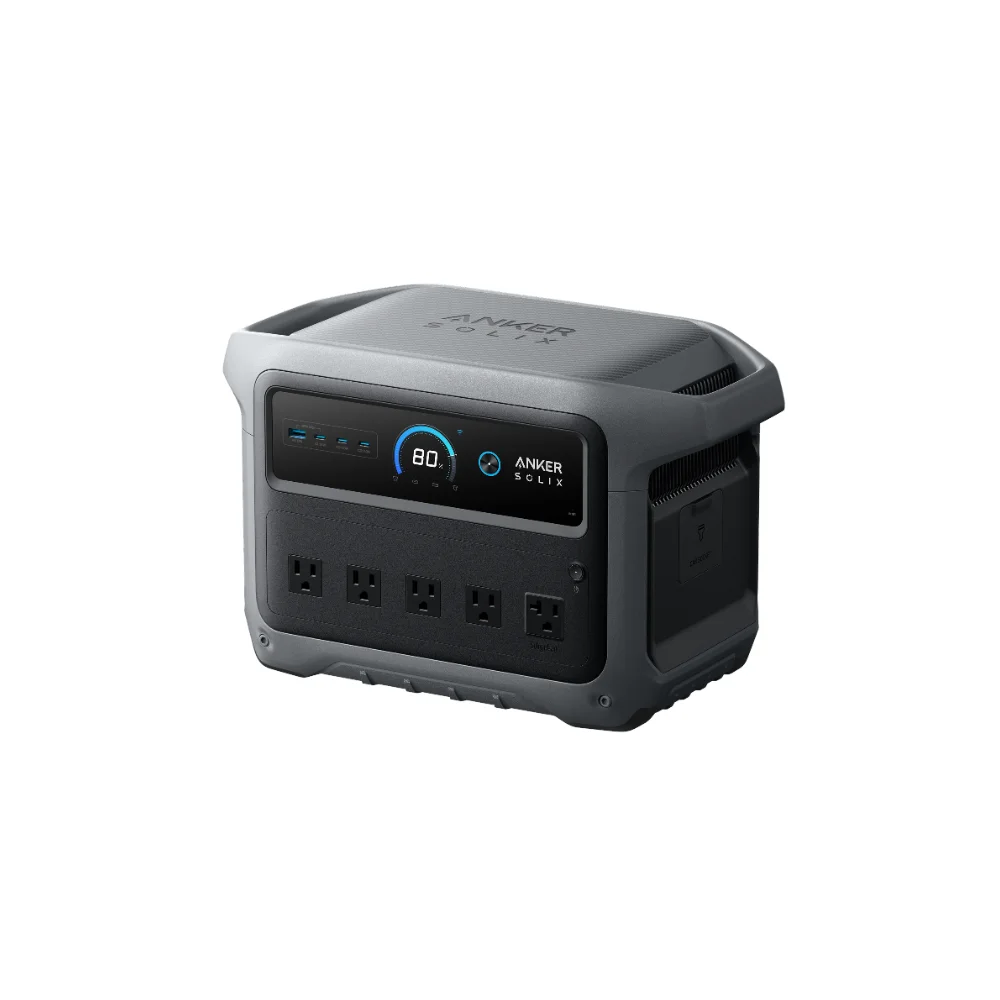

Buying a power station for an elderly parent or for aging-in-place backup is a different decision than buying one for camping. The priorities flip: instead of maximum capacity per pound, what matters most is whether someone unfamiliar with technology can turn it on, plug something in, and trust it’ll work — without an app, a login, or a menu to figure out during a power outage.
A note before we start: if you or a family member relies on life-sustaining medical equipment (an oxygen concentrator, for example), treat any backup power plan as a conversation with the device manufacturer and your healthcare provider first, not something to figure out from a blog post. What follows is general information about power station capacity and safety features — not medical guidance.
What actually makes a power station senior-friendly
The single biggest factor isn’t capacity — it’s whether the core functions work entirely on the unit itself. According to UDPOWER’s buying guide for seniors, that means powering on and off, switching AC/DC output, checking the battery percentage, and recharging should all be possible “directly on the unit itself, without needing a phone signal, app login, or software troubleshooting.” A power station that requires a smartphone app to check its own battery level is a bad fit for anyone who isn’t comfortable navigating apps under stress, during a power outage, in a dark room.
Beyond app-independence, the same guide points to a short list of concrete features worth checking before you buy: large, easy-to-read buttons; a clear display showing battery percentage and wattage at a glance; obvious, clearly labeled AC/DC switches; and quiet operation, which matters more than it sounds like when the unit is running overnight in a bedroom.
Weight matters more than the spec sheet suggests
A power station that’s too heavy to move isn’t just inconvenient — it can be a real hazard for an older adult managing it alone. UDPOWER’s guidance breaks it down into three practical thresholds: under 15 lbs for genuine grab-and-go use, under 30 lbs if it needs to be moved around the house regularly, and above 40 lbs, it becomes a two-person job or a fixed, don’t-move-it appliance. That’s worth checking against the specific model’s actual weight, not just its capacity — a bigger battery is not automatically the better buy if nobody can safely lift it during an emergency.
Matching capacity to the actual need
| Use case | Recommended capacity |
|---|---|
| Phone, lights, hearing aid chargers | 200-600Wh |
| Overnight medical device backup (CPAP without humidifier, nebulizer) | 500-1200Wh |
| CPAP with heated humidifier, or multiple devices | 700Wh minimum, more for multiple nights |
| Refrigerator plus comfort devices | 1000Wh+ |
| Oxygen concentrator | 2000Wh or expandable battery modules (verify with device manufacturer) |
For context on runtime: Power Station Pick’s guide notes a 768Wh unit “can easily handle 2-3 nights of CPAP use” with the humidifier disabled, while a 1000Wh unit typically delivers 7-25 hours of CPAP runtime depending on humidifier use, but only 1.5-3 hours for an oxygen concentrator — a reminder of just how much more power oxygen equipment draws compared to most other home medical devices.
Pure sine wave isn’t optional for medical devices
If a power station will ever run anything with a motor or sensitive electronics — a CPAP machine, a nebulizer, a medical refrigerator — the inverter type matters. Power Station Pick’s guide is direct about this: modified sine wave power can cause motors to “hum, overheat, or even fail permanently,” while a pure sine wave inverter produces power clean enough to safely run the same equipment your home’s utility power does. Nearly every mainstream power station brand sold today uses pure sine wave output, but it’s worth confirming on the spec sheet rather than assuming — especially on off-brand or clearance units.
Pass-through charging — running a device directly off the power station while it’s simultaneously plugged into the wall — is also worth checking for. Done right, with proper battery management, it’s a safe and genuinely useful feature for medical use, letting a unit stay topped off and ready without ever needing to be disconnected.
What we’d actually recommend
For most aging-in-place setups — phone chargers, lights, a fan, a CPAP without a humidifier, maybe a small fridge for a night — a roughly 1000Wh unit with physical controls and a legible display hits the range that covers real needs without the weight or complexity of a whole-home system. The Jackery Explorer 1000 v2 (1070Wh, 24 lbs) is a reasonable example of that middle ground: enough capacity for the table above’s mid-tier use cases, at a weight that’s manageable to relocate without being a two-person lift, and Jackery’s control layout is built around physical buttons rather than requiring an app for basic operation.
FAQ
Can a power station replace a whole-home generator for someone with high medical power needs?
Not usually — portable power stations are built for select devices during an outage, not whole-home loads. For an oxygen concentrator or multiple continuous medical devices, talk to the device manufacturer about backup power requirements and consider whether a dedicated home backup system is more appropriate.
Is it safe to leave a power station plugged in and charging all the time?
Most current power stations are designed with battery management systems that make continuous “trickle” charging or pass-through use safe, but always check the specific manufacturer’s guidance for your model.
What’s the easiest power station to explain to a parent over the phone during an outage?
Look for one with a single obvious power button, a display that shows battery percentage without needing to press anything else, and clearly separate AC/DC switches — the fewer steps between “power is out” and “device is running,” the better for a phone-guided setup.
Do I need a power station with solar charging for this use case?
Not necessarily. Solar charging matters most for extended outages with no access to grid power. If outages in your area are typically short, wall-charging capacity and battery size matter more than solar input specs.
Bottom line
For an elderly parent or an aging-in-place backup plan, skip the spec-sheet arms race. Prioritize app-independent controls, a manageable weight, a pure sine wave inverter, and capacity that matches the specific devices that actually need to run — and for anything life-sustaining, confirm the plan with the device manufacturer directly before relying on any consumer power station.
This post may include affiliate links — if you buy through them, we may earn a small commission at no extra cost to you. It doesn’t change what we cover or how we rank anything. This article is for general informational purposes only and is not medical advice — consult your device manufacturer and healthcare provider for backup power needs involving medical equipment.
Sources externes citées
- UDPOWER — What Kind of Portable Power Station Is Best for Seniors?
- Power Station Pick — Portable Power Stations for Medical Equipment: The Ultimate Guide