
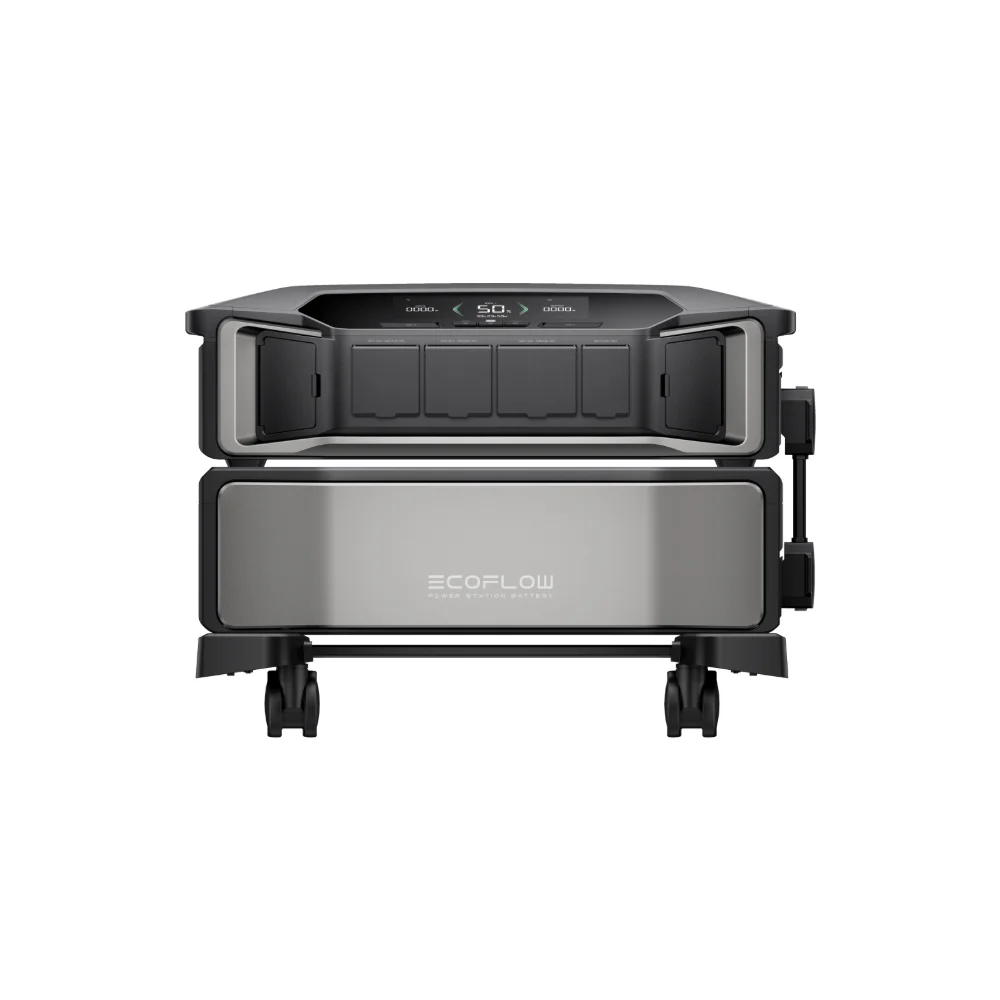

A well pump is one of the trickiest loads to back up with a portable power station — not because of the running wattage, but because of two things buyers often miss until it’s too late: the brutal starting surge electric motors demand, and the fact that most residential well pumps run on 240V power that most consumer power stations simply can’t produce.
The 240V problem, first
This is the single most important thing to check before buying anything: most portable power stations output 120V only, and cannot power a standard 240V residential well pump directly. Deep well pumps in particular are commonly wired for 240V, while smaller jet pumps sometimes run on 120V — so the very first step, before looking at any wattage chart, is confirming your specific pump’s voltage from its nameplate or your well service documentation. If your pump is 240V, a standard single portable power station is the wrong tool regardless of its wattage rating, and you’ll need either a dedicated 240V-capable backup system, a properly configured dual-unit split-phase setup, or a traditional generator sized for your pump — this is a case worth discussing with a licensed electrician rather than guessing.
Wattage by pump size, if you’re on 120V
| Pump size | Running watts | Starting surge watts |
|---|---|---|
| 1/3 HP | 500-900W | 1,500-3,000W |
| 1/2 HP (most common) | 700-1,200W | 2,000-4,000W |
| 3/4 HP | 1,000-2,000W | 3,000-6,000W |
| 1 HP | 1,500-2,500W | 4,000-7,500W |
The gap between running and starting watts is the whole story here. Electric motors need 3-5 times their running wattage during startup — what’s called locked rotor amperage — and that surge only lasts about 2-3 seconds. But if your power station can’t deliver that peak for even that brief window, its protection circuits will trip and the pump simply won’t start, regardless of how much running capacity it has to spare afterward.
What to actually look for in a power station
For a typical 1/2 HP pump on 120V, that translates to real minimum specs: at least 3,000W of surge capacity (3,600W+ is more comfortable headroom), 2,000Wh or more of battery capacity for meaningful runtime, pure sine wave output (non-negotiable for motor protection — a modified sine wave inverter can cause a pump motor to overheat or fail), and LiFePO4 battery chemistry, which typically supports around 4,000 charge cycles versus 500-1,000 for older lithium-ion designs, a meaningful difference for equipment you might rely on for years.
How long will it actually run?
A 2,000Wh power station running a typical 1/2 HP pump, accounting for roughly 85% inverter efficiency, provides approximately 10-12 pump cycles — enough for about one full day of normal household water use, or 2-3 days if you’re conserving water during an extended outage. That’s a meaningful planning number: if your outages tend to run longer than that, you’re looking at either a larger-capacity unit, a way to recharge via solar during the outage, or accepting that water use will need to be deliberately rationed.
Size your pump backup in a minute
Add your well pump with your fridge and other essentials. The calculator checks both the energy you need and the startup surge.
FAQ
How do I find out if my well pump is 120V or 240V?
Check the nameplate on the pump’s control box or motor housing, or check your well system’s electrical panel — a 240V circuit uses a double-pole breaker, while 120V uses a single-pole breaker. When in doubt, ask your well service company or an electrician.
Can I use two 120V power stations to make 240V?
Some setups can achieve this with the right split-phase configuration and equipment, but this isn’t a simple DIY combination — it requires equipment specifically designed for split-phase output and should be set up or verified by a licensed electrician to avoid damaging your pump or creating a safety hazard.
Why did my power station’s display show enough watts, but the pump still wouldn’t start?
This is almost always the starting surge, not the running wattage — a power station rated well above your pump’s running watts can still fail to start it if its surge/peak rating doesn’t cover that brief 3-5x startup spike.
Does a bigger battery capacity help with the starting surge problem?
Not directly — capacity (Wh) determines runtime, while surge capacity (W) determines whether the pump starts at all. You need both numbers to check out, and a bigger battery with an undersized inverter still won’t start a pump that needs more surge than the inverter can deliver.
Bottom line
Before shopping by wattage, confirm your well pump’s voltage — a 240V pump rules out most portable power stations entirely. If you’re on 120V, size for the starting surge (3-5x running watts), not just the running wattage, and insist on pure sine wave output. Get the surge number wrong and the biggest battery in the world won’t get your water running during an outage.
This post may include affiliate links — if you buy through them, we may earn a small commission at no extra cost to you. It doesn’t change what we cover or how we rank anything. For 240V well pump systems or any electrical wiring questions, consult a licensed electrician.