
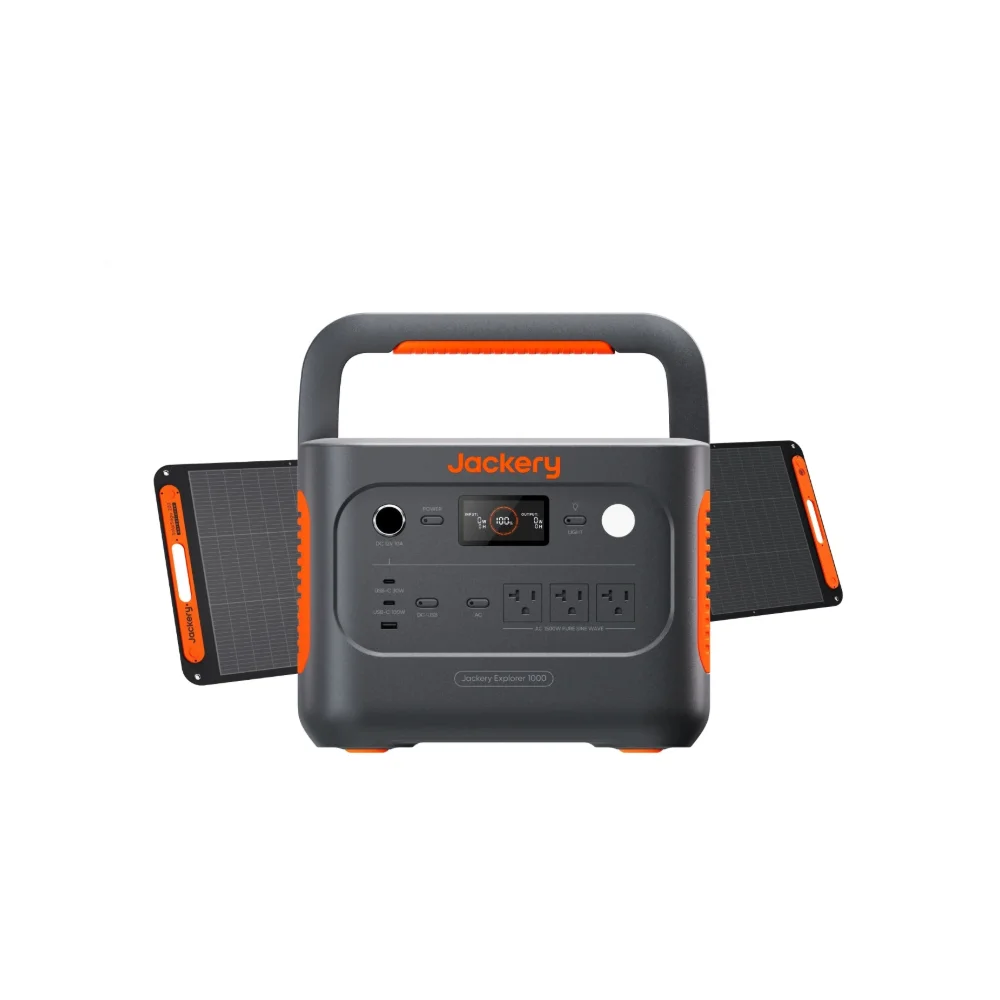

A cabin fifteen miles from the nearest utility pole doesn’t come with the math already done for you. It comes with a well pump that needs to run, a mini-fridge you don’t want cycling all night on a starved battery, a string of LED lights, and a laptop or phone that both need to survive the weekend. Buy the wrong size solar generator and you find out at the worst possible moment — the pump groaning under sagging voltage, the cell signal booster dead by day two, the solar panel doing nothing because it’s propped in the shade of a pine tree nobody accounted for. Sizing an off-grid power system isn’t guesswork. It’s arithmetic: how many watt-hours you burn in a day, how many watt-hours of sun you can realistically capture, and how much buffer you build in for the string of cloudy days every region eventually throws at you. Here’s how to do that math before you buy anything.
Start with your actual daily load, not your dream load
Every appliance has a wattage rating, printed on the unit or in its manual. Multiply that by the hours you’ll actually run it per day, and you get watt-hours — the same unit power stations use to describe capacity. Add everything up and you have your daily draw. Most cabin owners overestimate what they need for lighting and underestimate what they need for refrigeration and pumps, so it’s worth being specific rather than rounding up in your head.
- LED lighting. Five to ten bulbs at 8–10W each, run four hours a night, comes to roughly 300–400Wh — a rounding error compared to everything else on this list.
- Mini-fridge or cooler. A compressor fridge cycling on and off typically averages 40–60W continuous, which works out to roughly 1,000–1,400Wh over 24 hours — often the single biggest line item in a cabin’s power budget.
- Water pump. A shallow-well or RV-style pump might only draw 100–300W running, but its startup surge can spike to 3–5x that for a second or two. Size your inverter’s surge rating around this, not just the running wattage.
- Electronics. Laptops, phones, and a router or signal booster add up to maybe 200–300Wh a day for most people, more if you’re running satellite internet.
- Space heaters and electric cooking. These are the budget-killers — a 1,500W space heater run for two hours alone eats 3,000Wh, more than most portable units hold. Plan to heat and cook with propane or wood and reserve battery power for things that need electricity specifically.
Match battery capacity to your number, then add margin
Once you’ve added up a realistic daily total, don’t buy a battery sized to exactly that number. Lithium batteries shouldn’t be run down to zero every day if you want them to last, inverter conversion isn’t perfectly efficient, and cabin weekends rarely go exactly to plan. A buffer of 30–50% above your calculated daily load is a reasonable target. If your load comes out to roughly 2,000Wh a day, you’re looking at something in the 2,700–3,000Wh range — which is where a unit like the Jackery HomePower 3000 lands, with 3,072Wh of capacity and 3,600W of output, enough headroom for a well pump’s surge and a fridge running around the clock.
If your cabin’s needs are genuinely small — lighting, phones, maybe a laptop, no fridge — you can size down considerably and save real money on both the battery and the solar array needed to keep it full.
Sizing solar input for real recharge, not the spec sheet number
A 400W-rated solar panel does not deliver 400W for eight straight hours. In good conditions — clear sky, panel angled correctly, cool temperatures — you might see 60–80% of rated output for a few hours around midday, tapering off toward morning and evening. On a hazy or partly cloudy day, cut that estimate again. In practice, a 400W panel in decent conditions might realistically contribute 1,200–1,600Wh over a full day, not 3,200Wh.
That means if you’re drawing 2,000Wh a day and want solar alone to keep you topped off, you likely need 400–800W of panel capacity depending on your latitude and the season — and winter at northern latitudes can cut solar yield by half or more due to shorter days and a lower sun angle. If the cabin sees regular cloudy stretches, plan around your battery bank carrying you through two or three sunless days rather than assuming daily full recharge.
Portable power station or a permanent off-grid battery bank?
For a weekend cabin or one that sees occasional use, a portable power station is usually the right call — no electrician, no permitting, and you can bring it inside for the winter. For a cabin that’s occupied full-time or that needs to run larger loads across the whole building, a hybrid system built for permanent installation, like the Anker SOLIX E10, starts to make more sense. It scales from 6kWh up to 30kWh, ties into your electrical panel rather than running everything through extension cords, and accepts up to 9kW of solar input — enough to actually keep pace with a cabin’s real daily consumption rather than just topping off a portable unit between weekends.
Setup details that save you a second trip to the hardware store
- Keep the unit ventilated and dry. Batteries and inverters generate heat and don’t like damp storage sheds — a covered but airy spot works better than a sealed closet.
- Re-angle panels with the seasons. A fixed mount optimized for July sun angle loses significant output by November. A tilt-adjustable mount or ground stakes that let you reposition seasonally pay for themselves in recovered watt-hours.
- Use weatherproof connectors outdoors. Any cable running from an outdoor panel to an indoor unit should use a sealed, rated connector at the entry point — moisture intrusion is the most common cause of solar input failure.
- Plan your cable run before you buy panels. Voltage drop over long DC runs is real. Keep runs as short as practical, or budget for heavier-gauge cable if the panels have to sit far from the unit.
Frequently asked questions
What size solar generator do I need for a small cabin?
For lighting, phone and laptop charging, and occasional small-appliance use without a fridge, something in the 1,000–1,500Wh range is usually enough. Add a compressor fridge or a water pump and you’re generally better off in the 2,500–3,000Wh class to avoid running the battery down every single day.
Can solar alone keep a cabin battery topped off through winter?
It depends heavily on latitude and cloud cover, but generally, plan on solar contributing far less in December than in July — sometimes half or less. Oversize your panel array beyond summer needs if you rely on the cabin through winter, or accept that you’ll need a supplemental charge source on extended cloudy stretches.
Do I need a permit or electrician for a portable power station in a cabin?
A portable unit that plugs into appliances directly or through its own outlets generally doesn’t require an electrician or permit. The moment you want it wired into the cabin’s electrical panel to power built-in circuits, that’s an electrical job and should go through a licensed electrician and local permitting, the same as any home battery installation.
How many solar panels do I need to fully recharge a 3,000Wh battery in a day?
In strong, consistent sun, roughly 800W–1,000W of panel capacity can get you close to a full recharge in a single day. In more realistic mixed conditions, plan for it to take a day and a half to two days, which is exactly why sizing your battery with margin matters more than chasing a same-day recharge.