
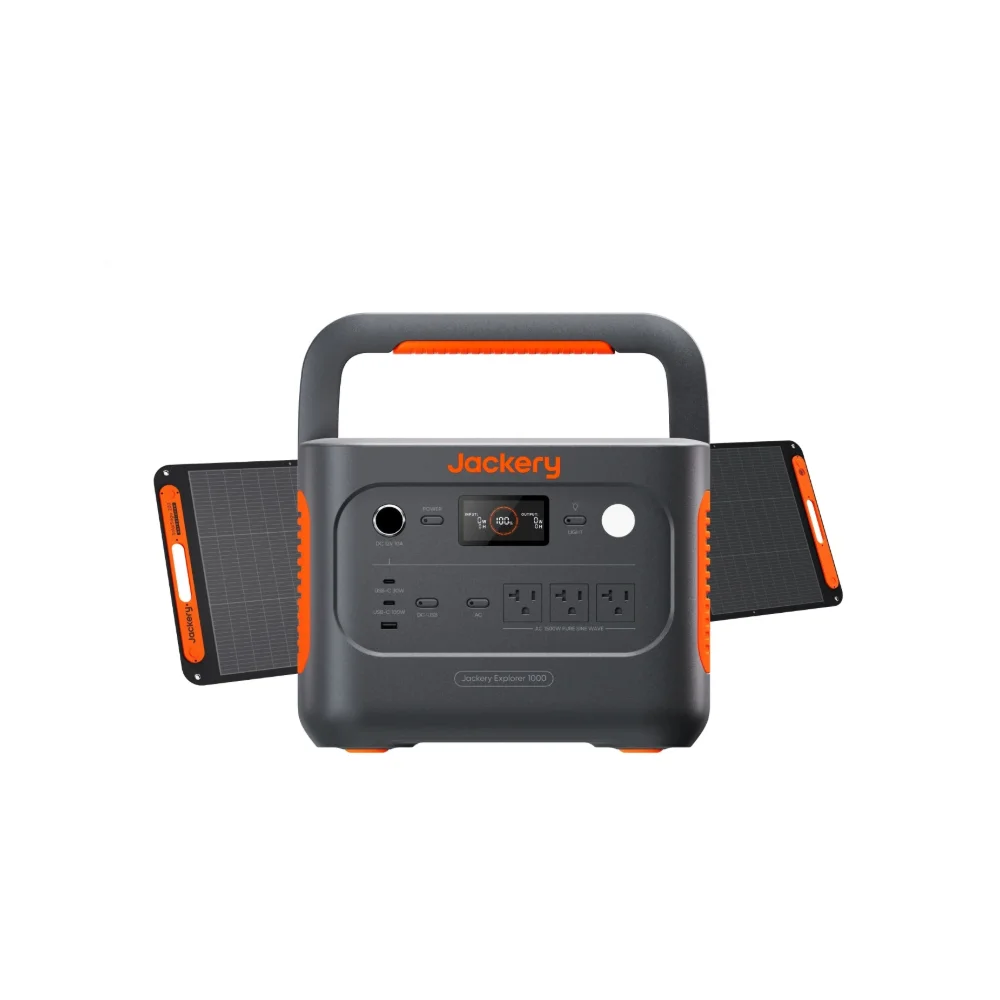

“How long until it pays for itself?” is the first question most people ask before spending $1,000 or more on a solar generator, and it’s also the question that’s easiest to answer badly. Run the math on pure electricity-bill savings and a portable power station rarely pays for itself in a way that beats just staying on the grid — the batteries are small compared to a home’s daily consumption, and the up-front cost per watt-hour is high compared to grid power. But that’s the wrong frame for most buyers. A solar generator is bought for resilience, portability, and flexibility, not as a mini power plant competing with your utility on price. Here’s an honest look at the actual numbers for 2026, including what’s changed on the incentive side, and where payback math does and doesn’t make sense.
The blunt math: comparing to grid electricity
The national average residential electricity price in 2026 is running around 19 cents per kWh, though it varies widely by state and utility. A 1,024Wh power station holds roughly one kWh — call it 19 cents worth of grid electricity per full charge, before accounting for the fact that a lithium battery typically loses 10–15% of that energy to conversion losses on the way in and out. If you used a $900 power station purely to store cheap off-peak grid power and offset expensive peak-rate usage, and you cycled it daily for years, you could theoretically claw back real savings on a time-of-use rate plan — but that’s a narrow use case, and most owners don’t cycle their unit daily.
If your only goal is minimizing your electric bill, a portable solar generator is not the tool for the job at any capacity currently on the market. The economics only start to make sense at whole-home battery scale, tied into net metering or time-of-use arbitrage — a different category of product entirely.
Where the real payback shows up: what you’re not buying instead
The more honest comparison is against what you’d otherwise spend to solve the same problem. A mid-size dual-fuel or gas generator with comparable output costs $600–$1,200 up front, plus ongoing fuel, oil changes, and maintenance — figure $150–$300 a year in fuel alone if you use it more than occasionally, plus the cost of your time doing upkeep. A solar generator has no fuel cost, no oil, no carburetor to gum up between uses, and the sun is free. Run that comparison over five years and a $1,500 solar generator paired with a $300 panel can come out ahead of a comparably capable gas unit once you account for fuel and maintenance, especially if you’re using it more than a handful of times a year.
There’s also the cost of what a power outage or camping trip without power actually costs you — spoiled groceries in a fridge, a missed remote workday, a canceled trip. That’s harder to put a dollar figure on, but it’s real, and it’s the reason most buyers land on a solar generator regardless of whether the spreadsheet says it “pays back.”
Sizing changes the math more than anything else
- Smaller units pay back faster on a per-use basis. A compact unit like the Anker SOLIX C1000 Gen 2 costs less up front, so the gap between it and a small gas generator or a season of hotel stays during outages closes faster.
- Larger units cost more but displace more. A 2,048Wh unit like the EcoFlow DELTA 3 Max Plus can run a fridge and a few other essentials through a multi-day outage, which is the scenario where the “cost of not having power” argument is strongest.
- Battery lifespan matters more than sticker price. LiFePO4 batteries in most current power stations are rated for 3,000+ charge cycles to 80% capacity — call it a decade or more of regular use — which lowers the effective cost per year far more than shaving a couple hundred dollars off the purchase price.
- Solar panels extend the payback in your favor. Pairing the battery with even a modest solar panel reduces or eliminates your reliance on grid charging between uses, which matters most for people using the unit frequently rather than as an occasional backup.
What changed for 2026: the tax credit picture
If you were counting on a federal tax credit to shorten your payback period, that math changed in 2025. The One Big Beautiful Bill Act ended the federal Residential Clean Energy Credit (Section 25D) early — it no longer applies to systems placed in service after December 31, 2025. In practice, that means there’s no federal tax credit for most portable solar generator purchases in 2026, a meaningful shift from a few years ago when battery storage over 3kWh installed at a residence could often qualify. We cover this in detail, including the narrow exceptions and where state-level programs still apply, in our 2026 solar generator tax credit guide — read that before you assume any credit will offset your purchase, and always confirm current rules with a tax professional since programs vary by state and change frequently.
Frequently asked questions
Will a solar generator actually lower my electric bill?
Only marginally, and only in specific setups like offsetting expensive peak-rate hours on a time-of-use plan. For most owners, a portable power station isn’t large enough relative to household consumption to move the needle on a monthly bill in a way you’d notice.
Is a solar generator cheaper than a gas generator over time?
Over several years of regular use, often yes, once you factor in fuel, oil, and maintenance for a gas unit against a higher but one-time cost for the solar generator and panel. For occasional, rare-outage use, the gap narrows and either can make financial sense.
How many years does a solar generator battery actually last?
Most current LiFePO4-based units are rated for 3,000 or more full charge cycles before dropping to 80% of original capacity. Used a few times a month, that’s easily a decade or more of useful life, which is the single biggest factor in whether the purchase pencils out over time.
Should I factor in resale value when thinking about payback?
It’s worth a modest mental discount, not a major one. Used power stations do sell, but batteries degrade and buyers are wary of unknown cycle counts, so don’t count on recovering a large share of the purchase price down the line — treat the payback calculation as if you’ll own it for its full useful life.