

A frozen waterer and a dead heat lamp on the coldest night of the year is how you lose birds, not from cold exactly, but from a heat source that failed when it mattered. Coops sitting fifty or a hundred feet from the nearest outlet are a common problem in backyard and small-farm setups alike, and running an extension cord across wet grass to a heat lamp is both a fire hazard and, if that cord fails, a bird welfare problem. A solar generator solves the location problem and, done right, is genuinely safer than the heat lamp and extension cord combination that causes a disproportionate share of barn and coop fires every winter. Here’s how to size and set one up correctly.
Rethink the heat lamp before you size anything
Traditional heat lamps — the 100W to 250W clamp bulbs — are a leading cause of coop and barn fires, largely because of how they’re mounted: a clamp that slips, dry bedding underneath, and a bulb running hot for hours unattended. Flat-panel radiant heaters, typically drawing 100–200W, run cooler to the touch, mount flush to a wall, and are broadly considered the safer choice by extension services and poultry keepers alike. Whichever heat source you use, mount it securely with a backup attachment point (not just the clamp), and keep it clear of bedding and debris.
Doing the wattage math for a coop
- Heat source. A 100–250W heat lamp or flat-panel heater run continuously through a cold night (roughly 10–14 hours) uses 1,000–3,500Wh — by far the largest draw in a coop power budget and the number that should drive your sizing decision.
- Heated waterer. Most heated poultry waterers or stock tank heaters draw 100–400W and cycle on and off rather than running continuously, but budget for several hundred watt-hours a day in freezing conditions.
- Coop lighting. A small LED light to extend daylight hours for egg production draws very little — a few watt-hours a day is typical — and is rarely the limiting factor.
- Automatic coop door. These draw power only briefly to open and close, a negligible daily total, but they’re worth accounting for since a dead battery means a door that doesn’t close at dusk.
Add it up and a typical winter coop night with a heat source and heated waterer running lands somewhere between 1,500Wh and 4,000Wh, depending on how cold it is and how long the heat needs to run. That’s a wide range, which is exactly why measuring your specific setup with a plug-in watt meter for a night or two before buying is worth the twenty minutes it takes.
Matching capacity to the job
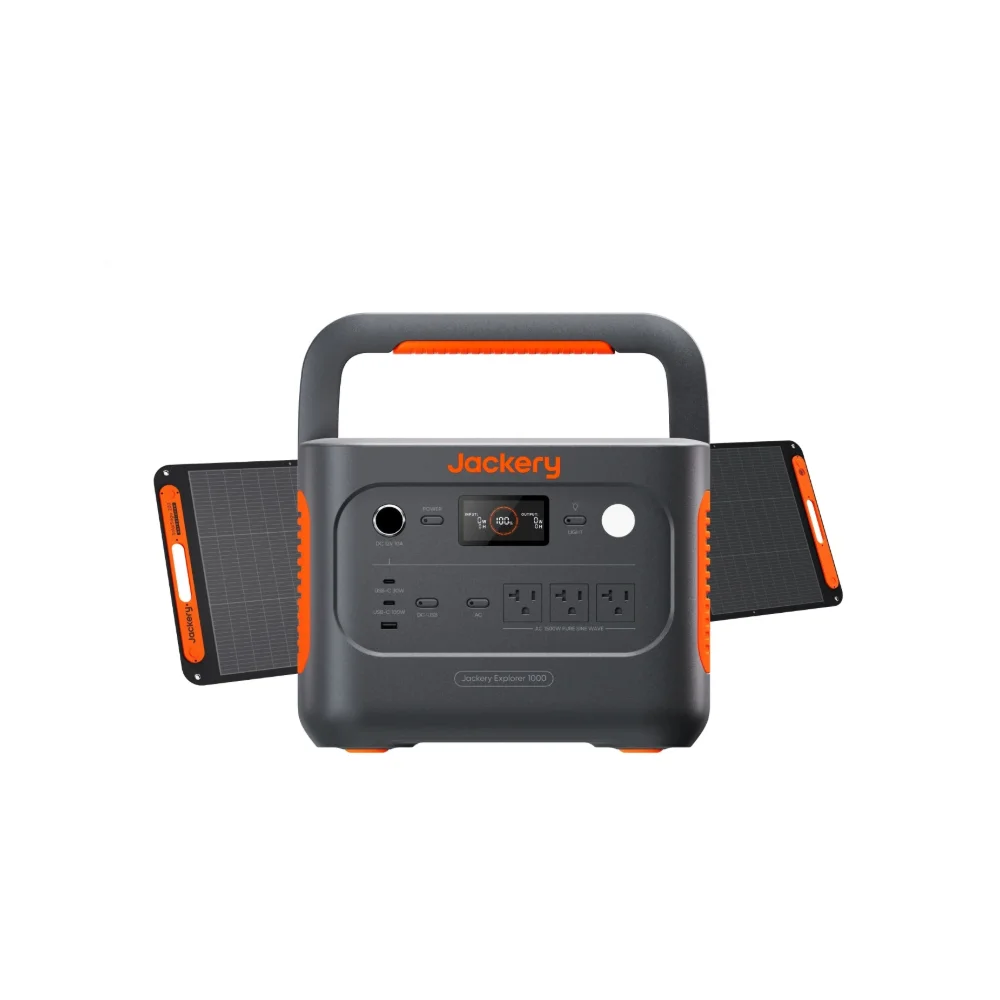
For a small coop with a handful of birds, a modest heat source, and a heated waterer, a compact unit like the BLUETTI EB3A can handle lighter, shorter-duration heating needs — think a flat-panel heater running for part of the night rather than a full 250W lamp running for fourteen hours straight. For a larger coop, multiple heat sources, or genuinely cold-climate overnight lows, you’ll want more headroom; something in the 1,000Wh class like the Jackery Explorer 1000 v2 gives you enough capacity to run a heat source through a full cold night without draining the battery to empty, which matters both for the birds’ safety and for the battery’s own long-term health.
Recharging between cold nights
Winter sun is weak and days are short, so don’t expect a solar panel to fully recharge a heavily-drained battery every day through December and January. Pair the setup with a small panel for partial daily recharge and plan to top the unit off from a wall outlet or vehicle on a rotation, especially during multi-day cold snaps when the heat source runs longest and the sun is least reliable. Keep the battery itself somewhere it won’t freeze between charging cycles if possible — extreme cold reduces both battery capacity and charging efficiency, on top of the season already asking more of the heat source.
Safety notes specific to livestock setups
- Keep the power station itself out of the coop. Ammonia, moisture, and dust from bedding aren’t good for electronics — run a weatherproof cord from a unit positioned just outside rather than housing it with the birds.
- Don’t run the unit at its max rated output for hours on end if you can avoid it. Leave headroom between your total load and the unit’s rated continuous wattage — running at the ragged edge for a whole night is harder on the inverter than running with margin.
- Check on the setup, don’t just trust it. A physical check once a day during a cold snap catches a failed connection or a bulb that’s died before it becomes an emergency.
Frequently asked questions
Do chickens actually need a heat lamp in winter?
Most cold-hardy chicken breeds tolerate freezing temperatures fine with a draft-free, dry coop and don’t strictly need supplemental heat. Heat sources become more important for extreme cold snaps, very young or ill birds, or breeds less suited to cold — check breed-specific guidance rather than assuming heat is always required.
How long will a portable power station run a heat lamp?
A 150W heat lamp running continuously on a 1,000Wh battery would run for roughly six to seven hours before the battery is depleted, though real-world runtime is usually a bit less once inverter losses are factored in. Match your battery capacity to how many hours of heat you actually need through the coldest part of the night.
Is it safe to run a heat lamp off a battery overnight unattended?
It’s safer than an extension cord run across wet ground to a wall outlet, but “safer” isn’t “risk-free.” Use a securely mounted heat source, ideally a flat-panel radiant heater rather than a bulb, and check the setup regularly rather than treating it as fully hands-off.
Can solar alone keep a coop heater running through winter?
Rarely on its own during the coldest, shortest-daylight months. Treat solar as a way to reduce how often you need to swap or recharge the battery from another source, not as a guaranteed self-sufficient system in deep winter.