
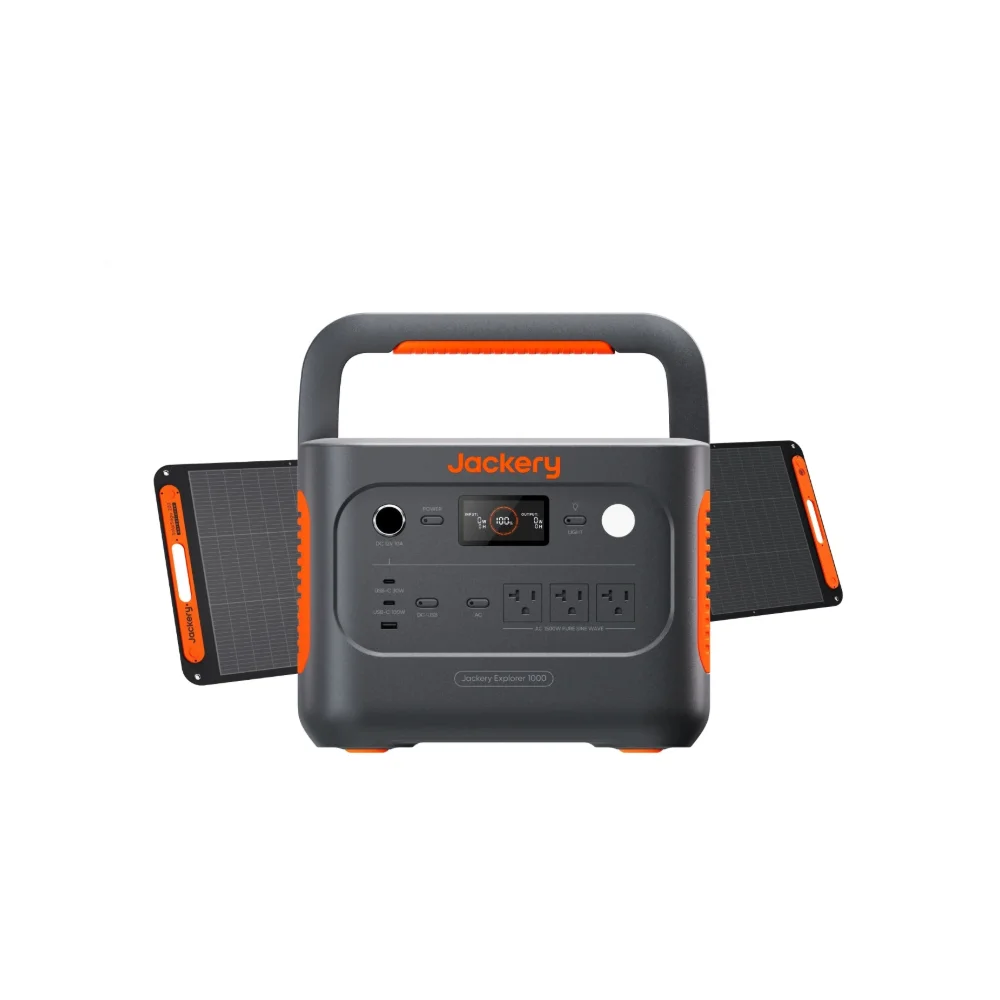

The neighborhood group chat lights up the same way every time the power goes out in a suburban development: someone’s gas generator is running at 2 a.m., and half the street is awake because of it. That’s not a hypothetical problem — gas generators are genuinely loud, and running one for days during an extended outage strains even the friendliest neighbor relationships. It’s also one of the more underrated advantages of a battery-based solar generator, which produces essentially none of that noise. If you’re weighing backup power options with an eye toward staying on good terms with the people next door — or you live somewhere with an HOA covenant or municipal noise ordinance to worry about — here’s what actually matters.
How loud is a solar generator, actually
A battery-based power station has no engine, so there’s no combustion noise, no exhaust note, none of what makes a gas generator carry across a whole block. The only real noise source is the cooling fan for the inverter and battery electronics, and that fan generally only spins up meaningfully under heavier load or fast charging. At idle or light draw, most units are close to silent — a soft hum you wouldn’t notice a few feet away. Under heavy load or during rapid recharge, fan noise on many units climbs into roughly the 45–60 dB range, comparable to a running refrigerator or a quiet conversation, and it’s directional and close to the unit rather than radiating across a yard. Compare that to a gas generator, which commonly runs 60–80+ dB or more at close range depending on size and load — a difference that’s not small given how decibels scale, since each roughly 10 dB increase represents a doubling in perceived loudness.
What noise ordinances actually say
Municipal noise ordinances vary widely, but a common pattern in residential zones is a daytime limit somewhere around 55 dB measured at the property line, dropping to roughly 45–50 dB at night — figures often modeled on EPA guidance for residential outdoor noise. For reference, normal conversation runs around 60 dB, and a gas-powered lawnmower or leaf blower can hit 80–85 dB. A solar generator’s fan noise, sitting in the 45–60 dB range under load and quieter at idle, is realistically at or below typical residential daytime limits in most jurisdictions and is far less likely to draw a noise complaint than a gas unit running for hours. That said, ordinances are set locally and enforcement varies — check your specific municipal code rather than assuming these figures apply exactly where you live, especially if you’re running equipment during an emergency, when many jurisdictions grant temporary exceptions anyway.
HOA and covenant considerations
Some HOAs restrict visible equipment, generator use, or exterior storage in their covenants, written mainly with loud, fuel-burning generators and their fuel storage in mind. A battery-based unit sitting quietly on a patio or in a garage is a much easier conversation to have with an HOA board than a gas generator with a fuel tank and an exhaust note, and it sidesteps most of the specific language those covenants tend to target. Still, read your specific covenant or ask your HOA board directly rather than assuming — some restrictions are written broadly enough to catch any exterior equipment, regardless of how quiet it is.
Placement tips that reduce noise even further
- Avoid hard, reflective surfaces nearby. A unit placed against a brick wall or in a corner can bounce and amplify fan noise more than one with open space around it.
- Keep vents unobstructed. Blocking airflow makes the fan work harder and louder to compensate — give the unit the clearance the manual recommends.
- Avoid maxing out fast-charge speeds overnight. Many units let you throttle charging speed; a slower charge rate at night generates less heat and less fan noise than pushing for the fastest possible recharge.
- Position away from bedroom windows, yours and theirs. Even quiet fan noise is more noticeable at night in a still house — a garage or covered porch placement beats a spot directly under a window.
The bigger picture: it’s a genuine selling point, not just a nice-to-have
For homeowners specifically weighing options for suburban backup power, a whole-home battery like the BLUETTI AC500 or an installed hybrid system like the Anker SOLIX E10 gives you meaningful backup capacity without the noise, exhaust, and fuel-storage concerns that come with a comparable gas generator — a real difference on a close suburban lot where “keeping the lights on” shouldn’t come at the cost of keeping the whole street awake.
Frequently asked questions
Are solar generators completely silent?
Not completely, but close. There’s no engine noise, only a cooling fan that runs under heavier load or fast charging, and it’s typically comparable to a running refrigerator rather than anything that carries across a yard or neighborhood.
Can I run a battery backup system at night without disturbing neighbors?
In most cases yes — fan noise from a battery-based unit is typically well within residential nighttime noise limits, especially compared to a gas generator. Slowing the charge rate overnight and positioning the unit away from shared property lines and bedroom windows further reduces any chance of it being noticeable.
Does my HOA allow solar generators or home batteries?
It depends entirely on your specific covenant — some restrict visible exterior equipment broadly, others focus specifically on fuel-burning generators. Check your HOA’s governing documents or ask the board directly rather than assuming a battery-based unit is automatically exempt from restrictions written for gas generators.
What decibel level counts as a noise violation where I live?
This varies by municipality — there’s no single national number. Many residential ordinances land somewhere around 55 dB during the day and 45–50 dB at night measured at the property line, but you should check your specific city or county code, since limits, measurement methods, and enforcement all differ locally.