

Glamping power needs look nothing like backcountry camping power needs. Nobody’s rationing watts to keep a headlamp alive — they’re running string lights for ambiance, a fan to sleep comfortably, and a real drip coffee maker in the morning instead of instant packets. The appliances are more residential, which means the wattage numbers are higher than a lot of first-time glampers expect, especially once a coffee maker enters the picture. Here’s what actually draws power in a glamping setup and how to size a unit that keeps the whole vibe running without a surprise shutdown mid-brew.
What draws power in a glamping tent
- String lights. A single 20-foot LED strand typically draws 20–40 watts; several strands layered for full ambiance can add up to 60–100 watts total, though LEDs keep this relatively modest.
- A tower or box fan. These generally draw 40–100 watts depending on size and speed setting, and they often run for hours overnight for sleeping comfort.
- A drip coffee maker. This is the biggest single draw in most glamping setups — standard drip coffee makers pull somewhere around 800–1,200 watts during the brew cycle, though that cycle is usually only 5–10 minutes.
- An electric kettle. Similarly high draw, typically 1,000–1,500 watts, but for an even shorter burst — a couple of minutes to boil.
- A mini fridge for drinks and snacks. Usually 40–60 watts running, cycling on and off through the day.
- Phone and speaker charging. Standard low draw, but worth including since most glamping trips involve music and plenty of photos.
The coffee maker decides your output rating
String lights and a fan are easy — almost any power station handles that combined load. The coffee maker is what actually determines which unit you need, because an 1,000-watt-plus appliance requires a power station with an output rating that clears it comfortably, not just a battery big enough to hold the energy. This is the same principle that trips up van kitchens and tailgates: capacity and output rating are two different specs, and glamping setups need both checked, not just one.
A unit like the Jackery Explorer 1000 v2 handles a drip coffee maker, string lights, a fan running overnight, and a mini fridge without breaking a sweat — its 1,500W output rating clears the coffee maker’s peak draw with margin, and 1,070Wh of capacity covers a full overnight stay comfortably.
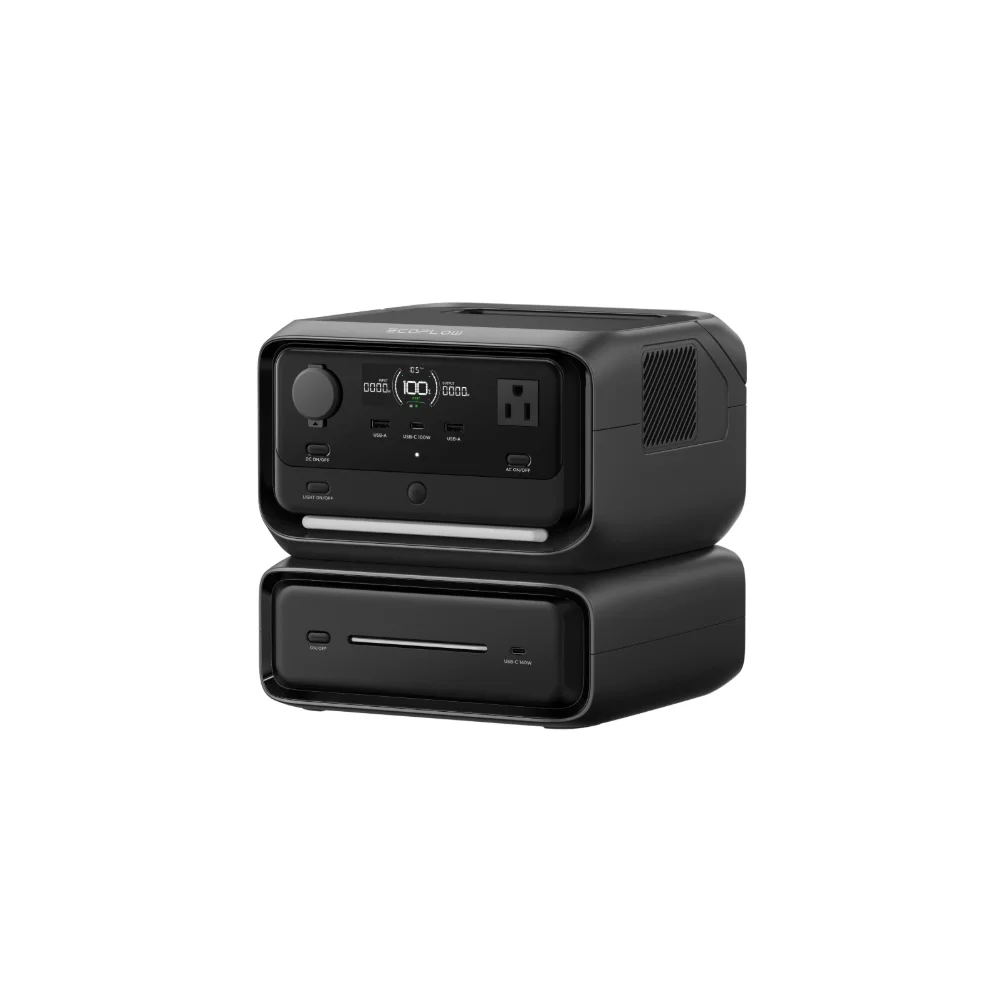
For multi-night glamping stays or setups running a fridge continuously alongside everything else, stepping up to the EcoFlow DELTA 3 gives you an 1,800W output rating — enough headroom to run a coffee maker and a kettle back to back without waiting — plus enough capacity to string multiple nights together before needing a full recharge.
A realistic overnight power budget
- String lights running all evening. Roughly 100–200 watt-hours for four to six hours of ambient lighting.
- A fan running overnight. Around 300–600 watt-hours for eight hours at a moderate setting.
- Morning coffee. Roughly 100–150 watt-hours for a full brew cycle.
- A mini fridge running all day. Somewhere around 300–500 watt-hours depending on ambient heat and how often it’s opened.
Add it up and a single glamping night typically uses somewhere around 800–1,300 watt-hours — which is why a 1,000Wh-class unit is the sweet spot for most one- or two-night glamping setups, with the fridge and fan being the two loads most likely to push you over if you’re not tracking them.
Keeping the ambiance without the anxiety
The whole point of glamping is not thinking about logistics, so the goal with power sizing is to build in enough buffer that you’re not doing math at 11pm wondering if the fan will make it through the night. Sizing one tier above your calculated total — rather than exactly to it — is worth the extra cost for the peace of mind alone, especially for multi-night stays where recharging opportunities may be limited.
Frequently asked questions
Will a power station really run a normal drip coffee maker?
Yes, as long as its continuous output rating clears the coffee maker’s draw, typically 800–1,200 watts for a standard drip machine. Units rated 1,500W or higher, like the Jackery Explorer 1000 v2, handle this with room to spare.
How long can a fan run overnight on a power station?
A typical tower or box fan drawing 40–100 watts can run for 8–20 hours on a 1,000Wh power station depending on speed setting, easily covering a full night of sleeping comfort.
What’s the biggest power mistake people make when glamping?
Underestimating the coffee maker and mini fridge. String lights and phone charging look like the main draws, but a drip coffee maker’s brief 1,000-watt spike and a fridge running all day both add up faster than the ambiance lighting most people focus on.
Should I run everything at once or stagger appliances?
As long as your power station’s output rating clears the combined peak load — string lights, fan, and coffee maker running together rarely exceeds 1,200–1,400 watts total — there’s no need to stagger. If you’re on a smaller unit, brewing coffee separately from running the fan avoids stacking two moderate loads at once.