
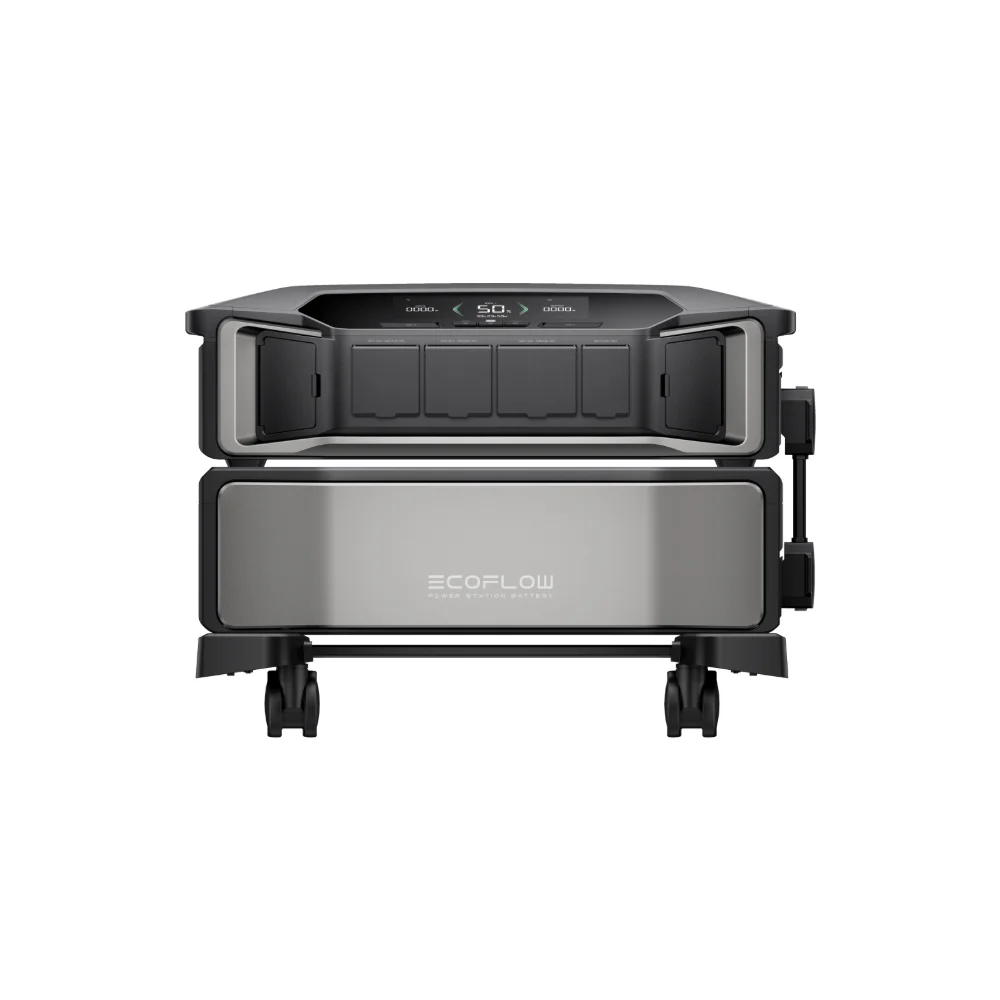

Live close enough to your neighbors and a generator stops being just a backup-power decision — it becomes a relationship decision. Fire up a gas generator on a shared driveway at 2 a.m. during a multi-day outage, and you’re not just keeping your own lights on; you’re broadcasting engine noise through everyone’s bedroom windows and, if you’ve placed it wrong, sending exhaust fumes somewhere it shouldn’t go. Homeowners associations have taken notice, and a lot of HOA covenants either restrict generator use outright or bury it in rules about noise, fuel storage, and placement that are easy to violate without realizing it. A battery power station sidesteps most of that friction entirely, but it’s worth understanding exactly why — and where it still falls short of what a generator can do — before you decide which one belongs in your garage.
The noise difference is not subtle
Generator noise is usually measured in decibels at a set distance, and even the quietest consumer models are audible well into a neighbor’s yard.
- Small inverter generators (2,000–3,000W) — the quietest gas-powered category, popular for home backup — typically run 48–60 dBA at a standard measuring distance, comparable to a normal conversation or a running dishwasher.
- Mid-size portable generators (4,000–6,500W) climb to roughly 65–75 dBA, closer to a vacuum cleaner, and large open-frame units can exceed 80 dBA — approaching lawnmower territory, for as long as the outage lasts.
- Battery power stations, by contrast, run around 30–55 dBA at most — and most of that is cooling-fan noise under heavy load, not the near-constant engine drone of combustion. Many models run essentially silent at light loads.
- Typical residential noise tolerance guidelines cluster around 55–65 dB in the daytime and 50–60 dB at night — meaning a mid-size generator can exceed common comfort thresholds for as long as it runs, while a power station generally stays under them.
That gap matters most exactly when outages are most likely — overnight, during storms, when everyone’s windows might be cracked and nerves are already frayed. A generator running for the two or three days a bad outage can last isn’t a one-time annoyance; it’s a sustained noise source your neighbors have to live with around the clock.
Fumes are a bigger deal than noise
Noise is an annoyance. Carbon monoxide is a genuine hazard, and it’s the reason most generator safety guidance is so insistent about placement. Gas and propane generators produce CO, which is colorless and odorless, and safety agencies consistently recommend running them well away from the home — commonly cited guidance is at least 20 feet from any door, window, or vent, positioned so exhaust can’t drift back inside. In an HOA setting with homes built close together, townhome-style attached garages, or shared courtyards, finding a spot that satisfies that distance from every nearby window — not just your own — can be genuinely difficult, and CO can migrate between adjacent units in ways that are easy to underestimate. This is also why some HOAs and even some local fire codes restrict where and how generators can be stored and operated, separate from noise complaints entirely.
A battery power station produces zero combustion exhaust, full stop. There’s no CO risk, no placement calculation, no “is this far enough from my neighbor’s bedroom window” math. That single fact is often what makes power stations the practical choice in condos, townhomes, and tightly packed HOA developments, independent of any noise consideration.
What generators still do better
None of this makes power stations strictly better — it makes them better suited to a specific set of constraints. Gas generators still win decisively on sustained output for heavy, continuous loads like central air conditioning or a well pump running for days on end, because you can keep refueling them indefinitely, while a power station is ultimately limited by its battery capacity and how fast you can recharge it (from solar panels or a wall outlet once power returns). If your home has genuinely high continuous power needs for a long outage — think whole-house HVAC in a heat wave — a generator, run according to CO safety guidance and any HOA restrictions, may still be the more realistic tool, or a hybrid approach with a larger battery unit and solar panels may close that gap. For most single circuits — refrigerator, WiFi, some lighting, phone charging, a fan — a power station handles it cleanly and without the neighborhood friction.
Larger power stations have narrowed the output gap considerably. The EcoFlow DELTA 3 Max Plus puts out up to 3,000W continuous — enough for a window AC unit, a refrigerator, and several other circuits at once — from a 2,048Wh battery that recharges via wall outlet or solar. For households wanting even more runway, the BLUETTI AC200P L offers 3,600W output from 2,304Wh, giving enough headroom for multiple appliances without tripping the inverter — all with none of the noise or exhaust considerations a generator brings to a shared property line.
Check your HOA’s actual language before you buy either one
HOA rules vary enormously by community, and “generators aren’t allowed” is often an oversimplification of language that actually restricts fuel storage, permanent installation, noise during certain hours, or visible placement — not portable equipment used briefly and stored out of sight. Some HOAs are silent on battery power stations entirely, since they don’t fit neatly into rules written with combustion generators in mind. Read your specific covenants (CC&Rs) or ask your HOA board directly rather than assuming either device is fine, or off-limits, based on general advice like this. If your community has a fuel-storage restriction, that alone can make a power station the simpler path, since it requires no gasoline or propane on-site at all.
Frequently asked questions
Is a power station actually silent?
Not always completely silent, but close. Most power stations run a cooling fan when under heavy load or fast-charging, which produces a modest hum — generally cited in the 30–55 dBA range, well below any combustion generator. At light loads, many units run near-silently with the fan off entirely.
Can I run a power station indoors, unlike a generator?
Yes — that’s one of the clearest practical advantages. Because power stations produce no combustion exhaust, they’re safe to run indoors, in a garage with the door closed, or on a small balcony, none of which is safe for a gas or propane generator. Always still follow the specific manufacturer’s guidance for ventilation and heat, since batteries do generate some heat under heavy load.
Does my HOA need to approve a battery power station?
Most HOA rules that restrict backup power are written specifically around generators — fuel storage, exhaust, permanent installations, and noise — and often don’t address battery power stations at all, since they don’t raise the same concerns. That said, requirements differ by community, so check your specific CC&Rs or ask your HOA board rather than assuming.