
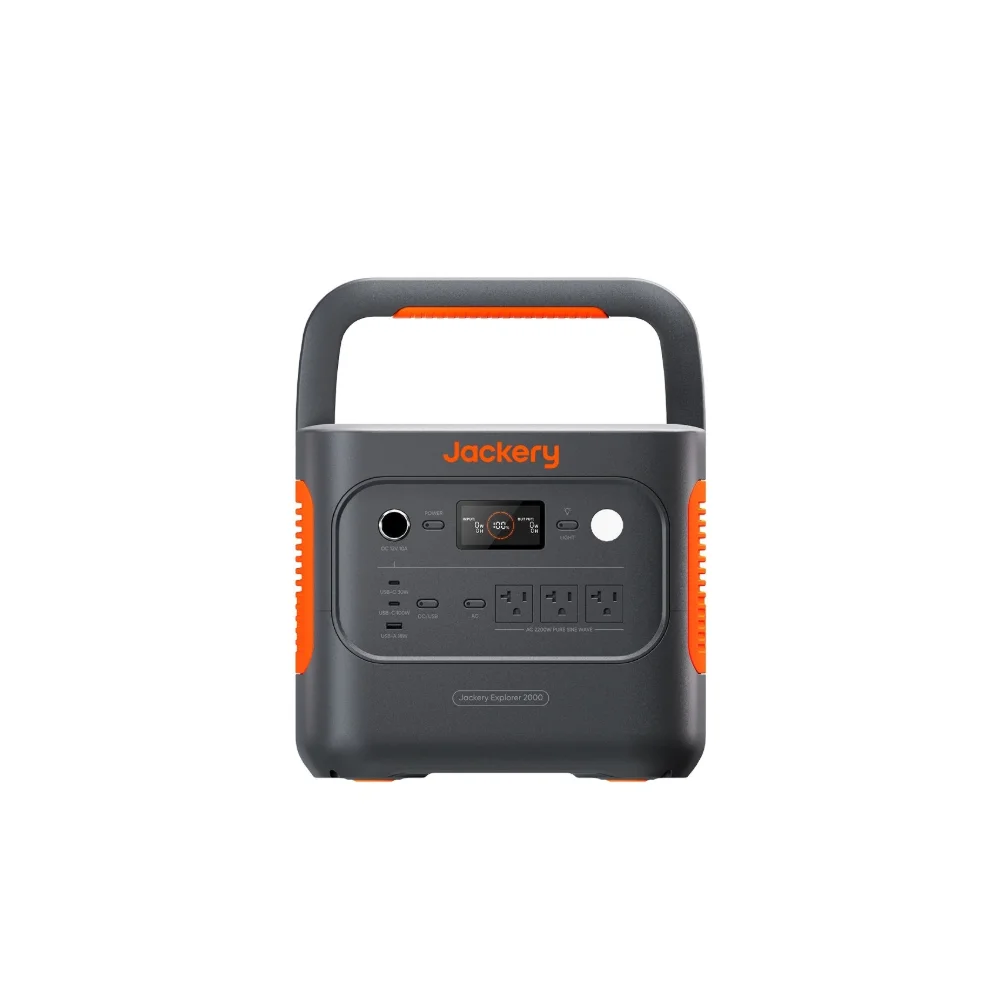

Show up at security with the wrong power station in your checked bag, and best case, an agent pulls it and you’re rebooking with a battery you can’t bring home. Worst case, it gets confiscated on the spot. Lithium-ion batteries are the reason: they’re classified as hazardous material for air travel because a damaged or short-circuited cell can go into thermal runaway, and airlines want any battery large enough to matter within reach of a crew member, not buried in cargo where a fire can’t be caught early. The rules aren’t a mystery, but they’re watt-hour-based, they cap out hard at a certain size, and they get enforced inconsistently enough between airlines and countries that “I read it was fine online” is not a plan. Here’s what the U.S. rules actually say, and how to check before you fly anywhere.
The baseline U.S. rule: carry-on only, always
Regardless of size, spare lithium-ion batteries and power banks are not permitted in checked baggage under TSA and FAA rules. That includes portable power stations — they count as spare batteries, not as an installed device battery, since they’re not physically part of the device they charge. This isn’t a size-based exception; it applies from the smallest phone power bank up to the largest power station you’d consider bringing. If you’re checking a bag, the power station comes out and goes in your carry-on, full stop.
The watt-hour tiers that actually matter
- 100 watt-hours or less. Allowed in carry-on without airline approval, in normal personal quantities. Nearly every phone power bank and most compact power stations fall in this range.
- 101–160 watt-hours. Per TSA, passengers may carry up to two of these larger spare batteries, but only with advance airline approval. This tier covers a lot of mid-size portable power stations, so check the label before you assume you’re clear.
- Over 160 watt-hours. Generally prohibited on passenger aircraft entirely, in both carry-on and checked baggage. This rules out most large power stations — the 1,000Wh-plus units meant for home backup are not fly-with-you devices.
The watt-hour rating should be printed directly on the unit or in its spec sheet — it’s a fixed number (voltage times amp-hours), not something that changes with charge level, so you can check it well before packing.
What actually flies without a headache
For travel, the safest play is staying under the 100Wh line entirely, since that skips the airline-approval step altogether. The EcoFlow TRAIL 200DC, at 192Wh, and the BLUETTI EB3A, at 268.8Wh, both land in the 101–160Wh approval tier rather than under 100Wh — worth knowing going in, since it means calling your airline ahead of time rather than assuming you can just walk it through security. If you want to skip that step entirely, look specifically for a compact unit whose spec sheet lists a capacity under 100Wh; several exist in this size class, just not among the picks above.
Rules vary by airline and by country — verify before you fly
The tiers above reflect U.S. TSA and FAA guidance, and most international carriers follow similar IATA-based standards, but “similar” isn’t “identical.” Some airlines cap spare battery quantity more tightly than the FAA minimum, some route international flights through countries with their own customs restrictions on lithium batteries, and enforcement at the actual gate can be stricter than what’s written in a policy PDF. If you’re flying with anything over 100Wh, or flying internationally with any power station at all, contact your airline directly before the trip — most publish a battery policy page, and a quick email or chat message confirming your specific model’s watt-hour rating is cheap insurance against a bad surprise at the gate.
Packing it so security doesn’t have to ask
Keep the power station easily accessible in your carry-on rather than buried under clothes — screeners frequently want to see it directly, and digging through a packed bag at the checkpoint slows everyone down. Cover any exposed terminals or connectors with the original packaging or a dedicated pouch to prevent short-circuiting against metal objects in your bag. And keep documentation of the watt-hour rating on hand, either a photo of the label or the product spec page saved offline, in case an agent asks and the printed number on the unit itself is hard to read.
Frequently asked questions
Can I put my power station in checked luggage if it’s under 100Wh?
No. The checked-baggage prohibition on spare lithium batteries applies at every watt-hour level, including small power banks well under 100Wh. It has to travel in the cabin with you regardless of size.
Do I need to tell TSA I have a power station before I fly?
For units under 100Wh, no advance notice is required. For the 101–160Wh range, you need approval from your airline in advance, not from TSA at the checkpoint — TSA enforces the size limits, but the airline is who grants the exception for that middle tier.
Why can’t I bring my large home-backup power station on a flight?
Most home-backup-class power stations, especially anything in the 1,000Wh-plus range, exceed the 160Wh ceiling that applies to passenger aircraft, so they’re not permitted in the cabin or the cargo hold. These units are meant to stay home or travel by ground shipping, not fly with you.
Does the watt-hour rating change if the battery isn’t fully charged?
No. Watt-hour rating is a fixed spec based on the battery’s design capacity, not its current charge level, so a half-charged 200Wh unit is still a 200Wh unit for airline purposes — charging it down doesn’t move it into a lower tier.