
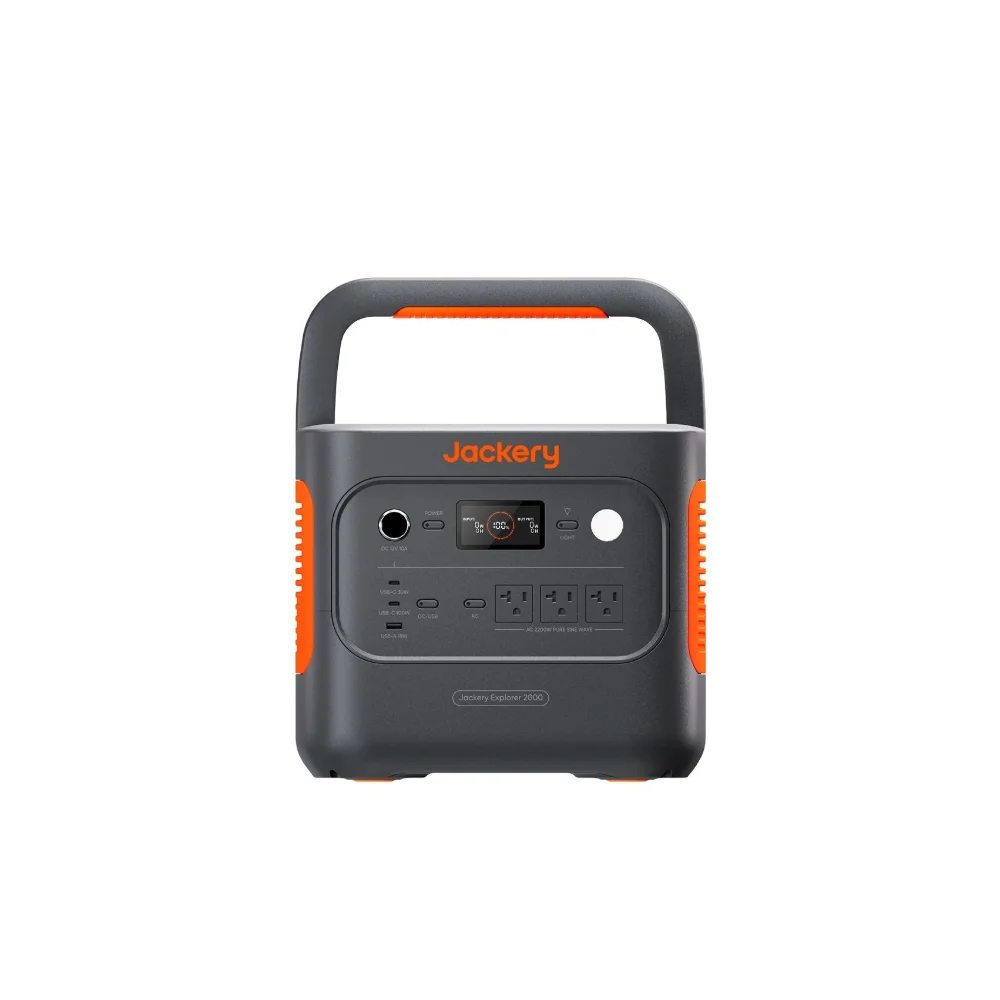

Portable power station lifespan comes down to two numbers: the cycle-life and storage figures below are general industry numbers pulled from published manufacturer data gathered through in-depth research, not results from my own test bench — treat them as a reasonable ballpark and check the exact spec sheet for whatever unit you’re considering.
This article may include affiliate links — if you buy through them we may earn a small commission at no extra cost to you, but our recommendations are based on our own independent research.
“How long will this last?” is the question I get asked most, and it’s actually two separate questions people mix together: how long does it run on a single charge, and how many years before the battery itself wears out. Both matter, and the second one is where a lot of buyers get surprised — usually pleasantly, sometimes not, depending on what chemistry they bought.
Runtime Per Charge Is Just Math
Runtime is simple division: take the station’s usable watt-hours, divide by the wattage of what you’re running, and factor in some efficiency loss from the inverter — typically somewhere in the 10-15% range. A mid-size station running a small mini-fridge (which actually only draws power intermittently as the compressor cycles) can realistically stretch well past half a day. That same station running a space heater continuously would be drained in under an hour. This is why I always tell people to add up their actual expected loads before assuming a capacity number means anything on its own.
The Number That Actually Matters: Charge Cycles
This is where battery chemistry does all the talking. A full charge-discharge is one “cycle,” and every battery loses a small amount of capacity per cycle. The two chemistries you’ll encounter:
- Standard lithium-ion (NMC): generally rated for somewhere in the hundreds-to-low-thousands of cycles before capacity drops meaningfully, which tends to translate to a few years of real-world life depending on use.
- LiFePO4 (lithium iron phosphate): routinely rated well into the thousands of cycles, often holding up for well over a decade of regular use. This is now the standard chemistry in nearly every reputable 2026 power station.
If you’re only using your station a handful of times a year — camping trips, the occasional outage — a LiFePO4 unit could genuinely outlast the rest of your camping gear. Owner reports spanning several years of regular weekend use consistently describe performance staying close to day-one levels.
What Actually Shortens Portable Power Station Lifespan
Cycle count is a lab number. Real-world lifespan depends heavily on how you treat it. Heat is probably the biggest factor — storing or charging a unit in a hot car or garage accelerates degradation more than almost anything else, so cool, dry storage is best. Storage charge level matters too: most manufacturers recommend keeping a unit at a partial charge for long-term storage rather than topped all the way up or left empty. And while fast charging is convenient, leaning on the fastest charge speed available as a daily habit generates more heat than a moderate charge rate — fine occasionally, not ideal every single time.
Self-Discharge During Storage
Something that doesn’t get talked about enough: how much charge a unit loses just sitting on a shelf. LiFePO4 units tend to hold their charge noticeably better than older lithium-ion chemistries under the same conditions — a battery charged partway in the fall can still hold a meaningful amount of that charge months later, while older chemistries drop off faster. If this thing is meant to be ready for an emergency you hope never comes, that difference is exactly why I steer people toward LiFePO4 without much hesitation.
My Take
Don’t just look at the watt-hour number and assume that’s the whole picture — a LiFePO4 station with a lower capacity will very likely outlast a bigger lithium-ion unit in years of actual service. If you’re buying something you expect to still be reliable a decade from now, chemistry matters more than the sticker capacity. Check the cycle rating on the spec sheet before you check the price.
Real-World Runtime Examples
To make the math from earlier more concrete, here’s roughly what a mid-size station (accounting for inverter losses) delivers running common devices on their own — these are approximate, since actual runtime depends heavily on the specific unit and device:
- Mini-fridge (small, cycling on and off): roughly half a day or more
- Full-size fridge (compressor cycling): several hours
- Laptop: around half a day of continuous use
- CPAP machine: multiple full nights
- String of LED lights: well over a day and a half
- Space heater: under an hour
The gap between the fridge and the space heater examples is the whole point of this exercise — high-draw heating and cooling appliances eat through capacity dramatically faster than lighting or electronics, and it’s the single biggest reason people overestimate how long a station will last them in a real outage.
How to Track Your Own Cycle Count
Most modern units display an approximate cycle count or health percentage in their companion app, which is worth checking every few months if you use yours regularly. If you notice runtime dropping noticeably faster than it used to for the same tasks, that’s usually the first real-world sign of capacity fade — well before the unit fails outright. It’s not something to panic over; it’s simply the normal aging curve every battery follows, and catching it early just means you’re not caught off guard the one time you actually need full capacity.
How Manufacturers Actually Test Cycle Ratings
It’s worth knowing what that cycle number on the box actually means, because it’s easy to misread. Manufacturers typically test cycle life under controlled lab conditions — a full charge to 100%, a full discharge to 0%, repeated at a stable ambient temperature, until capacity drops to a defined threshold, commonly cited as around 80% of original. Real-world use rarely matches this pattern exactly: most people partially discharge and recharge rather than running to empty every time, which generally extends real-world lifespan beyond the lab number, not shortens it. So when you see a cycle rating on a spec sheet, treat it as a conservative baseline rather than a hard ceiling on how long the unit will realistically serve you.
Frequently Asked Questions
Does a warranty cover normal battery degradation?
Usually only if capacity drops below a specified threshold within the warranty period — check the manufacturer’s exact terms, since this varies by brand and product line. Gradual, expected degradation within normal limits generally isn’t a warranty claim.
Should I fully discharge my power station occasionally to “calibrate” it?
Not necessary with modern lithium chemistries — unlike old nickel-based batteries, LiFePO4 and lithium-ion don’t suffer from “memory effect” and don’t need periodic full discharges. In fact, avoiding frequent full discharges to 0% generally helps longevity rather than hurting it.
Can I replace the battery in a power station once it wears out?
Almost never for consumer units — the battery is integrated into the unit as a sealed system, not a swappable component. This is part of why chemistry and cycle rating matter so much upfront: you’re buying the battery’s whole lifespan, not a replaceable part.
Related Reading
- Portable Power Station Buying Guide for Beginners (2026)
- Lithium-ion vs LiFePO4 Batteries in Portable Power Stations: What’s the Difference?