

If you’re trying to find the best solar generator for van life 2026 has to offer, the first question isn’t “which brand” — it’s “what’s actually on my circuit.” Van life power setups get talked about like they’re all the same problem, and they’re really not. Someone running a laptop and a phone charger has completely different needs than someone running a compressor fridge, induction cooktop, and roof AC off the same battery bank.
This article may include affiliate links — if you buy through them we may earn a small commission at no extra cost to you, but our recommendations are based on our own independent research.
Best Solar Generator for Van Life 2026: Light Setups (Laptop, Phone, Lighting)
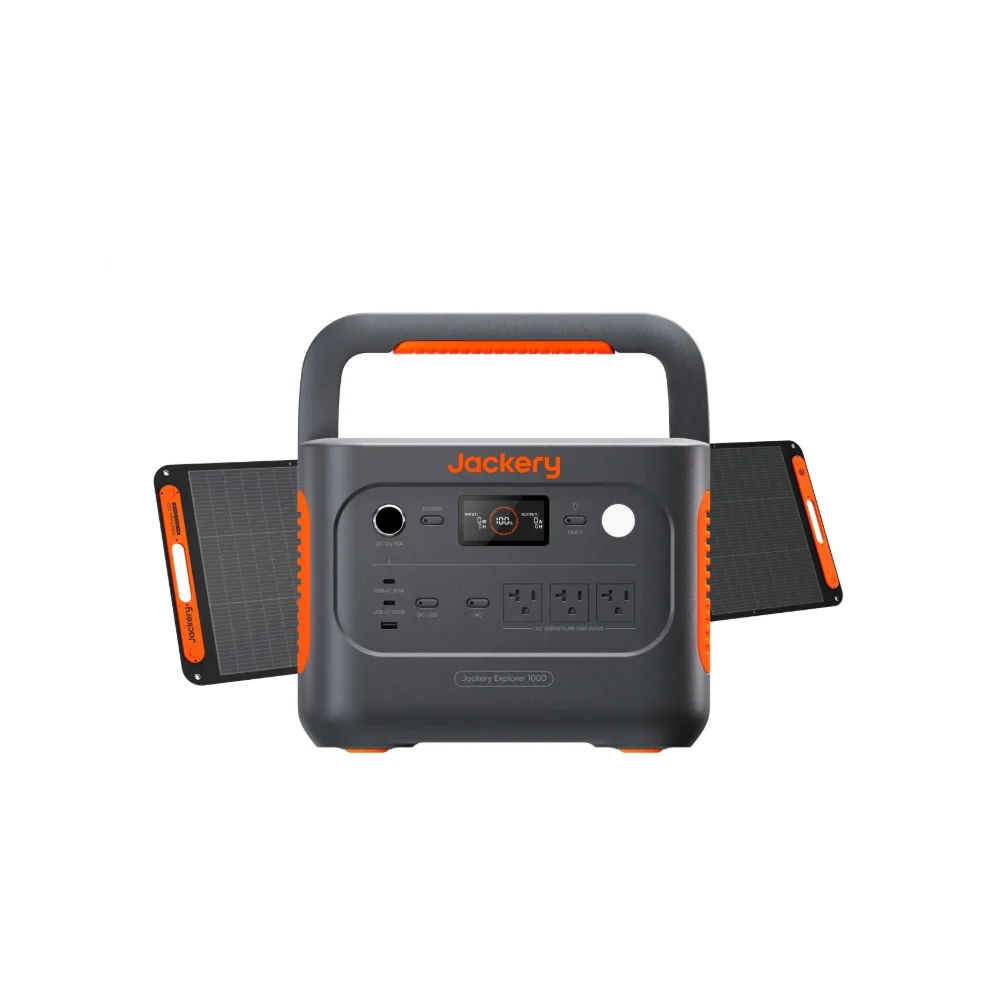
If your daily draw is a laptop, phone charging, some LED lighting, and maybe a fan, you genuinely don’t need a multi-kWh monster taking up half your build. A compact 1,000Wh-class unit from Jackery or a similarly sized Bluetti keeps weight and footprint down, which matters more than people admit when you’re actually living out of a build with limited storage.
My take: this is the category where portability should win over raw capacity almost every time. I’ve seen people buy way more battery than their circuit ever needs because a bigger number felt safer. It isn’t wasted money exactly, but it is wasted cubic feet in a van where every inch matters.
Full-Time RV Living: Fridge, HVAC, Real Loads
Sustained loads change the math completely. A compressor fridge running 24/7, plus HVAC, plus general appliance use, pushes you toward the multi-kWh range that current-generation units from EcoFlow and Bluetti are built around. This is also where expandable capacity actually earns its keep — starting with a base unit and adding expansion batteries as your build evolves is smarter than guessing your final capacity on day one.
What surprised me researching this: the brand-by-brand differences are more real than I expected going in. EcoFlow tends to lean into charging speed and app/ecosystem features, Bluetti leans into raw expandable capacity and value, Jackery stays focused on simplicity and lighter weight. None of them are “wrong” — they’re built for slightly different priorities, and matching your actual use case to that priority matters more than chasing whichever one has the flashiest spec sheet.
Solar Input: Don’t Undersize Your Panels
A common mistake I see in van builds is treating the solar panel as an afterthought to the battery purchase. If you’re relying on solar to actually keep up with daily use rather than just topping off overnight at a hookup, your panel wattage needs to be sized against your real daily draw, not the minimum the kit ships with. Cloudy stretches happen, tree cover happens, and a panel that’s “just enough” on a perfect day leaves you short the rest of the week.
The Real Cost Comparison That Matters
For full-time van or RV life, a well-sized solar setup can realistically offset a meaningful amount in campground hookup fees and generator fuel over a year, depending on how much boondocking you actually do. That’s less about a specific number and more about a straightforward function of how often you’re avoiding paid hookups. If you mostly stay at RV parks with power included, that math changes and a smaller, cheaper setup makes more sense.
Our Recommendation
Match capacity to your actual daily loads, not the biggest number on the shelf. Light van life: stay compact and portable. Full-time RV living with real appliance loads: size up and lean into expandable capacity so you’re not stuck re-buying in a year. Either way, don’t undersize your solar input relative to your battery — that’s the mistake that actually leaves people stranded.
FAQ
How much solar generator capacity do I need for van life?
For light use (laptop, phone, lighting) a 1,000Wh-class unit is usually enough. For full-time living with a fridge and HVAC, plan for the multi-kWh range with room to expand.
Can solar alone keep up with full-time RV living?
It depends on your climate and how much you boondock versus stay at hookups — solar rarely fully replaces shore power for heavy loads, but it significantly extends how long you can stay off-grid.
Roof-Mounted vs Portable Ground Panels
This decision matters more than most van builders expect going in. Roof-mounted rigid panels are permanently angled to whatever your roof pitch is (usually flat), which means they lose efficiency any time the sun isn’t directly overhead — no way to angle them toward a low winter sun. Portable folding panels you set up on the ground each time you park can be angled directly at the sun, which in practice often outperforms a larger roof-mounted array in shoulder-season light, at the cost of having to set them up and pack them away daily.
My honest take: if you move sites often, portable ground panels are worth the daily hassle for the efficiency gain. If you tend to park somewhere for a week or more at a time, roof panels that just work passively while you’re inside are worth the lower peak efficiency. A lot of serious full-timers end up running both — a roof array for baseline passive charging, plus a portable panel they deploy when they know they’ll be stationary for a while.
Model Comparison at a Glance
Capacities below are approximate and can vary by hardware revision — check each manufacturer’s current spec sheet before buying.
| Use Case | Example Model | Capacity | Priority |
|---|---|---|---|
| Light van life | Jackery Explorer 1000 v2 | ~1,000Wh-class | Weight/portability |
| Full-time, moderate loads | EcoFlow DELTA Pro 3 | ~4,000Wh-class | Fast charging, app ecosystem |
| Full-time, heavy loads | Bluetti AC200L / Elite 200 V2 | ~2,000-2,100Wh-class (expandable) | Expandable capacity, value |
The Jackery Explorer 1000 v2 and EcoFlow DELTA Pro 3 mentioned above are both currently available: Check current price on Jackery → or Check current price on Outbound Power →
Will running a fridge off solar drain my battery overnight?
A compressor fridge typically draws somewhere in the 40-80W range when actively cooling, cycling on and off through the night, which usually adds up to a few hundred watt-hours over 12 hours — very manageable for a 1,000Wh+ unit as long as you’re recharging some of that back the next day.
Do I need a separate battery for starting my vehicle, or does the solar generator cover that too?
Keep these completely separate. A solar generator/power station runs your living-space appliances; your vehicle’s starter battery is a different system entirely, and you should never try to use one to jump-start or replace the other without a proper isolator setup installed by someone who knows 12V vehicle electrics.
One last thing worth factoring in: temperature swings matter more in a van than most people expect. Battery chemistry, especially LiFePO4, charges less efficiently in cold weather, and most units will not charge at all below freezing without a built-in heating function. If you plan to winter in your rig, check the manufacturer specs for low-temperature charging support before you buy, not after the first cold snap catches you off guard.
Related Reading
- Best Large-Capacity Solar Generators for Extended Off-Grid Living
- Are Solar Generators Worth It? A Real Cost-Per-Cycle Breakdown