
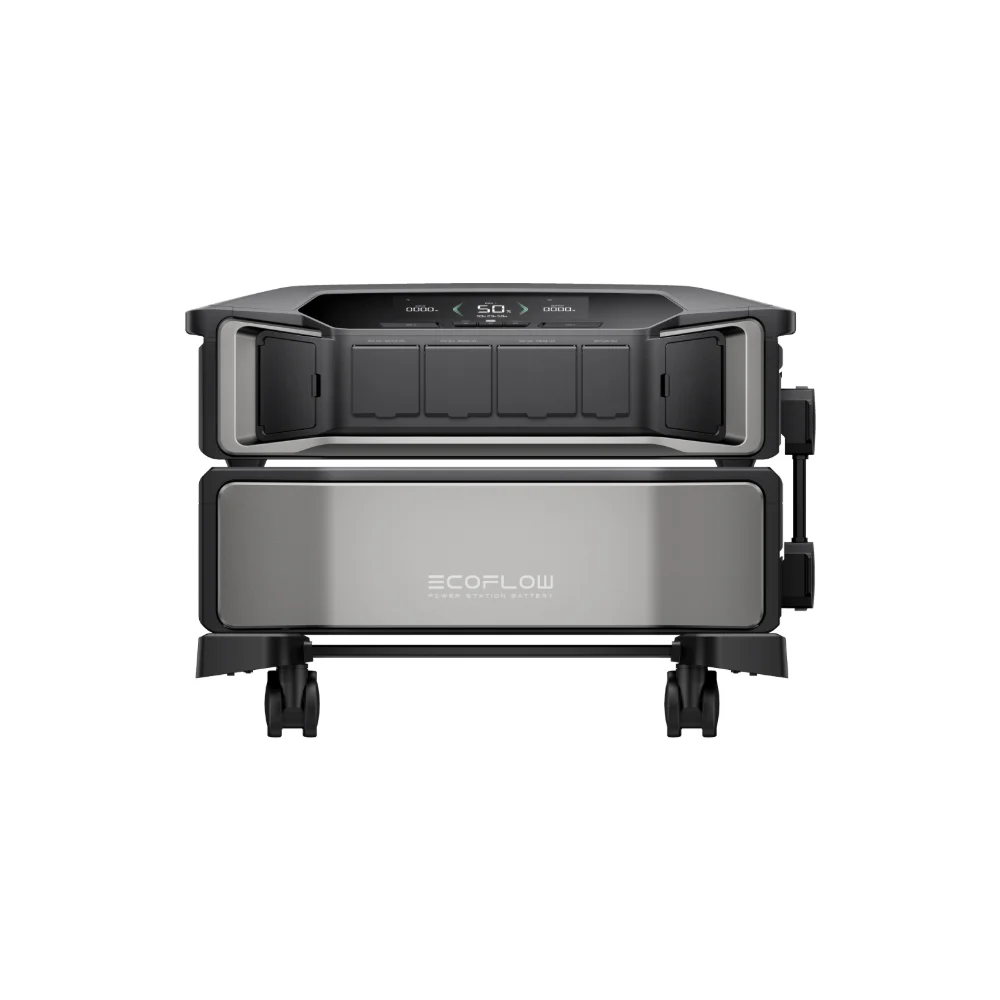
When the power goes out, the fridge is usually the first thing people worry about, and for good reason — spoiled food is an immediate, tangible cost. Here’s how to actually power your fridge and the handful of other genuine essentials during a blackout, with real numbers instead of vague reassurance.
This article may include affiliate links — if you buy through them we may earn a small commission at no extra cost to you, but our recommendations are based on our own independent research.
Your Fridge’s Real Draw
A full-size household fridge typically draws around 100-200W while running, cycling on and off rather than running continuously. Averaged over a full day of normal cycling, that usually works out to somewhere around 1,000-1,500Wh — but remember the compressor’s startup spike can briefly hit 2-4x that running figure, which is why the peak/surge rating on your power station matters just as much as its continuous rating (we cover this in detail in our continuous vs peak power guide).
What About a Chest Freezer?
A chest freezer is actually more forgiving than most people expect — its dense, well-insulated design means a full one can hold safe temperatures for a surprisingly long stretch (often 24-48 hours) even with zero power, as long as the lid stays shut. If you’re prioritizing capacity between fridge and chest freezer during a short outage, a mostly-full chest freezer can often wait longer before needing power than your fridge can, simply due to thermal mass and insulation. That said, for anything beyond a day, plan to power both — a chest freezer typically draws somewhat less than a full-size fridge-freezer combo while running, in a similar 60-150W range depending on size and age.
What Else Actually Counts as “Essential”
- WiFi router/modem: low draw (typically under 20W), but critical for communication and information during an outage
- Phone charging: minimal draw, high importance for staying informed and reachable
- A few LED lights: very low draw, meaningfully improves safety and comfort
- A fan (summer) or supplemental heating fan (winter): moderate draw, situational depending on season
Sizing for a Realistic Blackout Day
My take: for fridge plus the essentials above through a single day-long outage, plan on 1,500-2,000Wh of capacity, with margin. That covers the fridge’s real daily draw plus the low-power essentials without cutting it uncomfortably close. For multi-day outages, either scale up with an expansion battery or plan to ration usage on the fridge specifically (keeping the door shut as much as possible) to stretch your existing capacity.
Using a Generator as a Backup Charging Source
If an outage runs longer than your battery capacity can cover, a portable gas generator can serve as a recharging source for your power station rather than running your fridge directly — this lets you run the generator intermittently (say, an hour or two to top up the battery) rather than continuously, which saves fuel and reduces noise and fume exposure time compared to running the generator non-stop. My take: this hybrid approach — battery for quiet continuous coverage, generator for periodic recharging during extended outages — gets you most of the benefits of both without the downsides of running a generator around the clock.
Practical Steps When the Power Goes
- Minimize fridge and freezer door openings immediately — every open costs you recovery energy
- Prioritize your power station for the fridge and communication devices first, non-essentials later
- If you have solar, get panels out and positioned as soon as it’s safe and daylight allows
- Keep a rough mental (or written) tally of your remaining battery percentage against how much longer the outage might last
Food Safety Guidelines Worth Following
A commonly cited food-safety guideline is that a closed refrigerator keeps food safely cold for about 4 hours without power, and a full freezer holds its temperature for roughly 48 hours (24 hours if half-full) as long as the door stays shut. Past those windows, or any time you’re uncertain, use a food thermometer rather than guessing — food held above 40°F for more than 2 hours is generally considered a discard risk.
Rotating Ice and Cold Packs as a Low-Tech Backup
Keeping a stock of reusable cold packs or extra ice in your freezer at all times (not just when a storm is forecast) means you always have a low-tech buffer ready if your power station runs low or fails unexpectedly. Transferring perishables to a cooler with these packs can extend safe storage well beyond what the fridge alone would manage on battery power, buying you meaningful extra time during an extended outage.
Our Recommendation
Size for your fridge’s real daily draw (1,000-1,500Wh) plus a margin for genuine essentials, landing around 1,500-2,000Wh total for a single day of coverage. Check that your station’s peak rating covers the fridge’s compressor startup spike, not just its running wattage — that’s the detail that actually determines whether it works when you need it.
Deciding Whether to Open the Fridge at All
During a power-limited blackout, every fridge or freezer opening lets warm air in and forces the compressor to work harder to recover, which draws more from your power station than the baseline running wattage suggests. Planning meals for the outage in advance — deciding what you’ll eat and grabbing everything you need in one deliberate trip rather than opening the door repeatedly throughout the day — genuinely conserves both battery capacity and food safety margin.
My take: this is a small habit that adds up more than people expect over a multi-day outage. I’d rather plan two deliberate fridge trips a day than have a household constantly popping the door open out of habit or boredom — the difference in both food safety and battery runway is genuinely noticeable by day two or three.
A Simple Backup Thermometer Is Worth Owning
A cheap appliance thermometer left inside your fridge and freezer takes the guesswork out of a blackout entirely — instead of assuming things are fine because the power station shows a healthy percentage, you can check actual temperatures directly and make food-safety decisions based on real numbers rather than anxiety or optimism.
My take: this five-dollar item solves more real uncertainty during an outage than most people expect, and it’s the kind of thing worth buying before you need it rather than during the emergency itself.
FAQ
How long can a power station keep my fridge running during an outage?
A 1,500-2,000Wh unit typically covers a full day of realistic fridge cycling plus basic essentials like WiFi and phone charging.
What should I prioritize if my battery is running low during a long outage?
Keep the fridge running as the top priority, minimize door openings to reduce its energy demand, and treat non-essential devices as optional until power returns.
Should I use a thermometer to monitor fridge safety during an outage?
Yes — an appliance thermometer takes the guesswork out of food safety decisions; as a general guideline, food kept below 40°F is typically considered safe, and when in doubt about a specific item, it’s better to discard than risk it.
Can I run my fridge and charge my power station from a generator at the same time?
Some setups allow this, but running the generator intermittently just to recharge the battery — rather than continuously powering the fridge directly — is often the more fuel-efficient and lower-noise approach for extended outages.
Related Reading
- What to Prioritize When the Power Goes Out: A Load-Shedding Plan
- Home Backup Power on a Budget: What You Actually Need