

If a power station dies two years after you buy it, the warranty is the only thing standing between you and a $900 paperweight. I spent a week going straight to the source — each brand’s own warranty policy pages, not marketing copy — because “up to 10 years” and “industry-leading coverage” mean very different things depending on which model you actually click “buy” on.
Short version: Jackery gives you 2 years standard, 3 if you register the product; Bluetti’s range is the widest at 24 to 72 months depending on the model; EcoFlow sits at 2 years on most consumer units; and Anker SOLIX advertises up to 10 years on select newer models under its InfiniPower™ program, though that’s not blanket coverage across the whole lineup. None of that tells you what’s excluded, which is where most warranty claims actually get denied — so let’s go brand by brand.
Quick comparison
| Brand | Standard warranty | How to get the full term | Biggest catch |
|---|---|---|---|
| Jackery | 2 years | Register within 30 days for +1 year (3 years total) | Registration window is easy to miss |
| EcoFlow | 2 years (most models) | Varies by product line — some newer units run longer | Coverage differs by exact SKU, not just brand |
| Bluetti | 24–72 months (model-dependent) | Automatic on official-site purchases; some models need manual extension registration | Buying through a third-party retailer can shorten the clock |
| Anker SOLIX | Up to 10 years on select models (InfiniPower™) | Applies to specific newer product lines, not the full catalog | “10 years” often means capacity-retention coverage, not full replacement coverage |
(Sources: brand policy pages linked below, cross-checked against BackupPowerHub’s 2026 warranty comparison. Warranty terms change — always confirm the exact figure on the product page before you buy, since it can vary by model generation even within one brand.)
Jackery: 2 years standard, 3 with registration
Jackery’s baseline is 2 years from the date of purchase. Register the unit on Jackery’s site within the window they specify and it stretches to 3 years — a meaningful bump, but only if you actually do it. A lot of buyers never register anything they own, and that’s the whole gap between Jackery’s “up to 3 years” marketing line and what most owners actually end up with.
What it covers: manufacturing defects and premature capacity loss under normal use. What it doesn’t: physical damage, water damage, or use outside the product’s rated limits — dropping it or running it in the rain voids the claim the same way it would with any electronics warranty.
EcoFlow: 2 years, but check the exact model
EcoFlow’s standard consumer warranty runs 2 years across most of the River and Delta lines, though EcoFlow has extended specific SKUs and generations with longer terms as the lineup has grown. This is the brand where knowing your exact model number matters most — a River 3 and a Delta Pro 3 aren’t necessarily on the same clock, and EcoFlow’s own site is the only reliable place to confirm the number for the unit you’re actually buying, not the product family in general.
Bluetti: the widest range, from 2 to 6 years
Bluetti’s own warranty policy page states the range plainly: 24 to 72 months depending on the model, with home backup systems running 48–60 months and solar panels/accessories capped at 12 months. That’s a wider spread than any other brand here, which is good news if you land on a 6-year model and less good news if you don’t check first — the AC-series units tend to sit at the high end, while entry units run shorter. Buying direct from Bluetti’s official store also matters: some extension programs are automatic there and require manual registration if you bought elsewhere.
Anker SOLIX: up to 10 years, with an asterisk
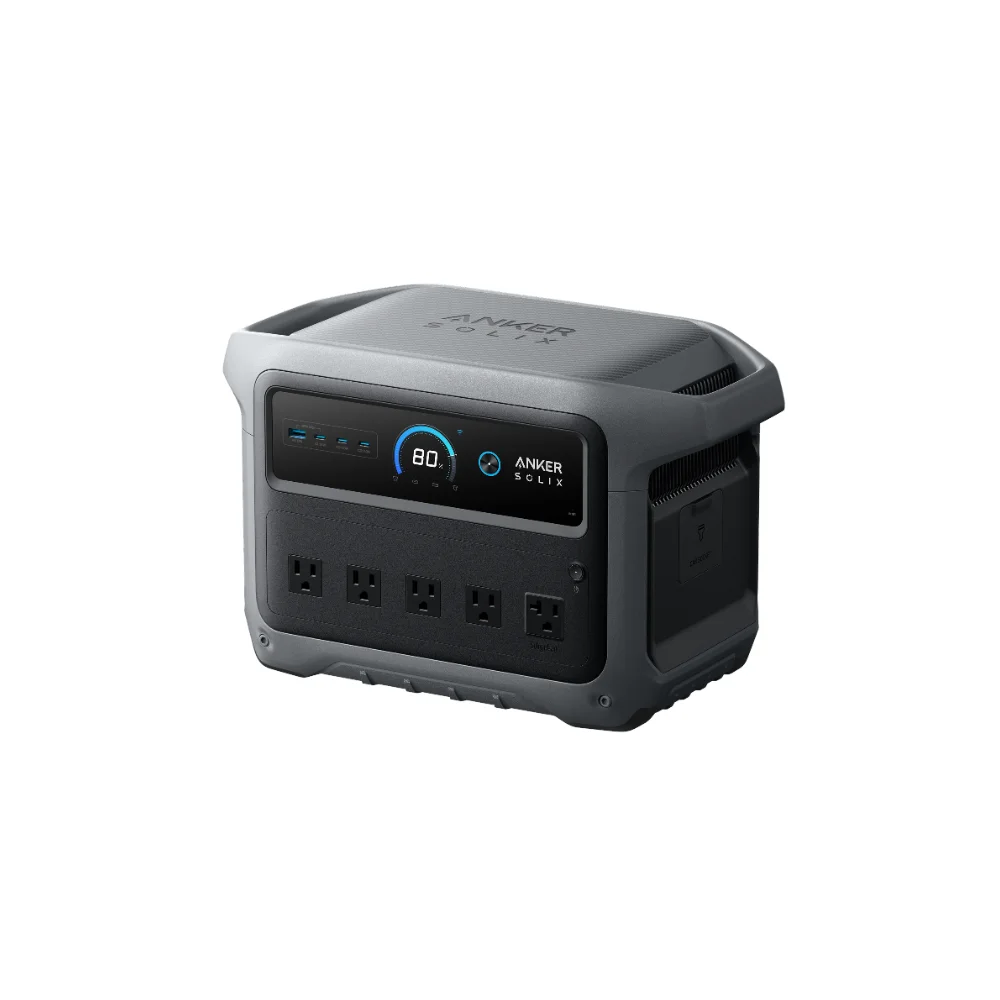
Anker’s InfiniPower™ program is the headline-grabber — some newer SOLIX models carry coverage stretching toward a decade, built around guaranteed capacity retention (commonly cited around 80% after years of cycling) rather than a flat “we’ll replace it if it breaks” promise. That’s a real, verifiable claim on Anker’s own SOLIX warranty policy page — but it does not apply uniformly across every SOLIX product. Older or lower-tier models carry shorter standard terms, so treat “10 years” as a best-case figure tied to specific SKUs, not a blanket brand promise, and confirm it against the exact model page before you buy.
What actually voids a power station warranty
Across every brand, the same handful of things show up as exclusions:
- Third-party solar panels or chargers that aren’t the brand’s own or an explicitly approved accessory
- Physical damage — drops, cracked housings, liquid exposure
- Modifications — opening the case, third-party repairs, firmware tampering
- Commercial or rental use on a warranty written for personal/residential use
- Missing proof of purchase — keep the receipt or order confirmation somewhere you can actually find it
That last one sounds obvious until you’re the person digging through a two-year-old inbox trying to find an order confirmation from a marketplace reseller.
Does buying from a marketplace instead of the brand change anything?
Sometimes, yes. A few brands only apply the “extended” tier of their warranty — the registration bump, the automatic extension — to purchases made through their own site or specifically authorized retailers. Buying the same model through a general marketplace listing can leave you on the shorter base term even though the product itself is identical. If the extra year or two matters to you, it’s worth checking the brand’s own retailer list before you check out, wherever you’re buying from.
How to actually file a warranty claim
Most claims fail for boring reasons, not because the defect wasn’t covered. Before you contact support:
- Find your order confirmation or receipt with the purchase date and exact model/SKU number — not just “Jackery Explorer,” but the full model name as printed on the unit’s label.
- Check the serial number on the bottom or back of the unit against what’s in your account if you registered it.
- Take photos/video of the actual fault before you do anything else — a screen showing an error code, a unit that won’t hold charge, swelling on the casing. Support teams ask for this first, so having it ready cuts a week off the process.
- Go through the brand’s own support portal, not the retailer, unless the retailer explicitly handled your purchase’s warranty registration.
- Note what you were doing when it failed — what you had plugged in, whether it was charging via solar or wall power, ambient temperature. Manufacturers use this to rule out user error.
FAQ
Does a longer warranty always mean a more reliable power station?
Not necessarily — it’s a reflection of how confident the manufacturer is in that specific model’s battery chemistry and how they’ve priced the risk, not an independent reliability score. Pair the warranty length with real owner reviews of that model before deciding.
Do power station warranties cover accessories like solar panels?
Usually not to the same degree as the main unit. Bluetti, for example, caps solar panels and accessories at 12 months even when the power station itself runs much longer — check the accessory-specific terms separately.
What happens if the company that made my power station shuts down?
Warranty claims typically become unenforceable if the manufacturer stops operating, which is one more reason established brands with a multi-year track record carry less risk than newer entrants, even if a newcomer’s spec sheet looks better on paper.
Should I buy an extended warranty from a third party?
It depends on the price relative to the unit’s cost and how the manufacturer’s own coverage already looks. If you’re already getting 5+ years from the brand itself, a paid extension is rarely worth adding.
Bottom line
If warranty length alone is deciding your purchase, Bluetti’s higher-tier models and Anker’s InfiniPower™ SOLIX lineup currently offer the longest terms on paper — but “on paper” is doing a lot of work in that sentence. Confirm the exact figure on the specific model’s own product page, register the unit if the brand asks you to, and keep your proof of purchase somewhere you’ll actually find it in three years.
If you’re weighing a longer-warranty option like the Anker SOLIX line against the rest of the field, our Anker SOLIX C1000 Gen 2 review has the full breakdown of what that model covers in daily use.
This post may include affiliate links — if you buy through them, we may earn a small commission at no extra cost to you. It doesn’t change what we cover or how we rank anything.