
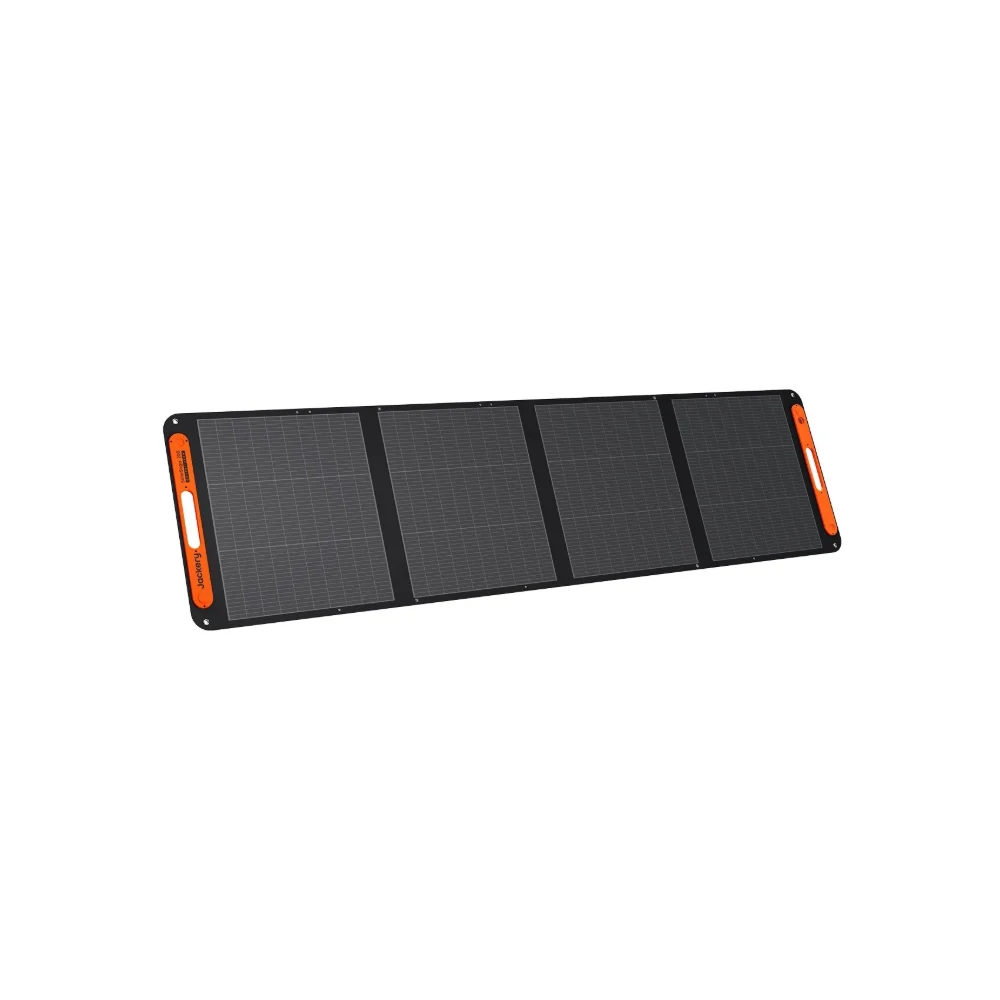

Bifacial solar panels have a genuinely appealing pitch: the same footprint, but extra power captured off the back of the panel from reflected light. Brands like Anker SOLIX and EcoFlow now sell bifacial versions of their portable panels at a real premium over standard monofacial ones, and the marketing numbers — “up to 25% more power” — sound like an easy upgrade. The real-world data tells a more conditional story: the gain is real, but it depends heavily on what’s underneath your panel when you set it up.
Short version: on highly reflective surfaces — snow, sand, white gravel, light concrete — bifacial panels can genuinely add 15-25% more output, and industry-wide data puts typical gains in an 8-12% range once you average across real conditions. On grass or dark soil, the gain drops to roughly 5-10%, and in some setups closer to single digits. The panels also cost more and weigh more, so whether that tradeoff is worth it depends entirely on where and how you actually camp or set up your panel.
Quick comparison
| Surface underneath the panel | Reported bifacial gain | Worth the premium? |
|---|---|---|
| Snow, white sand, light concrete | 15-25% | Yes — the gain alone can justify the extra cost |
| White gravel | 18-25% | Yes, in ground-mount setups |
| Grass or dark soil | 5-10% | Marginal — modest but real benefit |
| Dark tarp, asphalt, shaded ground | 2-5% | Probably not worth the premium |
Where the numbers actually come from
BackupPowerHub’s testing of the EcoFlow 220W bifacial panel found rear-panel output rated at “up to 155W” under ambient light, with the brand’s own “up to 25% additional energy” claim holding up specifically on highly reflective surfaces — their real-world breakdown showed 15-25% gains on snow, sand, or white concrete, dropping to just 5-10% on grass or dark soil. That’s the key nuance most marketing pages leave out: the same panel can be a strong upgrade or barely noticeable depending entirely on what you set it on.
Broader solar industry data (typically measured on ground-mounted residential and utility systems rather than portable panels, but reflecting the same underlying physics) puts bifacial gains at a wide 5-30% range, stabilizing around 8-12% in most real conditions — and identifies albedo, or surface reflectivity, as the single biggest factor. White gravel surfaces with 60-80% reflectivity showed 18-25% yield gains in that data, while dark soil at 5-10% reflectivity produced only 2-5% gains. The physics is the same whether the panel is bolted to a rack or leaned against your camper: no reflective surface underneath, no meaningful bonus from the back side.
The price and weight tradeoff
Bifacial panels aren’t free upgrades. In BackupPowerHub’s direct comparison, EcoFlow’s 220W bifacial panel ran $279 ($1.27/watt) versus $209 for a 160W standard panel ($1.31/watt) — so per-watt pricing is actually comparable once you account for the bigger panel, but the up-front cost is $70 higher. Broader industry pricing data puts the bifacial premium at roughly 3-8% higher on the module itself, or 10-15% higher once you factor in the dual-glass construction. That glass is also the source of the other tradeoff: bifacial panels are meaningfully heavier than flexible or ETFE-only alternatives, which owner feedback flags as a real downside for backpacking, though less of an issue for car camping or a fixed home-backup setup where the panel doesn’t need to be carried far.
Does mounting height or angle matter?
For ground-mounted systems, industry data identifies panel height above the ground as one of the biggest factors in bifacial performance — an optimal range of roughly 0.8 to 1.1 meters lets enough reflected light reach the rear cells without losing too much direct-sun angle. That’s a genuinely useful data point if you’re setting up a bifacial panel on a stand rather than laying it flat: propping it up off the ground, angled toward the sun with open space underneath, does more for the rear-side gain than laying it directly on the surface.
Who should actually buy bifacial
If you regularly set up in snow (ice fishing, winter camping), on sand (beach, desert overlanding), or on a light-colored surface like a driveway or white gravel pad for home backup charging, the 15-25% real-world gain range makes the premium a reasonable bet — especially since per-watt pricing isn’t actually worse once you’re comparing similarly sized panels. If your typical setup is grass, dirt, or a shaded campsite, you’re more likely in the 5-10% range or lower, where the extra cost and weight are harder to justify over just buying a larger standard panel for the same money.
FAQ
Do bifacial panels work at all without a reflective surface?
Yes — they still function as a normal front-facing panel and won’t underperform a monofacial panel of the same front-side spec. You just won’t see much of a rear-side bonus without something reflective underneath.
Can I put something reflective under a monofacial panel to fake the bifacial effect?
Not really — a monofacial panel has no rear-side cells to capture that reflected light in the first place. A white tarp under a standard panel won’t add meaningful output; the bifacial gain specifically requires rear-side photovoltaic cells.
Are bifacial panels more fragile because of the extra glass?
Generally more durable, if anything — the one-piece tempered glass construction that adds weight also adds resistance to scratches and impacts compared to flexible or ETFE-only panels, according to owner feedback on the EcoFlow bifacial panel.
Is the 25% gain figure brands advertise realistic?
It’s realistic as a best case, not a typical case. Treat “up to 25%” the way you’d treat any “up to” spec — achievable under ideal reflective conditions, with 8-12% being a more realistic average across mixed real-world use.
Bottom line
Bifacial solar panels aren’t a marketing gimmick — the physics behind rear-side light capture is real and well documented — but the gain is conditional on surface reflectivity in a way most product pages don’t emphasize. Snow, sand, and light-colored ground can genuinely deliver the advertised 15-25% bump; grass and dark soil will get you closer to 5-10%. Match the panel to where you actually set it up, not to the headline number on the box.
This post may include affiliate links — if you buy through them, we may earn a small commission at no extra cost to you. It doesn’t change what we cover or how we rank anything.
Sources externes citées
- BackupPowerHub — EcoFlow 220W Bifacial Solar Panel Review
- Sungoldsolar — Bifacial Solar Panel ROI Comparison: Is the Gain Worth the Cost?