
Rigid vs. Foldable Solar Panels for RV Roofs: Which Actually Makes Sense
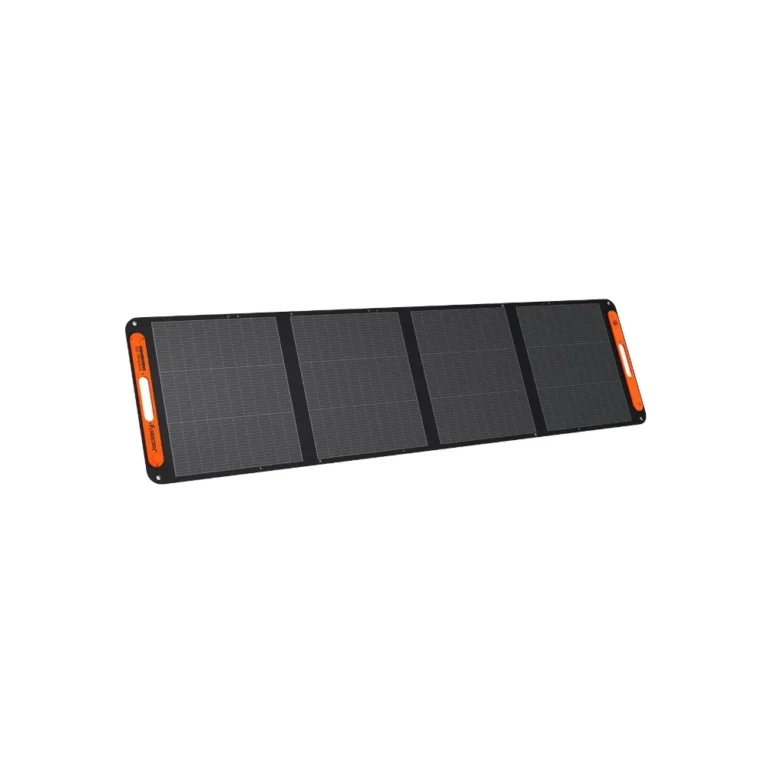
Roof-mounted rigid panels and portable foldable panels solve different problems for RV owners. Here's how to decide which setup — or combination — fits your travel style.
Reviews and guides on portable and foldable solar panels compatible with power stations.
Roof-mounted rigid panels and portable foldable panels solve different problems for RV owners. Here's how to decide which setup — or combination — fits your travel style.
A single shaded cell can drag down an entire solar panel's output far more than you'd expect. Here's what bypass diodes do about it, and their real limits.
The difference between a panel laid flat and one properly angled toward the sun can mean hours of extra charging time. Here's the physics and the practical fixes.
Bifacial panels capture light on both sides, but the real-world gain depends heavily on your setup. Here's when the extra cost pays off and when it doesn't.
A step-by-step method for calculating exactly how much solar wattage your power station setup needs, based on real daily energy use rather than guesswork.
A practical breakdown of the foldable solar panels worth buying in 2026, matched to real use cases from ultralight backpacking to full off-grid charging.
Dust and grime can cut solar panel output by 5-10%. Here's how often to clean a portable panel, the safe method, and what to avoid.
MC4, XT60, XT90, Anderson — every brand uses a different power station connector. Here's the brand-by-brand mapping, plus why matching voltage matters more than matching plugs.
Series wiring adds voltage; parallel wiring adds current. Here's how each affects your power station's charging speed, shading tolerance, and input limits.
Bifacial solar panels promise up to 25% more power from reflected light. Real-world data shows the gain ranges from 5% to 25% depending entirely on the surface underneath — here's when the premium is worth it.