

If you live anywhere near California’s wildland-urban interface, you already know the drill. The wind picks up, the humidity drops, and a text lands on your phone warning that your power might go out — not because anything broke, but because a utility decided it was safer to shut the grid off before something did. That’s a Public Safety Power Shutoff, or PSPS, and it’s become a fact of life for millions of homeowners from San Diego to Shasta County.
The frustrating part isn’t just losing power. It’s losing it with almost no warning, sometimes for days, during exactly the kind of hot, dry, smoky stretch when you most want your fridge, fans, and phone chargers working. A portable power station won’t stop a PSPS from happening, but it can turn a stressful 36-hour blackout into a minor inconvenience — if you size it correctly and have it charged before the wind ever starts blowing.
What a PSPS actually is (and why it’s different from a normal outage)
A PSPS is a proactive outage. Utilities like PG&E, Southern California Edison, and San Diego Gas & Electric cut power on purpose when weather conditions raise the risk that their own lines could spark a fire — think low humidity, forecasted high winds, dry vegetation, and a National Weather Service Red Flag Warning all lining up at once. Crews also do field checks, because a red flag on paper doesn’t always match what’s happening on the ground.
The California Public Utilities Commission ranks fire-threat areas by tier, and if your home sits in a Tier 2 (elevated risk) or Tier 3 (extreme risk) zone, you’re the customer base these shutoffs are built around. That’s most of the foothill and mountain communities ringing the Central Valley, large stretches of the North Bay and Sierra Nevada, and swaths of inland San Diego County.
Here’s the part that catches people off guard: notice can be short. Utilities try to warn customers as early as possible, but a fast-moving weather system can mean the first alert arrives the same day the lines go dark. You don’t always get 48 hours to prep a plan — sometimes you get a few hours, and sometimes the power’s already off by the time you check your phone.
How long does a PSPS actually last?
There’s no fixed number, but the pattern utilities describe — and that most affected households experience — is somewhere in the 24-to-48-hour range for a typical event. Utilities also have to physically inspect every mile of de-energized line before they restore power, which is why a shutoff can drag on well after the wind dies down. In a bad fire season with back-to-back weather events, some neighborhoods have been cut off for the better part of a week.
That 24-to-48-hour window is the number to plan around. It’s long enough that a couple of flashlights and a phone power bank won’t cut it, but short enough that you don’t necessarily need a whole-home battery wall to get through it comfortably.
Sizing a power station for a PSPS outage
The appliances that actually matter during a PSPS are predictable: your refrigerator, some lighting, phone and laptop charging, a fan or two if it’s hot, and maybe a small TV or Wi-Fi router so you’re not flying blind on evacuation updates. Air conditioning and electric ranges are the outliers — they draw enough continuous wattage that running them on battery alone gets expensive and heavy fast, so most people plan around everything except full-house climate control.
For that priority-circuit list, a power station in the 1,000–2,000Wh range with at least 1,500–2,000W of continuous output covers a 24-to-48-hour outage with room to spare, especially if you’re rationing fridge run-time by keeping the door closed and cycling it on and off rather than running it continuously. If you’ve got solar panels to pair with it, that same unit can stretch indefinitely, which matters when a PSPS drags past the two-day mark.
A few sizing notes that trip people up:
- Fridges cycle, they don’t run constantly. A standard fridge might only draw power 30–40% of the time it’s plugged in, so real-world consumption is a lot lower than the compressor’s peak wattage suggests.
- Continuous watts, not just capacity (Wh), determines what you can run at once. A big battery with a small inverter still can’t start a fridge compressor if the surge watts spike past its output.
- Solar input speed matters more than people expect. A power station that accepts 400–600W of solar can go from empty to mostly full in a single sunny wildfire-season afternoon — which, unfortunately, is exactly the kind of weather a PSPS shows up in.
A power station that fits this job
For most single-family homes riding out a PSPS, the Anker SOLIX C1000 Gen 2 lands in a sensible spot: 1,024Wh of capacity, a 2,000W continuous output that handles a fridge plus lighting and electronics without flinching, and 600W of solar input if you want to keep it topped off through a multi-day event. It’s also compact enough to live in a closet fully charged, waiting, instead of taking up garage space you don’t have. We’ve put it through a full review if you want the deeper dive on runtime testing and port layout — see our Anker SOLIX C1000 Gen 2 review for the details.
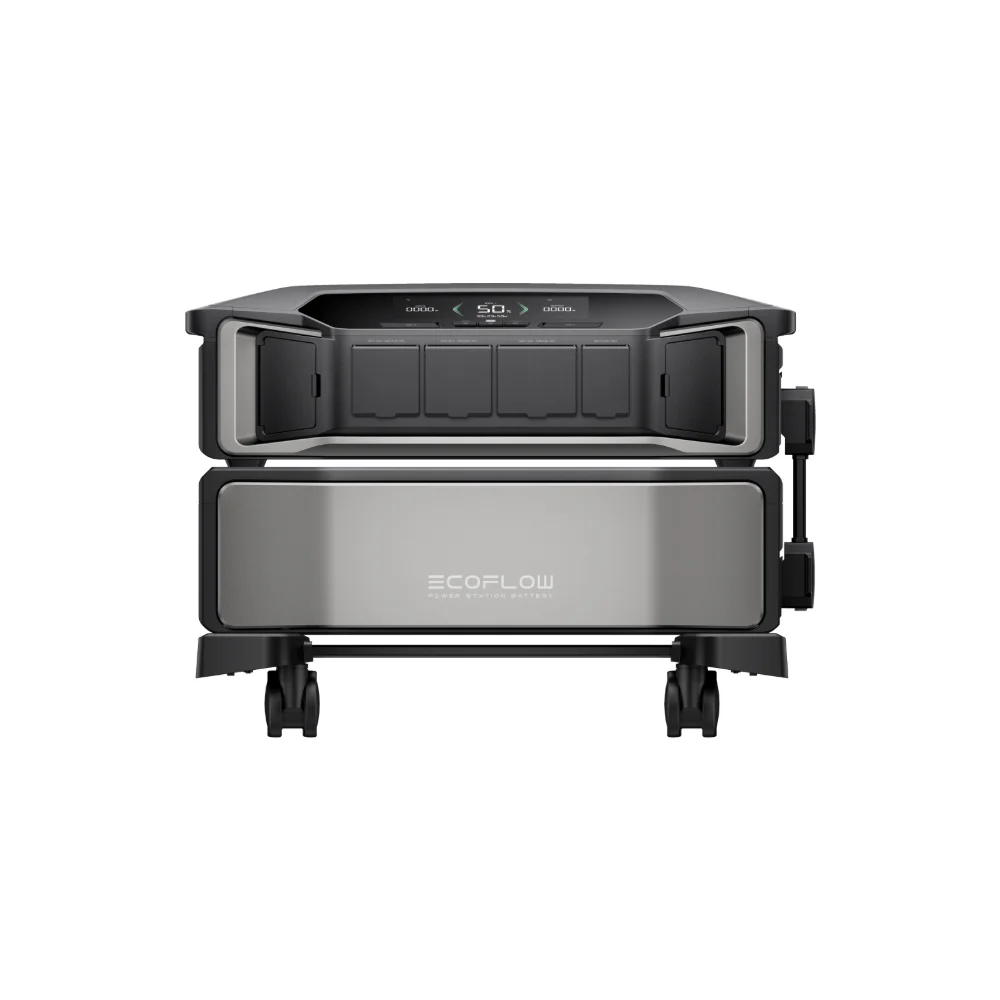
If your household leans on more medical equipment, a second fridge or freezer, or you just want a wider safety margin, stepping up to something in the 2,000–3,000Wh class or adding an expansion battery is worth the extra cost. If you’re working with a tighter budget and can live with a shorter runtime, a smaller unit like the Jackery Explorer 1000 v2 still covers the essentials for a single night.
Getting ready before the wind picks up
A power station only helps if it’s charged and accessible when the alert comes in, and PSPS notices don’t always give you time to shop, charge, and figure out cables from scratch. A few habits make the difference:
- Keep it charged through the whole fire season, not just when a Red Flag Warning is posted. Most lithium units hold a charge for months, so top it off in early summer and do a quick check monthly.
- Sign up for your utility’s PSPS alerts directly — PG&E, SCE, and SDG&E all offer text and email notifications tied to your address, and they’re faster than hearing it from a neighbor.
- Pre-wire your priorities. Know exactly which cord goes to the fridge and which powers your router before the lights go out, not while you’re digging through a junk drawer by flashlight.
- Test it once a season. Run your fridge off it for an evening so you know your real runtime instead of trusting the spec sheet alone.
FAQ
Does a portable power station qualify me for any PSPS-related utility credit?
Some utilities offer bill credits or reimbursement programs tied to PSPS events, particularly for customers with documented medical needs, but a power station purchase itself typically isn’t reimbursed. Check your utility’s PSPS resiliency or medical baseline programs directly, since rules vary by provider.
Can I run my whole house on a 1,000–2,000Wh power station?
Not for climate control or electric cooking, no. That size range is built for the priority-circuit approach — fridge, lighting, electronics, and fans — not a full home load. For whole-home coverage during multi-day shutoffs, you’re looking at a hardwired battery system in the 5,000Wh-plus class instead.
Is a PSPS covered by homeowners insurance the way a wildfire itself might be?
Generally no — a PSPS is a planned outage, not property damage, so standard homeowners insurance doesn’t apply the same way it would to fire damage. Food spoilage riders exist on some policies, so it’s worth checking your specific coverage if you’re relying on refrigeration during outages.
How do I know if I’m in a high-risk PSPS zone?
Your utility’s website lets you check your address against the CPUC’s fire-threat tier maps — PG&E, SCE, and SDG&E each have a lookup tool. If you’re in Tier 2 or Tier 3, plan for shutoffs as a recurring seasonal event rather than a rare exception.