
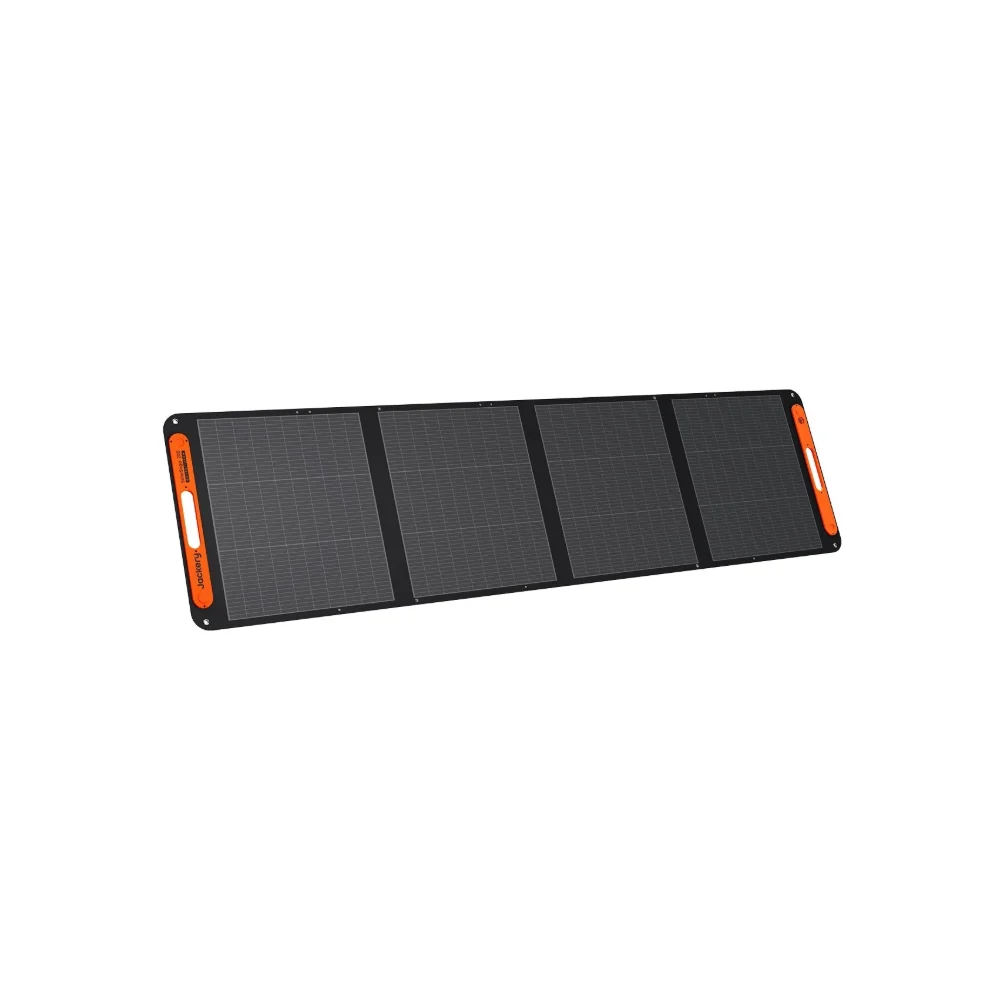

Two identical solar panels, same sun, same day — one propped at the right angle, one laid flat on the ground. By mid-morning, the angled one can be putting out noticeably more power than the flat one, and the gap only grows the further the sun is from directly overhead. This isn’t a marginal effect you can ignore. It comes straight from basic geometry: a solar cell produces maximum current when sunlight hits it perpendicular to its surface, and output falls off as the angle between the light and the panel increases. You don’t need a tracking mount or an engineering degree to capture most of this benefit — just an understanding of what’s actually happening and a few minutes of adjustment through the day.
The physics in plain terms
Sunlight hitting a surface at an angle spreads its energy over a larger area than light hitting it head-on — the same amount of light, diluted across more panel area, means less power per cell. This is often described through Lambert’s cosine law: as the angle between the sun and the panel’s face increases, output drops roughly in proportion to the cosine of that angle. At a 30-degree mismatch, you’re still capturing most of the available light. At 60 degrees or more, you’re losing roughly half or more of what a perpendicular panel would capture. This is why a flat panel performs fine near solar noon, when the sun is close to overhead, but badly in the morning and evening when the sun sits low on the horizon.
Practical angle rules that actually work in the field
- Tilt roughly toward your latitude for a fixed, all-day setup. If you’re setting a panel once and leaving it for the day, angling it at roughly your latitude from horizontal (steeper in winter, flatter in summer) gets you close to the average best angle across the whole day, without needing to babysit it.
- Re-aim every couple of hours if you’re actively managing it. The sun moves roughly 15 degrees across the sky per hour. Nudging a panel’s angle every 2-3 hours captures most of the benefit of a full tracking system without needing one.
- Face it south in the northern hemisphere (north in the southern hemisphere). This maximizes the hours the panel spends close to perpendicular to the sun’s daily arc.
- Prioritize the angle during peak hours over the edges of the day. The sun delivers most of its usable energy in the hours around midday even though total daylight extends well beyond that window, so getting the angle right for late morning through mid-afternoon matters more than optimizing for early morning or late evening light.
Why your kickstand matters more than you’d think
A weak or poorly designed kickstand is one of the most overlooked charging bottlenecks in a portable solar setup. If the kickstand only offers one or two fixed angles, or can’t hold position in a light breeze, you end up defaulting to laying the panel flat just to avoid it tipping over — which forfeits exactly the gain angling was supposed to provide. When shopping, an adjustable, multi-position kickstand is worth prioritizing over a few extra watts of rated capacity, since a well-angled 200W panel can outperform a poorly-angled 300W one for real hours of the day.
Positioning beyond just angle
- Clear the shadow line before you set up. Trees, vehicles, and even your own tent can cast moving shadows across a panel as the sun travels — check where shade will fall two or three hours later, not just where it is when you set up.
- Keep the panel elevated off hot ground. Cell output drops as temperature rises above the 25°C test standard, so a panel baking directly on hot asphalt or dark rock underperforms one with airflow underneath it, independent of angle.
- Recheck position after wind or movement. A gust that shifts a kickstand’s angle by 20 degrees can meaningfully cut output without being obvious at a glance — a quick visual check against the sun’s position is worth the ten seconds.
If you’re regularly chasing angle through the day, a panel with a sturdy, wide-range kickstand — like the EcoFlow 400W portable panel or the BLUETTI PV350 — makes the adjustment habit far less annoying than a panel with a single flimsy prop leg.
Frequently asked questions
Is it worth buying a solar tracking mount for a portable panel?
For most portable setups, no — the mechanical complexity and cost aren’t justified when manually re-angling a panel every couple of hours captures most of the same benefit. Tracking mounts make more sense for fixed, semi-permanent installations than for gear you’re packing up daily.
How much charging time can bad angling actually cost me?
It varies with season and latitude, but a panel left flat instead of properly angled can easily lose the equivalent of an hour or more of effective charging time across a full day, concentrated in the morning and evening hours when the sun sits lowest.
Does cloud cover make angle irrelevant?
Angle matters less under heavy overcast, since diffuse light arrives from the whole sky rather than a single direction. It still matters some — a panel isn’t equally exposed to diffuse light from every angle — but the payoff from careful positioning shrinks considerably compared to a clear day.
Should I angle toward true south or magnetic south?
True south (or true north in the southern hemisphere) is technically more accurate, but the difference from magnetic south is small enough in most locations that it won’t meaningfully change your output. Get roughly in the right direction and focus your effort on adjusting the tilt angle through the day instead.