
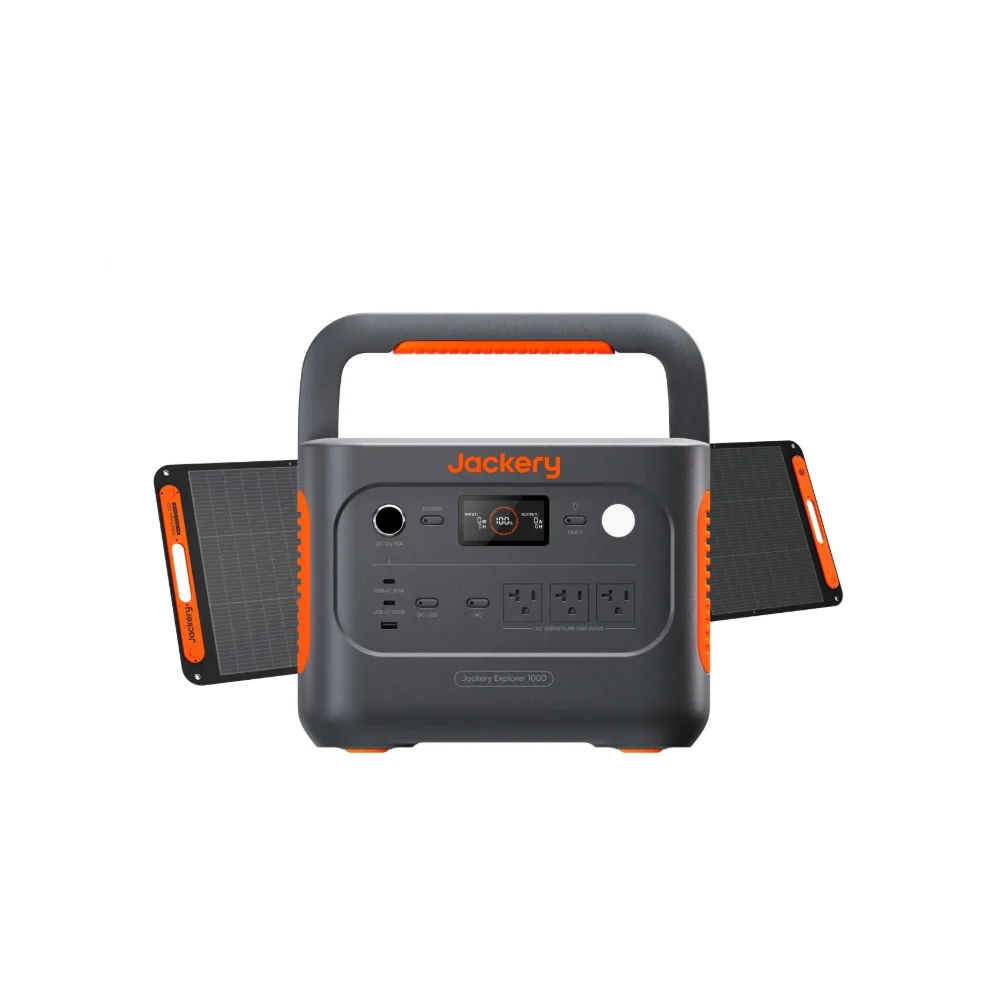

Looking for the best solar generators for home backup? A grid outage is an inconvenience for a few hours and a real problem once it stretches past a day, especially somewhere without a wood stove or generator already sitting in the garage. A solar generator sitting charged in a closet is a different kind of preparedness — quiet, no fumes, and it just works when you flip it on. Here’s what’s worth putting in a house for backup power in 2026, based on what’s shipping right now and what I’ve read from people who’ve run these units through real outages. Pricing and specs below shift often, so treat the numbers here as a general guide and check each manufacturer’s page before buying.
This article may include affiliate links — if you buy through them we may earn a small commission at no extra cost to you, but our recommendations are based on our own independent research.
Choosing the Best Solar Generators for Home Backup: Watt-Hours Explained
Before you look at a single product, figure out what you’re trying to keep alive. A fridge, a router, some lights, and a phone charger or two is a modest load — maybe a few hundred watt-hours a day. That’s a small unit. Add a CPAP machine, a chest freezer, or you want two days of coverage without any sun, and you’re solidly in the multi-kWh range. Want to ride out a week-long outage for a good chunk of the house, including recharging from the sun each afternoon? Now you’re talking a large battery bank paired with a serious solar array just to keep pace.
Most homeowners overestimate how much continuous wattage they need and underestimate how long they’ll actually run things, in my experience. Add up your real loads — a fridge, a router, a handful of LED lamps, maybe a CPAP — multiply by hours per day, and that’s your actual daily budget. It’s almost always smaller than people assume, until the freezer kicks on.
Best Overall: Bluetti Elite 200 V2
Reviewers across several outlets are pointing to the Bluetti Elite 200 V2 as the strongest all-rounder for 2026, and from what I’ve read about its balance of capacity, recharge speed, and app control, I’d agree it’s the safest first pick if you only want to buy one unit and not think about it again. It sits in the sweet spot for whole-evening backup without the price tag of the true whole-home systems — check Bluetti’s site for current pricing, since it moves around with sales.
Best for Serious Backup: Anker SOLIX F3800
If you want to run more than a fridge and lights — think a well pump, part of your HVAC, or several rooms — the Anker SOLIX F3800 is built for it. It’s rated for high continuous output with 120V/240V split-phase support, which is the detail that actually matters: split-phase means it can power your existing breaker panel setup, not just a handful of extension cords. It sits at the top of Anker’s lineup price-wise (check their site for the current figure), but it’s genuinely a generator replacement, not a big power bank.
The Anker SOLIX F3800 is available through Outbound Power. Check current price on Outbound Power →
Best Value: Jackery Solar Generator 2000 Plus
The Jackery Solar Generator 2000 Plus gives you roughly 2,000Wh out of the box with a 3,000W-class inverter, and — this is the part I like — it’s modular. You can expand it well into five figures of watt-hours by adding battery packs as your budget allows, instead of buying your ceiling on day one. If you’re not sure how much backup you’ll eventually want, starting here and growing into it is a smarter way to spend than guessing big up front. (Check Jackery’s page for current pricing and exact capacity figures.)
Best Budget Entry: Bluetti AC180P
Not everyone needs whole-home coverage. If you mainly want to keep phones charged, the router alive, and a couple of lamps running through a short outage, the Bluetti AC180P covers that job at the lower end of this lineup’s pricing, without overspending on capacity you won’t use. Confirm the current price on Bluetti’s site, since entry-level units like this one see frequent sales.
The BLUETTI AC180P is available through Outbound Power. Check current price on Outbound Power →
Battery Chemistry: Why It Actually Matters
Most current EcoFlow and Anker SOLIX units use LiFePO4 (LFP) chemistry, rated for a few thousand charge cycles and relatively fast AC recharging — that’s the chemistry you want for something sitting in a closet for years, occasionally getting cycled. Jackery’s Explorer 3000 Pro still uses NMC lithium in some models, rated for meaningfully fewer cycles. For a unit you might use a handful of times a year, that difference won’t matter much over a decade. For one you cycle often, LFP will outlast it by years. Check the spec sheet, not just the marketing copy — chemistry is usually buried a few lines down, and exact cycle ratings are worth confirming directly with the manufacturer rather than trusting a rounded number you read somewhere else, including this article.
Side-by-Side: How These Four Actually Compare
Specs on a page never tell the full story, but they’re a starting point. Here’s how the four units above stack up on the factors that actually change your day-to-day experience with them. Treat every figure below as approximate — capacity, output, and especially price change often, so confirm current numbers directly on each manufacturer’s product page before buying.
| Model | Capacity (approx.) | Output (approx.) | Battery Type | Relative Price Tier |
|---|---|---|---|---|
| Bluetti Elite 200 V2 | ~2kWh class | ~2,600W | LiFePO4 | Mid |
| Anker SOLIX F3800 | ~3.8kWh, expandable | ~6,000W | LiFePO4 | Highest |
| Jackery 2000 Plus | ~2kWh, expandable to five figures | ~3,000W | LiFePO4 | High |
| Bluetti AC180P | ~1.44kWh class | ~1,800W | LiFePO4 | Lowest |
Notice that every unit here has moved to LiFePO4 — that’s genuinely a 2026 shift. A couple of years ago you’d still see NMC lithium in this price bracket, and the cycle-life gap between the two chemistries is wide enough that it changes the ten-year cost math in LFP’s favor almost every time.
A Real Runtime Example, Not Just a Wh Number
Watt-hours on a spec sheet don’t mean much until you translate them into “how long until the lights go out again.” Take a roughly 2,000Wh unit like the Jackery 2000 Plus as an example. A fridge cycling on and off draws meaningfully less than its nameplate wattage on average, since it isn’t running constantly — call it a few hundred watt-hours a day rather than the full 24-hour draw. Add a router, a handful of LED bulbs, and phone charging, and you’re looking at somewhere in the neighborhood of 1,300-1,400Wh for a full day of the essentials. That means a 2,000Wh-class unit gets you a solid day or more before you’re empty — and even a modest solar panel catching a few hours of daylight claws back a meaningful chunk of that each afternoon, which can make the difference between “we’re fine” and “we need a plan for tomorrow.” Your own numbers will differ based on your specific appliances — check the nameplate wattage on your fridge and router rather than assuming mine match yours.
This is the calculation I’d actually do before buying, rather than picking a number that sounds big. Most people either wildly overbuy, paying for capacity they’ll use twice a decade, or underbuy and get caught out on day two of a multi-day outage.
Frequently Asked Questions
Can I run a solar generator indoors?
Yes — unlike a gas generator, these units produce no exhaust, so they’re safe to run inside the house. That’s actually one of the biggest practical advantages over a traditional generator, especially in bad weather when you don’t want to be running an extension cord through a cracked window.
Do I need solar panels, or can I just charge from the wall?
You don’t need panels at all if you’re just charging the unit before a forecast storm — a wall outlet works fine and is usually faster. Panels matter most when the outage runs longer than your battery, since that’s your only way to top back up once the grid is down.
Can I use one of these with my home’s existing wiring?
Only if it supports split-phase output and you’ve had a transfer switch installed by an electrician — that’s the Anker SOLIX F3800 in this lineup. The other units are meant to power devices directly through their own outlets, not backfeed your breaker panel.
How long will the battery actually last before it needs replacing?
For the LiFePO4 units above, you’re generally looking at many years of realistic home-backup use, since most households only cycle these a handful of times a year rather than daily. Check each manufacturer’s specific cycle-life rating if you want an exact number to plan around.
My Recommendation
For most households, I’d point you at the Bluetti Elite 200 V2 or the Jackery 2000 Plus — both land in a capacity range that covers a real outage without asking you to take out a loan. If you’ve got higher-draw appliances you can’t live without, like a sump pump or part of your HVAC, skip straight to the Anker SOLIX F3800 and don’t try to undersize it; running a unit at its limit for hours at a time is how batteries age fast. And if your budget is tight and your needs are simple, the AC180P will do the job without complaint.
Whatever you land on, buy before the outage, not during it — availability and pricing both tend to get worse the week a storm is forecast.
Related Reading
- Solar Generator Kits Explained: What’s Included vs What to Add
- Jackery vs EcoFlow vs Anker SOLIX: 2026 Solar Generator Comparison