
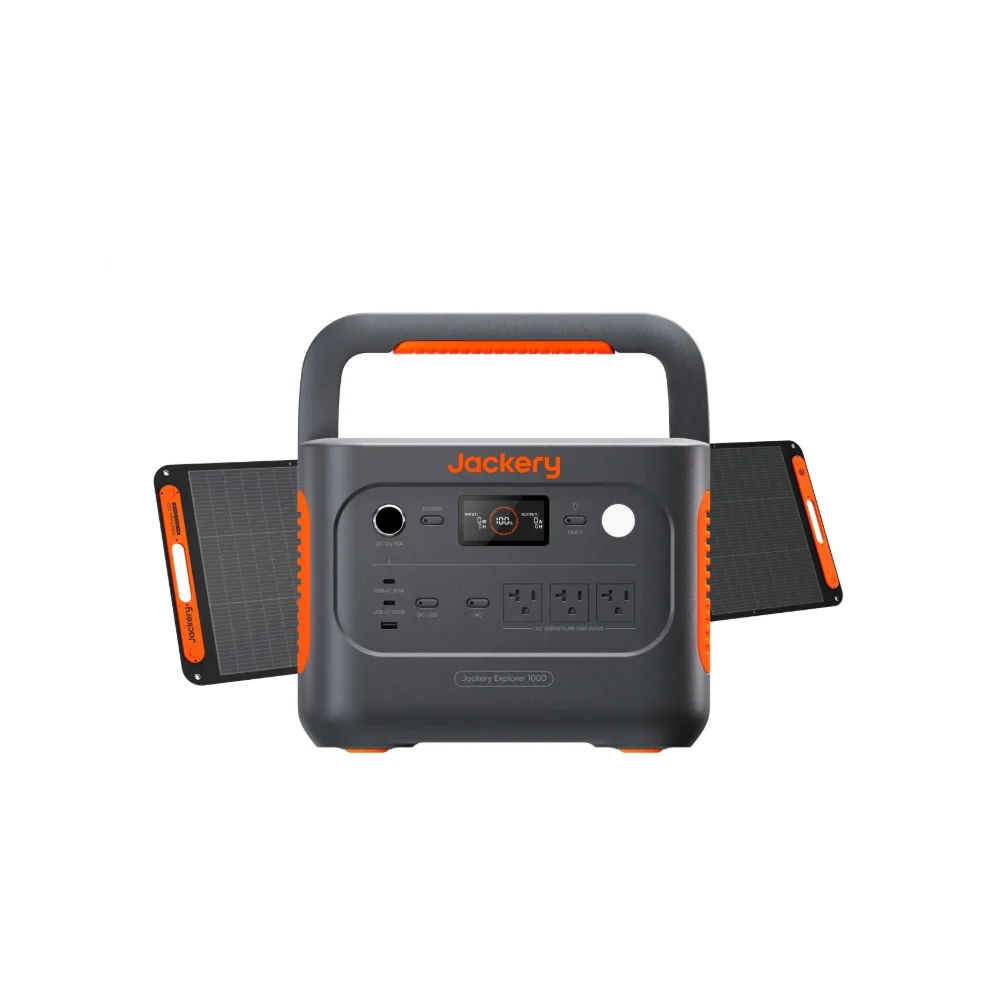
“Are solar generators worth it?” gets answered with vague enthusiasm on most sites I’ve read while researching this — lots of “absolutely, here’s why” without anyone actually running the numbers. So let’s run the numbers. The real question isn’t whether solar generators are worth it in the abstract, it’s whether they’re worth it for how YOU actually plan to use one.
This article may include affiliate links — if you buy through them we may earn a small commission at no extra cost to you, but our recommendations are based on our own independent research.
A note on the numbers below: prices for power stations, generators, and solar panels shift constantly and vary by retailer and sale timing. Treat every dollar figure in this article as an illustrative example for working through the cost-per-cycle math, not a live price — check current listings before you buy.
The Cost-Per-Cycle Math
Here’s the calculation almost nobody does: take the unit price, divide it by the realistic number of full charge cycles you’ll get before capacity noticeably degrades, and that’s your true cost per use. As an example: a current-generation LiFePO4 power station rated for 3,000-5,000 cycles to 80% capacity, priced somewhere in the $800-1,200 ballpark at today’s typical pricing, works out to roughly $0.16-$0.40 per cycle over its realistic lifespan — plug in the actual price you’re looking at and the same formula holds. Compare that to a similarly priced older lithium-ion unit rated for 500-1,000 cycles, and the cost-per-cycle is 3-6x higher even though the sticker price looked the same.
My take: this is the number that actually matters, and it’s almost never the number brands lead with. Sticker price comparisons are misleading in this category specifically because cycle life varies so much between battery chemistries.
Where Solar Generators Actually Pay for Themselves
If you’re regularly displacing gas generator fuel, campground hookup fees, or you live somewhere with frequent outages that would otherwise mean spoiled food and a hotel stay — those are real, recurring costs a solar generator offsets. Full-time RVers and van-lifers can realistically offset several hundred dollars a year in hookup and fuel costs, which I mentioned in a related piece on van life setups. For occasional weekend camping, the math looks different — you’re paying more for convenience and quiet operation than for hard dollar savings.
Where They’re Genuinely Not Worth It
If you camp twice a year and just want to charge a phone, a basic power bank in the low hundreds of dollars does that job for a fraction of the cost. I don’t think everyone needs a 1,500Wh LiFePO4 system, and I’d rather tell you that upfront than upsell you into more capacity than your actual usage justifies. What surprised me putting this together is how often “bigger is safer” thinking leads people to overspend on capacity they’ll use maybe a few weekends a year.
Factoring In Resale and Longevity
A LiFePO4 unit that still holds 80% of its original capacity after a decade of weekly use retains real resale value in a way a degraded lithium-ion unit from three years ago simply doesn’t. This is a soft factor that doesn’t show up in a simple cost-per-cycle formula, but it’s worth weighing if you tend to upgrade gear every few years rather than run it into the ground.
Our Recommendation
Do the cost-per-cycle math before you buy, not just the sticker price comparison. If you’ll genuinely use it often — camping regularly, living in a van, or living somewhere with frequent outages — a LiFePO4 solar generator is worth it and pays for itself faster than the upfront price suggests. If your use case is occasional and light, save your money and buy smaller, or skip it entirely for a basic power bank.
How This Compares to Just Running a Gas Generator
A small gas generator costs less upfront — typically a few hundred dollars — but fuel adds up fast if you actually use it regularly — figure roughly a gallon every few hours under moderate load, plus oil changes and the kind of maintenance that gets skipped until something won’t start. Over a few years of regular weekend use, fuel and upkeep alone can rival what you’d have spent on a solar generator outright, and that’s before counting the noise, the exhaust fumes that rule out indoor or enclosed use, and the fact that gas can go stale in storage if you’re not using the generator often.
My take: the solar generator wins decisively on quiet operation and zero ongoing fuel cost, which matters most if you camp somewhere with generator noise restrictions or simply don’t want to smell like gasoline every trip. The gas generator still wins on raw continuous wattage per dollar for genuinely heavy, sustained loads — running power tools on a job site all day, for instance — where a battery-based system would need an expensive, large-capacity unit to compete.
FAQ
Do solar generators really pay for themselves?
For frequent users offsetting fuel or hookup costs, often yes within 2-3 years. For occasional use, the payoff is more about convenience than dollars saved.
Is LiFePO4 always worth the extra upfront cost?
For anything you’ll cycle regularly over several years, yes — the cost-per-cycle math consistently favors LiFePO4 over older lithium-ion chemistry.
Three Real Buyer Scenarios, Priced Out
| Buyer Type | Usage | Recommended Spend | Payoff Timeline |
|---|---|---|---|
| Occasional camper (2-4 trips/year) | Light — phone, lantern, maybe a fan | $150-300 basic power bank | Convenience only, no real “payoff” |
| Regular camper (monthly+) | Fridge, lighting, device charging | $700-1,200 LiFePO4 station + panel | 2-4 years vs. repeated fuel/ice costs |
| Full-time van/RV or frequent outages | Fridge, HVAC, daily heavy use | $2,000-4,000 expandable LiFePO4 system | Often under 2 years vs. hookup/fuel costs |
Spend ranges above are illustrative, not live prices — actual costs shift by brand, sale timing, and region, so check current listings before budgeting against these numbers.
The middle category is where I see the most people second-guess themselves, and honestly it’s the hardest one to give a universal answer for. If you camp once a month, you’re using the unit maybe 12-15 times a year. Say that station runs you somewhere around $900 — comfortably outlasting 3,000 cycles means you’re nowhere near testing its lifespan limits — you’re really paying for convenience, quiet operation, and not smelling like gasoline, not for squeezing out every cycle of value. That’s a completely legitimate reason to buy one. Just be honest with yourself that it’s a comfort purchase in that middle tier, not a strict financial no-brainer the way it is for full-time use.
The Hidden Costs Nobody Mentions
The unit price isn’t the whole story. Budget for a replacement or backup solar panel eventually — panels take physical abuse (drops, scratches, occasional hail) that batteries sealed inside a case don’t. Also factor in that fast AC charging repeatedly, rather than slower solar charging, can add modest extra wear over years of heavy use, though this is a minor factor compared to raw cycle count. And if you’re buying an expandable system, price out what a second battery module actually costs before you buy the base unit — some brands price expansion batteries surprisingly close to a full standalone unit, which changes the “just add capacity later” math people assume going in.
What I’d Tell a Friend Asking Me This Directly
If a friend asked me this over coffee, I’d ask them one question back: how many nights a year will this thing actually get used? Under 10 nights, buy small or skip it. Between 10 and 30, a mid-size LiFePO4 unit is a reasonable comfort purchase that’ll last you a decade. Over 30 nights a year, or if you’re offsetting real recurring costs like campground fees or generator fuel, it’s not really a debate anymore — the math clearly favors buying, and buying LiFePO4 specifically rather than trying to save money on an older lithium-ion unit that’ll need replacing twice as often.
How much does a replacement solar panel typically cost?
A single replacement folding panel in the 100-200W range typically runs somewhere from the low hundreds up, depending on brand and wattage — worth pricing out on the manufacturer’s current listings as a real ownership cost beyond the initial kit price.
Does financing or a payment plan change whether it’s “worth it”?
If you’re financing at meaningful interest, it shifts the math against buying for occasional users specifically, since you’re adding a real cost on top of a purchase that was already more about convenience than savings — frequent users still generally come out ahead even with modest financing costs, given how much recurring expense they’re offsetting.
Related Reading
- Jackery vs EcoFlow vs Anker SOLIX: 2026 Solar Generator Comparison
- Best Solar Generators for Home Backup in 2026