

A boat already has a battery system — usually a starting battery and, on bigger rigs, a house battery bank wired to the electronics. So why bring a separate power station at all? Because running your electronics, cooler, and phone chargers off the boat’s own battery all day is exactly how people end up needing a jump start at the dock. A portable power station gives you an isolated power source for everything that isn’t essential to actually running the boat, which means your starting battery stays untouched no matter how long the fish finder’s been on. Here’s what actually needs power on a typical day on the water, and how to size a unit that handles it without adding a lot of bulk to the boat.
What draws power on a typical boat trip
- Fish finder or chartplotter. Most units draw somewhere around 10–30 watts, depending on screen size and whether GPS and sonar are both active.
- VHF radio. Draw is low while listening, generally under 10 watts, and rises somewhat during transmission — but transmission is brief, so total draw over a day is small.
- Cabin or deck lighting. LED lighting on most boats draws well under 30 watts total, even running for hours after dark.
- A 12V cooler or fridge. Typically 45–60 watts running, cycling throughout the day — this is usually the largest continuous draw aboard.
- Phone, tablet, and camera charging. Small individually, but adds up across a full day and multiple people on board.
- A portable Bluetooth speaker. Usually 20–40 watts at moderate volume.
Worth noting: trolling motors, bilge pumps, and livewell aerators are almost always wired directly into the boat’s own 12V system rather than run off a portable power station — they’re higher-draw, safety-relevant systems that belong on dedicated marine batteries with proper wiring, not on a battery you’re carrying on and off the boat.
Sizing for a day on the water
Add up a fish finder, some cabin lighting, a cooler running most of the day, and charging for a few devices, and you’re typically looking at somewhere around 150–300 watt-hours for a full day trip — well within reach of a mid-size unit with plenty of buffer. The Jackery Explorer 1000 v2 covers that easily with capacity to spare for multi-day trips or unexpectedly long days on the water, and its 1,500W output rating means it can also run a small blender for the cooler or handle a hair dryer-style bilge dryer if you ever need to.
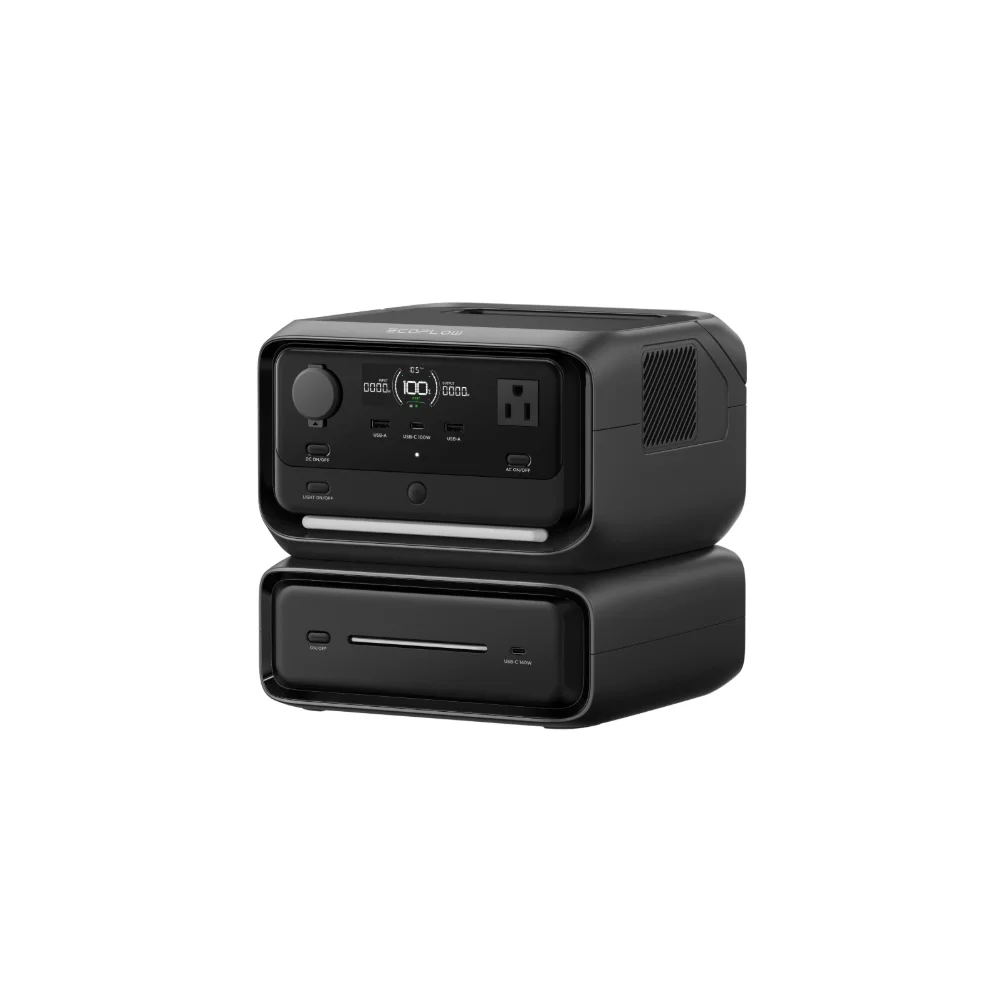
For anglers who want something small enough to stash in a dry hatch or hand off between a kayak and a chase boat, a compact unit like the EcoFlow TRAIL 200DC covers electronics and charging for a day trip in a much smaller, lighter package, which matters more on boats than almost anywhere else — deck space and dry storage are always at a premium.
Moisture and salt are the real enemy
- Keep it out of the splash zone. Even units with some water resistance aren’t meant to sit where spray or bilge water can reach them directly — a dry hatch, console shelf, or waterproof bag is worth the extra step.
- Rinse and dry the exterior after saltwater trips. Salt spray that dries on ports and buttons can cause corrosion over time, even if the unit was never submerged.
- Store it below deck or in a covered area when not in use. Sun and humidity exposure over a full season shortens the life of any battery electronics, boat-specific or not.
- Secure it so it can’t slide. A power station sliding around a cockpit in rough water is both a safety hazard and a good way to damage the unit — strap it down or wedge it into a fixed spot.
Charging between trips
Most boaters charge their power station at home between trips, which is the simplest approach and keeps things predictable. If you’re doing multi-day trips — overnighting at anchor, or fishing tournaments with early starts and late finishes — a 12V charging cable from the boat’s system (used carefully, ideally from a house battery rather than the starting battery) or a compact solar panel clipped to a bimini top or T-top can extend your runway without needing to return to shore power.
Frequently asked questions
Can a portable power station run my trolling motor?
Generally no. Trolling motors draw significant current and are designed to run off dedicated deep-cycle marine batteries wired directly into the boat’s system. A portable power station is meant for electronics, lighting, and charging, not propulsion.
Do I still need my boat’s house battery if I bring a power station?
Yes. A portable power station is a supplement for electronics and convenience loads, not a replacement for a boat’s wired electrical system, which handles things like bilge pumps, livewells, and navigation lights that need to be reliably connected at all times.
Is a portable power station safe to use around water on a boat?
Most portable power stations are not fully waterproof, even if they carry some splash resistance rating. Keep it in a dry hatch, waterproof bag, or covered console area rather than exposed on deck, and never operate it with wet hands or in standing water.
What size power station is enough for a full day of fishing?
For a fish finder, cabin lights, a 12V cooler, and device charging, most day trips use somewhere around 150–300 watt-hours total. A 500Wh to 1,000Wh unit covers that comfortably with room for a longer-than-planned day on the water.