
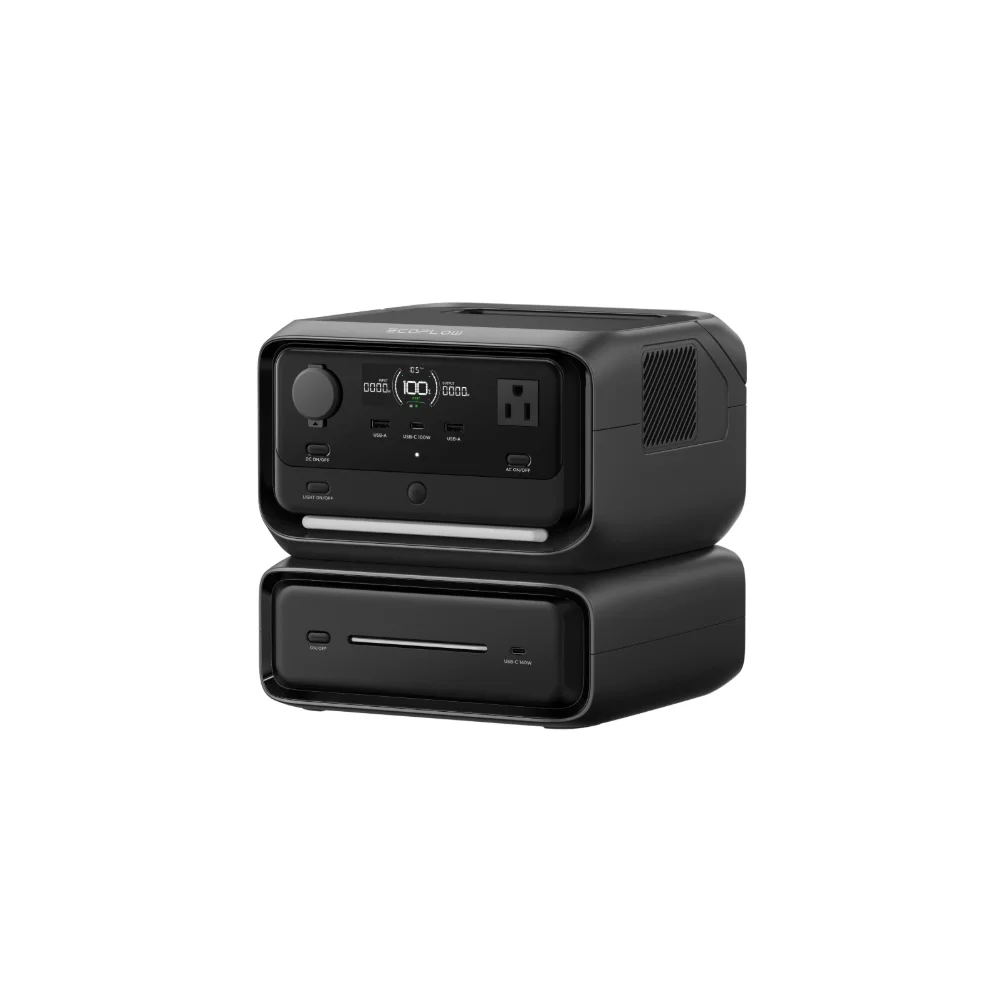

A dead trail camera battery means a week of missed activity data. A dead phone in a deer stand means no way to call in a location, check weather, or just pass the time during a slow sit. Hunting camps and deer stands don’t need much power compared to an RV or a tailgate — but they need it reliably, in the cold, often far from an outlet, and usually carried in on foot. That changes what “the right power station” means. It’s less about running big appliances and more about steady, low-draw charging that survives a week in camp without babysitting. Here’s how the actual loads break down and which size makes sense for camp versus the stand itself.
What actually needs power at a hunting camp
Compared to RV camping or tailgating, hunting loads are small individually but numerous, and a lot of them run for days unattended.
- Trail camera battery packs. Cellular trail cameras usually run on their own AA or lithium battery packs, but recharging spare battery packs or a camera’s internal pack draws only a handful of watts per charge cycle.
- Headlamps and flashlights. Trivial power draw, but you’ll be charging several of them across a multi-day camp.
- Heated clothing and seat cushions. 12V heated seats and heated gloves or socks typically draw somewhere in the 5–20 watt range each, but they often run for hours during a long, cold sit.
- Phones, GPS units, and two-way radios. Individually small at 5–15 watts, but this is usually the most frequent charging demand at camp.
- Camp lighting. LED lanterns and string lights in a wall tent or cabin draw very little, generally under 30 watts total.
- A 12V cooler for meat or drinks. This is the biggest continuous draw in most hunting camp setups, typically 45–60 watts running, cycling on and off through the day.
Camp power versus stand power are two different problems
It’s worth separating these because the right gear differs. Base camp — a cabin, wall tent, or truck camp — can support a larger, less portable unit that stays put and charges everything overnight: phones, headlamps, camera batteries, a cooler. A unit like the Jackery Explorer 500 v2 handles a multi-person camp’s charging needs for several days between recharges, especially if you’re pairing it with a compact solar panel during daylight hours when nobody’s in a stand.
The stand itself is a different situation. You’re carrying whatever you bring, often up a ladder or into a climbing stand, and you need it to be quiet and small. For that, something in the sub-300Wh range — like the BLUETTI EB3A — is enough to run a heated seat cushion for a full cold-weather sit and still have plenty left for phone and headlamp charging, without adding meaningful weight to your pack.
Sizing for a multi-day camp without an outlet
The real planning question for hunting camps is usually “how many days between charges,” not “how much wattage.” If you’re at a remote camp for five or seven days with no shore power, add up your daily charging needs — phones, headlamps, a cooler running most of the day, maybe heated gear on the coldest sits — and multiply by the number of days, then add a margin for a cloudy stretch if you’re relying on solar to top off.
- Weekend camp, electronics only. A 300–500Wh unit covers phones, headlamps, and radios for two to three days without recharging.
- Week-long camp with a cooler running. Plan for 500–1,000Wh, or pair a smaller unit with a solar panel for daytime top-offs since a running cooler is the biggest continuous draw.
- Cold-weather sits with heated gear. A dedicated small unit carried to the stand — 250–300Wh — is enough for a full-day sit with heated seat and clothing running most of the time.
- Solar backup for extended camps. A lightweight panel like the Jackery SolarSaga 40 packs small enough to bring along and can meaningfully extend how long you go between generator or vehicle charges.
Noise and scent matter more here than anywhere else
One reason battery power stations have largely replaced small gas generators at hunting camps isn’t just convenience — it’s that a running generator is loud enough to be heard well beyond camp, and gasoline fumes are exactly the kind of scent that pressures a hunting area. A silent, battery-based unit lets you charge gear at camp without broadcasting your presence or contaminating the area with fuel smell, which matters more here than in almost any other outdoor use case.
Cold weather changes how these batteries behave
Lithium batteries lose some usable capacity as temperatures drop, and most manufacturers recommend charging them above freezing even though many will still discharge fine in cold weather. If you’re leaving a unit in an unheated stand or truck overnight during late-season hunts, expect somewhat reduced runtime compared to what you’d get at room temperature, and try to keep the unit somewhere it isn’t sitting at extreme cold for charging cycles.
Frequently asked questions
How long will a small power station run a heated seat cushion?
Most 12V heated seat cushions draw around 10–20 watts on a mid setting. A 250–300Wh power station can run one for well over ten hours, which comfortably covers even a long all-day sit with charge to spare for a headlamp or phone.
Can I charge a trail camera directly from a power station?
Most trail cameras run on their own AA or internal lithium packs rather than plugging in directly, but you can use a power station to recharge spare battery packs or a USB power bank you swap into the camera. The draw for this is minimal, a few watts per charge cycle.
Is solar worth bringing to a hunting camp?
For camps longer than a few days without vehicle access to recharge, yes — a small, lightweight panel adds meaningful daily charge during hours when nobody’s using the unit anyway, since most people are in a stand during peak sun. For short weekend trips, it’s usually unnecessary extra weight.
Will a power station work in freezing temperatures?
Most portable power stations discharge fine well below freezing, though usable capacity drops somewhat in the cold. Charging is more sensitive — many manufacturers recommend charging above 32°F — so it’s best to bring the unit somewhere warmer, like a heated cabin or a vehicle, when it’s time to top it off.