
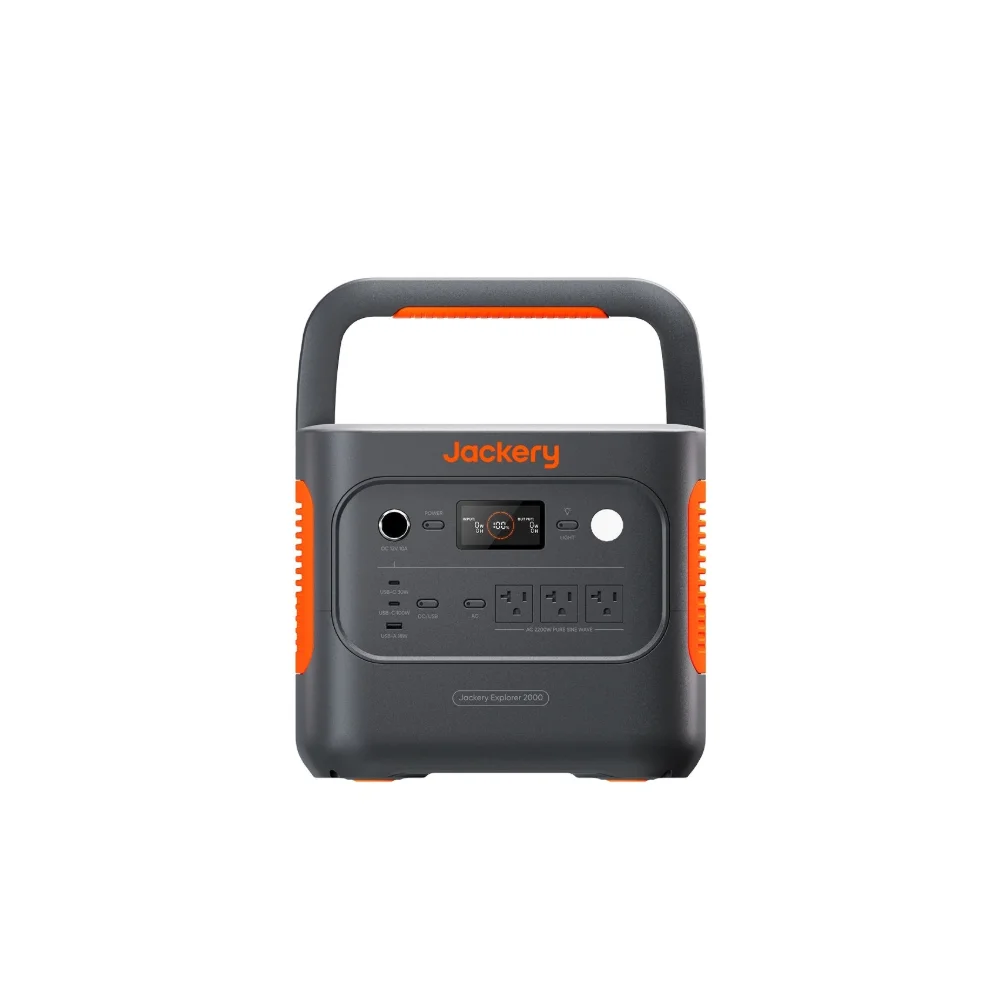

GaN (gallium nitride) has become a marketing buzzword slapped on everything from phone chargers to power station AC adapters, usually paired with an implied promise: faster charging. The honest answer is more precise than the marketing — GaN doesn’t make electricity move faster on its own, but it does something that indirectly gets you there in most real situations.
What GaN actually changes
Gallium nitride conducts electricity more efficiently than the traditional silicon used in older chargers. That efficiency shows up in two concrete ways: less energy is lost as heat, and because GaN components run cooler, they can be packed closer together — which is exactly why GaN chargers are dramatically smaller than silicon chargers of equivalent wattage. A real example: a 65W GaN charger can be roughly the size of a dental floss box, something that would have required a much bulkier brick with older silicon technology. That efficiency also means less thermal throttling — traditional chargers can reduce their output when they get hot, while well-designed GaN products maintain peak output for longer.
So does it actually charge faster?
Here’s the part that gets misrepresented: charging speed is determined primarily by wattage and by what your specific device can accept — not by whether the charger uses GaN or silicon internally. A 65W silicon charger and a 65W GaN charger deliver electricity at the same rate to a device that can accept 65W; the GaN version is just smaller, cooler, and more efficient while doing it. Buying more wattage than your device needs doesn’t damage anything or charge it faster either — your device only draws what it’s designed to accept, regardless of how many watts the charger is rated for.
Where GaN genuinely enables faster real-world charging is indirect but important: because GaN lets manufacturers fit higher wattages into smaller, more thermally efficient packages, it’s made compact 100W+ chargers and multi-port bricks practical in ways that would have been bulky or impractical with silicon. That’s a real improvement in what’s available, not a change in the underlying physics of how fast electrons move.
Addressing the “fast charging damages your battery” myth
This comes up constantly alongside GaN marketing, and it’s worth clearing up directly: what actually degrades a lithium battery over time is heat, not charging speed itself. Modern chargers and devices manage temperature actively during fast charging, and there’s a useful reframe worth internalizing — charging to 50% in 15 minutes generates less total heat than leaving a device plugged in for 3 hours charging slowly, because the total time spent generating any heat at all is shorter. Fast charging isn’t inherently harder on your battery than slow charging; poor thermal management during either is what causes long-term wear.
What this means for power station charging
Many power station brands now ship GaN-based AC charging bricks or fast-charge modules specifically because of the size and heat advantages — a smaller, cooler charging brick is a genuine quality-of-life improvement for something you’re packing in a bag or leaving connected for extended periods. But the actual recharge speed you get for your power station is set by the unit’s rated AC input wattage (for example, a unit rated for 1,000W AC input charges at up to 1,000W regardless of whether the charger driving it uses GaN or silicon internally) — GaN just makes hitting that rated speed possible in a more compact, cooler-running package than older charger technology could manage.
FAQ
Should I pay extra for a GaN charger over a standard silicon one?
If size, weight, and heat matter to you — packing for travel, running a multi-device charging station, or just wanting less bulk on your desk — yes, it’s a genuine upgrade. If none of that matters and you already have a functional charger, the actual charging speed won’t change.
Can a GaN charger overcharge or damage my power station?
No — your power station’s charging circuitry negotiates and limits the input to what it’s rated for, regardless of the charger’s maximum capability, the same way phones and laptops do.
Is GaN the same as USB-C PD (Power Delivery)?
No — GaN is the semiconductor material inside the charger, while USB-C PD is the charging protocol/standard that negotiates voltage and current between charger and device. Many modern chargers use both, but they’re separate technologies solving different problems.
Do all power stations support fast AC charging regardless of charger type?
No — the power station itself must be rated for higher AC input wattage to take advantage of a fast charger; check your specific unit’s maximum AC input spec, since pairing a high-wattage GaN charger with a unit rated for a lower input won’t exceed that unit’s own ceiling.
Bottom line
GaN chargers are smaller, run cooler, and resist thermal throttling better than silicon equivalents — genuine, measurable advantages. What they don’t do is make electricity flow faster than the same wattage from any other charger; your device or power station’s own rated input speed is still the limiting factor. Treat GaN as a size-and-efficiency upgrade, not a speed upgrade in itself.
This post may include affiliate links — if you buy through them, we may earn a small commission at no extra cost to you. It doesn’t change what we cover or how we rank anything.