
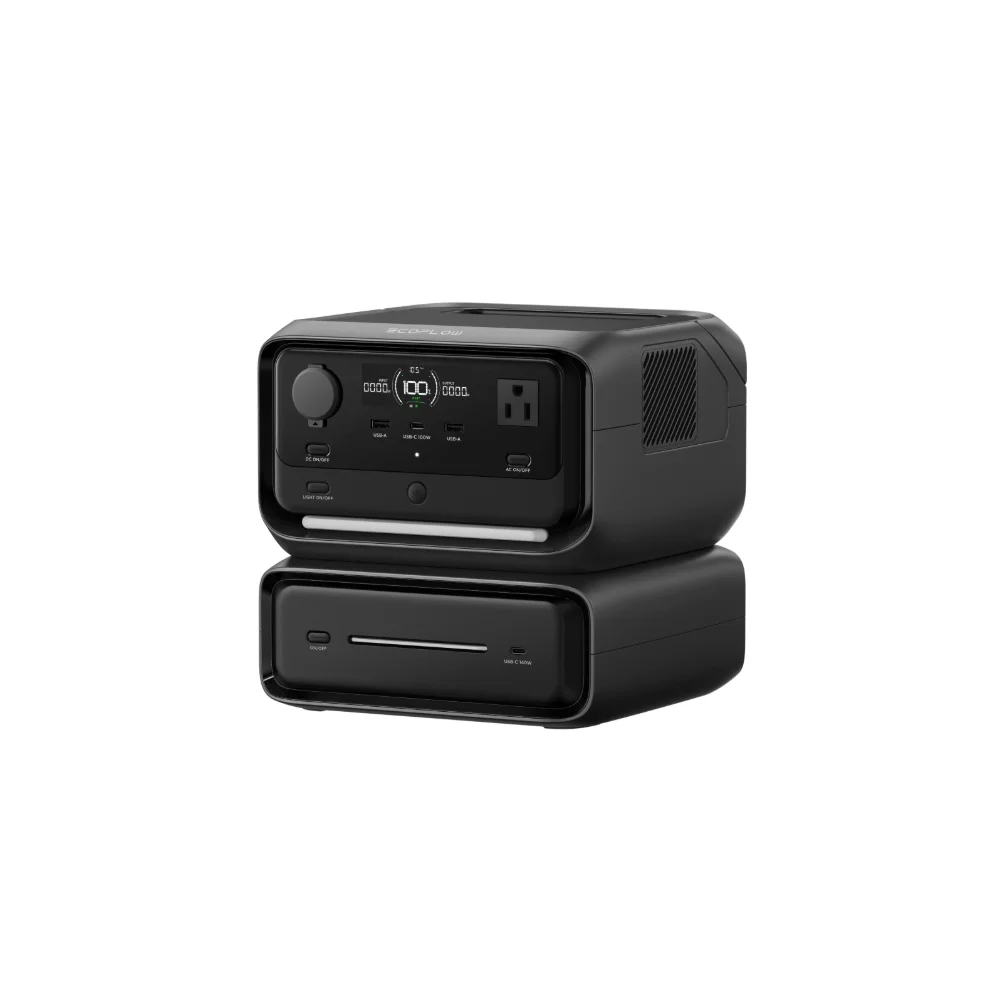

How Cold Weather Affects Your Power Station’s Battery
Most camping power content is written for summer trips, and how power stations perform in cold weather barely gets mentioned, even though winter camping is a genuinely popular category. If you’ve ever had a device seem sluggish or a battery drain faster on a cold night, this is why — and it’s more manageable than most people assume once you understand what’s actually happening.
This article may include affiliate links — if you buy through them we may earn a small commission at no extra cost to you, but our recommendations are based on our own independent research.
What Cold Actually Does to a Battery
Cold temperatures slow the internal chemical reactions that let a battery deliver power efficiently, which reduces available capacity — it doesn’t damage the battery outright, but it does mean less usable power at the same charge level. LiFePO4 batteries handle this noticeably better than older lithium-ion or lead-acid chemistry: they typically retain around 80% of rated capacity at 14°F (-10°C), and lead-acid batteries by comparison can lose up to half their power in similar conditions.
How Different Battery Chemistries Actually Compare
It’s worth being specific here rather than just saying “cold is bad.” LiFePO4 (lithium iron phosphate) is the current standard for a reason — its chemistry is inherently more stable across a wider temperature range than older lithium-ion cells, and dramatically more stable than lead-acid. Standard lithium-ion (the kind in a lot of older or budget power banks) sees a more noticeable capacity drop in freezing conditions and is also more sensitive to charging-related cold damage. Lead-acid, still used in some budget solar setups, is the least cold-tolerant of the three — its usable capacity can genuinely be cut in half in freezing conditions, which is a big part of why it’s fallen out of favor for portable power despite being cheaper upfront.
The Rule That Actually Matters: Don’t Charge Below Freezing
This is the single most important winter habit, and it’s the one I see people miss most: charging a lithium battery (including LiFePO4) below freezing can cause internal damage over time, even though discharging (using it) in the cold is generally safe. If you need to recharge in freezing conditions, bring the unit somewhere warmer first — inside a tent, a vehicle, or a heated space — rather than plugging it in straight from the cold.
Practical Winter Habits
- Keep the unit inside your tent or vehicle overnight rather than leaving it exposed outside — ambient warmth alone helps meaningfully.
- Insulate it if it has to sit outside — a simple blanket or dedicated battery jacket reduces heat loss.
- Warm it before charging if it’s been sitting in freezing temperatures — don’t plug it in straight from the cold.
- Look for models with built-in low-temperature charging protection or battery heating if winter camping is a regular thing for you, not a one-off.
None of this requires a dedicated heating accessory. Bringing the unit into your tent vestibule rather than leaving it outside on frozen ground makes a real difference, since ground contact pulls heat away faster than still air does — and if you’re car camping rather than backpacking, keeping it in the vehicle’s cabin rather than the trunk overnight is an easy win, since cabin temperatures typically run several degrees warmer.
My take: none of these tricks turn a power station into a true cold-weather unit if you’re regularly camping well below freezing — for that, a model with a built-in heating function is worth the premium. But for occasional cold nights, basic insulation habits genuinely extend usable capacity and protect long-term battery health without spending another dollar.
Storing Your Power Station Between Winter Trips
How you store the unit between trips matters almost as much as how you use it in the field. Avoid storing a lithium power station in an unheated garage or shed through a hard winter at very low or fluctuating charge levels — most manufacturers recommend storing at roughly 50-60% charge in a moderate-temperature location, checking in every few months to top up if it’s dropped low from natural self-discharge. My take: an unheated storage space that swings from freezing nights to warm days is genuinely one of the harder environments for long-term battery health, so if you have the option, a basement or climate-controlled closet is a meaningfully better home for it between trips than the garage.
Shorter Days Compound the Problem
Winter camping doesn’t just mean colder batteries — it means less daylight for solar recharge and often higher power demand from heating-adjacent devices. My take: plan winter trips assuming meaningfully less usable capacity and less solar recharge than the same setup would give you in summer, not the same numbers with a coat on.
Signs Your Battery Has Been Damaged by Cold
If you suspect a battery was charged while frozen or exposed to extreme cold improperly, watch for warning signs: noticeably faster capacity loss than expected for its age and cycle count, unusual heat during charging, swelling of the casing, or the unit failing to hold a charge it previously held reliably. My take: any of these symptoms warrant stopping use and contacting the manufacturer rather than continuing to charge and use a potentially damaged lithium battery — this is one area where being cautious rather than trying to “wait and see” is the right call.
Cold-Weather Solar Panel Performance
Interestingly, solar panels themselves actually perform slightly better in cold, clear conditions than in heat, since panel efficiency drops somewhat as panel temperature rises. The catch is that winter’s shorter days and lower sun angle more than offset this small efficiency gain in most cases, and snow cover or frost on the panel surface can block output entirely until cleared. My take: don’t expect the “cold panels are more efficient” fact to meaningfully change your winter solar planning — the daylight hours and sun angle limitations dominate the real-world outcome.
Our Recommendation
Choose LiFePO4 for winter use if you have the choice — the cold-weather capacity retention difference versus older chemistries is real and significant. Never charge below freezing; warm the unit first. And budget more capacity margin than you would for the same trip in summer, since both battery performance and solar recharge work against you in cold, short-daylight conditions.
FAQ
Is it safe to use a power station in freezing temperatures?
Discharging (using) it is generally fine in the cold — charging below freezing is the part to avoid, since that’s what can cause internal battery damage over time.
Does LiFePO4 really perform better in cold than other battery types?
Yes — LiFePO4 typically retains significantly more capacity in freezing conditions than lead-acid and holds up better than many older lithium-ion chemistries too.
Does cold weather permanently damage a lithium battery?
Cold discharge alone generally doesn’t cause permanent damage — it’s charging in freezing conditions specifically that carries real risk of lasting harm, which is why warming the unit before plugging it in matters so much.
How much extra capacity should I bring for winter trips?
As a rough starting point, budget for meaningfully more than your summer estimate to account for reduced capacity retention and lower solar output — treating your winter plan as your summer numbers with a real safety margin added is a reasonable default.
Related Reading
- Best Portable Power Stations for Tent Camping in 2026
- CPAP Machines While Camping: Best Power Stations for Medical Devices Outdoors