
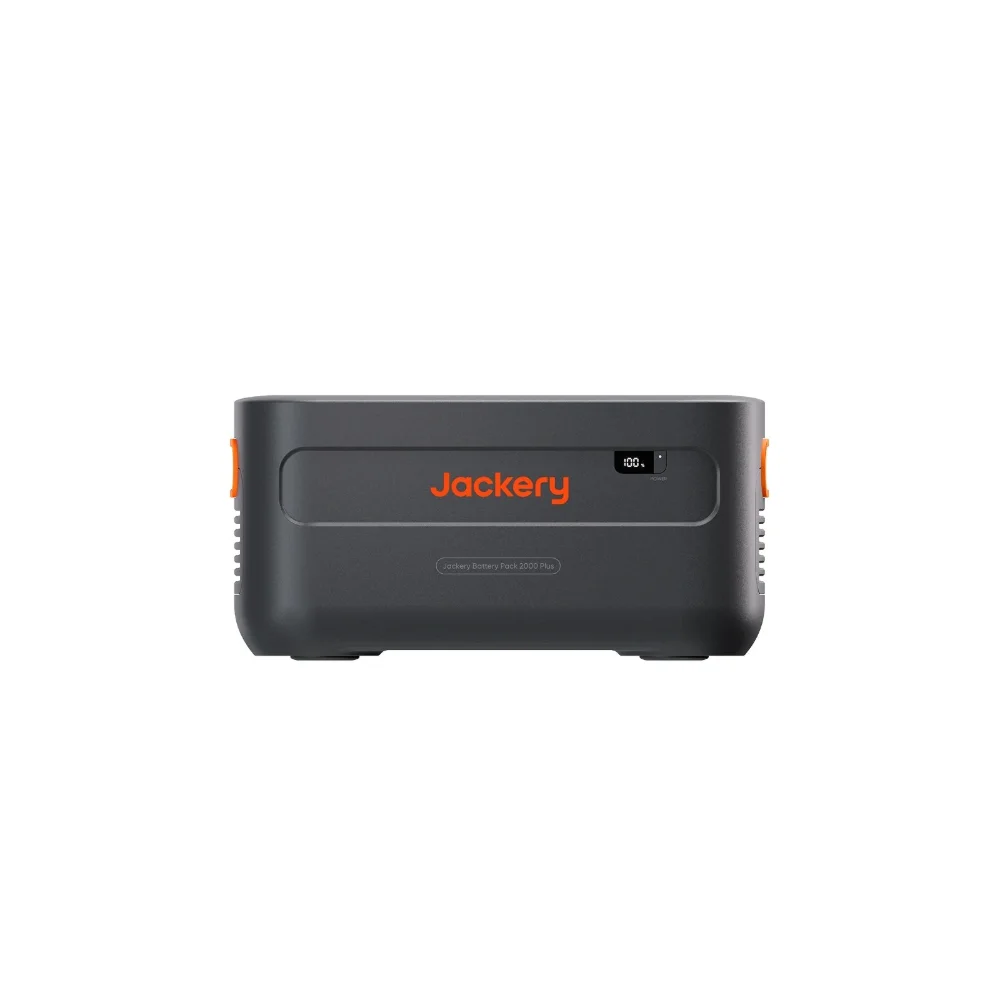

If you already own a Jackery Explorer 2000 Plus and you’ve ever watched its battery percentage drop faster than you’d like during a multi-day power outage or a week off-grid, you’ve probably wondered whether there’s a way to extend its runtime without buying an entirely new unit. That’s exactly the problem the Jackery Battery Pack 2000 Plus is built to solve — and after digging through its actual specs, I wanted to lay out honestly what it does well, where it falls short, and who it’s actually for.
This article may include affiliate links — if you buy through them we may earn a small commission at no extra cost to you, but our recommendations are based on our own independent research.
What This Product Actually Is (And Isn’t)
Let’s clear up the most important thing first: the Jackery Battery Pack 2000 Plus is not a standalone power station. It has no inverter and no AC output of its own. It’s an expansion battery — think of it as a second fuel tank that only works when it’s connected to a compatible Jackery Explorer 2000 Plus unit. If you don’t already own that power station, this isn’t the product for you; you’d want the Explorer 2000 Plus itself, or the bundled Solar Generator 2000 Plus kit.
For everyone who does own the Explorer 2000 Plus, though, this battery pack effectively doubles your usable capacity by adding 2,042.8Wh on top of your existing unit’s storage — without needing to buy a second full power station with its own (redundant) inverter and control panel.
Capacity and Real-World Runtime
The headline number here is 2,042.8Wh of additional LiFePO4 battery storage. Paired with an Explorer 2000 Plus, that’s a combined capacity north of 4,000Wh — enough to run a full-size refrigerator for the better part of two days, keep a CPAP machine going for close to two weeks, or run a handful of essential home circuits through a multi-day outage without rationing power.
For context, most single-unit “prosumer” power stations in this capacity range are also significantly heavier and bulkier than adding this battery pack to a unit you already own. Instead of managing two separate systems, you’re scaling one system up.
Charging Speed: A Detail Worth Double-Checking
Jackery’s official spec for this battery pack states a 2-hour full charge using six SolarSaga 200W panels (1,200W of total solar input). A 6-hour figure using six SolarSaga 100W panels also circulates online, but it doesn’t appear on Jackery’s current official spec sheet, so it should be treated as unconfirmed. If solar charging speed is a deciding factor for you, confirm the exact figure for your specific panel setup directly with Jackery before buying rather than relying on an unverified number.
Charging from a 12V car outlet is a much slower 25 hours — fine as a backup option, but not something to plan around for daily use.
Battery Life and Build Quality
This is where the Battery Pack 2000 Plus is genuinely strong. It uses LiFePO4 (lithium iron phosphate) battery chemistry, which is the safer, longer-lasting option compared to the older NMC batteries still found in some cheaper competitors. Jackery rates it for 4,000 charge cycles before capacity drops below 70% — which, if you’re cycling it roughly once a week, works out to well over a decade of realistic use before you’d notice meaningful degradation.
The unit also includes what Jackery calls a “12-layer” Battery Management System (BMS), covering protections like overcharge, over-discharge, short-circuit, and temperature regulation. It’s rated to operate safely between -10°C and 45°C (14°F to 113°F), which covers most climates you’d realistically be using it in, whether that’s a cold garage in winter or a hot RV in summer.
Size and Portability — Be Honest With Yourself Here
At 41.9 lbs (19 kg) and roughly 18.5 x 13.2 x 9.1 inches, this is not a lightweight accessory. Combined with the Explorer 2000 Plus itself, you’re looking at a genuinely heavy two-piece system best suited for a fixed home backup setup, a van or RV build, or a garage/basement installation — not something you’re casually tossing in a backpack for a weekend hike. If ultra-portability is your priority, this expansion strategy isn’t the right fit; a smaller standalone unit would serve you better.
Warranty: A Genuine Strong Point
Jackery backs this battery pack with a 3-year standard warranty plus a 2-year extension applied automatically when purchased through their official store — five years of coverage in total. That’s a meaningfully longer warranty than what you’ll find on many competing expansion batteries, and it reflects real confidence in the LiFePO4 cell longevity mentioned above.
Where It Fits in a Home Backup Strategy
For households that started with a single Explorer 2000 Plus as their primary backup unit and found themselves consistently running short of capacity during real outages, this expansion battery is a more cost-effective next step than replacing the whole system with a larger unit. It’s worth doing that assessment honestly first, though — track your actual capacity usage during a real or simulated outage before assuming you need to double up, since plenty of households discover their existing single unit was closer to adequate than they thought once they actually measure real usage rather than worst-case assumptions.
Is an Expansion Battery the Right Approach for Everyone?
Expansion batteries like this one solve a specific problem well — scaling up capacity without duplicating a full second unit’s inverter and electronics — but they’re not the only way to add backup capacity, and it’s worth being clear-eyed about the alternative. Buying a second, fully independent power station instead of an expansion battery costs more but gives you true redundancy: two units that can each function completely on their own, in two different locations if needed, rather than one system that depends entirely on the primary Explorer 2000 Plus staying healthy. Our comparison of one big power station vs. two smaller ones covers that broader tradeoff, which applies directly to the expansion-battery-versus-second-unit decision this product represents.
Who This Is Actually For
- Current Explorer 2000 Plus owners who’ve felt the capacity ceiling during outages or extended off-grid stretches
- Home backup planners who want to scale power storage without adding a second full inverter/control system
- Van life or RV builders who’ve already standardized on the Explorer 2000 Plus and want more headroom without a full second unit
Who Should Look Elsewhere
- Anyone who doesn’t already own a compatible Explorer 2000 Plus unit
- Campers or hikers prioritizing light weight and portability over raw capacity
- Buyers who need a fully independent, standalone power source rather than an add-on
The Bottom Line
The Jackery Battery Pack 2000 Plus does exactly one job, and it does it well: it lets existing Explorer 2000 Plus owners roughly double their capacity without duplicating hardware they already have. The LiFePO4 chemistry, 4,000-cycle rating, and 5-year total warranty make it a genuinely durable long-term investment rather than a short-term patch. The trade-offs — its weight, and Jackery’s own inconsistent solar-charging figures — are real, but they’re the kind of trade-offs that come with any high-capacity expansion battery, not unique flaws in this specific product.
If you’re already in the Jackery ecosystem and capacity has been your limiting factor, this is a sensible way to scale up.
Frequently Asked Questions
Can this expansion battery work with other Jackery models, or only the Explorer 2000 Plus?
It’s built specifically for compatibility with the Explorer 2000 Plus ecosystem — check Jackery’s current compatibility list before assuming it works with a different Explorer generation or capacity tier, since expansion battery compatibility is typically limited to the specific model line it was designed alongside.
Does adding this expansion battery void the original unit’s warranty?
No, connecting a manufacturer-designed, officially supported expansion battery through the intended port is expected use, not a warranty-voiding modification. That’s different from using unofficial or third-party expansion hardware, which could raise warranty questions.
How does the 5-year warranty compare to what most power stations offer?
It’s on the longer end for the category — many power stations and expansion batteries carry 2-3 year standard warranties, so a 5-year term is a genuine point in this product’s favor for buyers who weigh long-term support and coverage heavily in their purchase decision.
Is doubling capacity with this expansion battery cheaper than buying a second full power station?
Generally yes, since an expansion battery skips the cost of a second inverter and full electronics package — the tradeoff, as covered above, is that you’re adding capacity without adding redundancy, unlike a genuinely second, independent unit.
Check current pricing and availability on Jackery’s official site →