
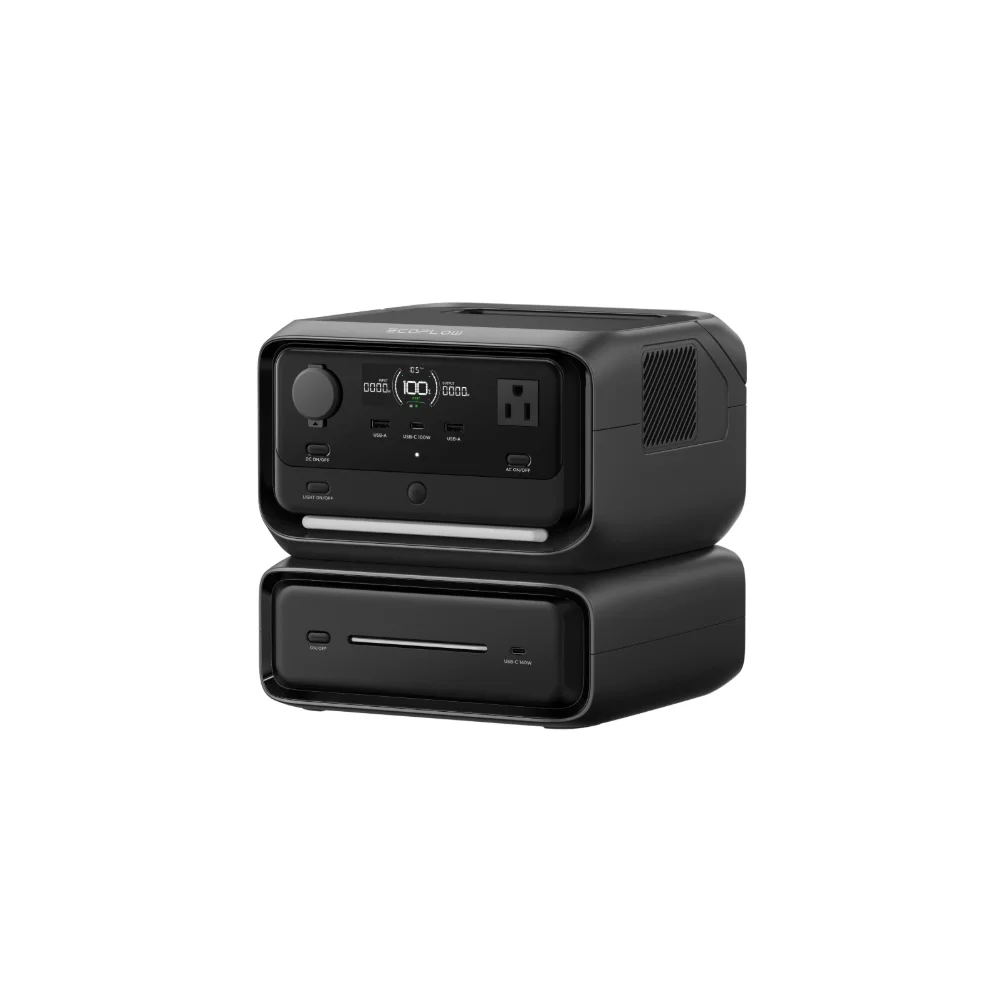

Drone flights are short — most consumer drones fly 20-35 minutes per battery — which means a single day of serious shooting means cycling through multiple batteries, over and over, often far from an outlet. The question that actually matters for sizing a power station isn’t “will it charge my drone,” it’s “how many full charge cycles does my capacity actually buy me before I run dry.”
Drone battery sizes and what they cost you per charge
| Drone model | Battery capacity | Typical charger draw |
|---|---|---|
| DJI Mini series (Mini 3/3 Pro/4 Pro) | 17-20Wh | 29-37W |
| DJI Air 3 | 47.6Wh | 65W |
| DJI Mavic 3 series | ~77Wh | ~65W |
| DJI Inspire 3 (dual-battery) | 98-130Wh per battery | — |
How many charges a given power station capacity actually buys
From a 1,000Wh power station, accounting for real-world efficiency losses and accessory charging: roughly 20 realistic charges for a DJI Mini series battery, 13-14 for a DJI Air 3, 8-9 for a Mavic 3, and 3-4 full dual-battery sets for an Inspire 3. That’s a meaningful spread — the same 1,000Wh unit that comfortably covers a full day of Mini-series flying barely covers a single Inspire 3 session.
Sizing by how serious you are
| Pilot type | Typical session power need | Recommended power station capacity |
|---|---|---|
| Hobbyist | 120-300Wh | 300-500Wh |
| Enthusiast / semi-pro | 400-800Wh | 1,000-1,500Wh |
| Professional | 1,500-3,000Wh | 2,000-3,000Wh |
| FPV racing | 2,000-3,000Wh | 2,500-3,500Wh |
A real full-day commercial shoot breakdown illustrates why professionals size up so much: 8 battery sets at roughly 250Wh each (2,000Wh) plus controller and device charging (100Wh), laptop editing on-site (200Wh), and backup gear (150Wh) adds up to around 2,450Wh total — comfortably justifying a 2,000-3,000Wh unit rather than trying to stretch a smaller one across an entire commercial day.
Photography and videography add their own load
Beyond drone batteries, on-location photo and video work typically layers in a laptop for tethered shooting or on-site editing (commonly drawing somewhere in the 45-100W range depending on the machine and workload), camera battery chargers (generally light, in the 10-30W range per charger), and continuous LED lighting panels, which vary enormously by size — small on-camera panels draw as little as 10-30W, while larger continuous lighting setups used for video can run 100-300W or more. Studio strobes and monolights are the heaviest common load in this category, often drawing 300-600W at full power, which is worth checking specifically if your on-location kit includes flash lighting rather than just continuous LED panels.
What actually matters beyond raw capacity
For drone and photography work specifically, a few features matter more than they would for general camping use: multiple simultaneous USB-C PD ports (for charging several drone batteries or camera batteries at once rather than sequentially), a genuinely portable weight since you’re often hiking to a shooting location, and pure sine wave AC output if you’re running any sensitive camera or lighting electronics off the inverter. Solar charging is a real bonus for multi-day location shoots where you won’t have grid access, letting you replenish during setup or golden-hour waiting periods rather than relying entirely on what you carried in.
FAQ
Can I charge a drone battery and my laptop from the same power station simultaneously?
Yes, as long as the combined draw stays within the unit’s continuous output rating — check your specific power station’s total wattage ceiling against your simultaneous charging needs before assuming it can handle everything at once.
Do drone battery chargers need pure sine wave power?
Most official drone chargers are designed to tolerate modified sine wave power without issue, but pure sine wave is still the safer default, especially for any sensitive camera electronics sharing the same power station.
Is it worth buying a power station specifically marketed for drones (like DJI’s own units)?
Drone-brand power stations often include built-in cables or charging hubs matched to that brand’s batteries, which can be genuinely convenient — but a general-purpose power station with the right port selection and capacity works just as well functionally.
How much capacity do I lose to “accessories” beyond the drone batteries themselves?
Budget roughly 100-150Wh for controllers, phones, and monitors on top of your drone battery charging needs for a full day of shooting — it adds up faster than most pilots initially budget for.
Bottom line
Size your power station around actual charge cycles for your specific drone and camera gear, not a generic capacity number. A hobbyist flying a Mini-series drone can get by on 300-500Wh; a professional running an Inspire 3 with a full commercial shoot day needs 2,000Wh or more once you account for batteries, controllers, and on-site editing.
This post may include affiliate links — if you buy through them, we may earn a small commission at no extra cost to you. It doesn’t change what we cover or how we rank anything.
Sources externes citées
- The Power Station Guide — Best Portable Power Stations for Drones (2026 Pilot Guide)