

Losing power in a multi-story home means something different depending on who lives there. For most households it’s an inconvenience. For someone who relies on a stairlift or a home elevator to move between floors, a blackout can mean being stuck on one level of their own house — which is exactly why it’s worth understanding, in advance, what backup power can and can’t realistically do for each of these systems. The short version: stairlifts are usually an easy win for a power station. Home elevators are a much bigger, more specialized undertaking, and for most households, not something a portable power station alone should be expected to solve.
Stairlifts already run on batteries — most of them
Here’s the detail that surprises a lot of people: most modern stairlifts aren’t actually powered directly by your home’s AC current while you’re riding them. They run on onboard rechargeable batteries that sit in a charging dock along the rail, topped up by household power between rides. In many designs, the battery isn’t just a backup sitting in reserve — it’s what powers the lift during every normal ride, with AC power simply keeping it charged. That built-in design is why stairlifts are often marketed with power-outage safety as a selling point: as long as the battery has a charge, the lift keeps working even with no household power at all.
How long that built-in battery lasts during an outage varies by model, battery age, and how heavily the lift is used, but manufacturers of some models cite figures in the range of dozens of ride cycles on a full charge before it needs recharging again — plenty for a short outage, and often enough to bridge a multi-day one if rides are infrequent. Check your specific stairlift’s manual or manufacturer spec sheet for its documented backup capacity, since this varies meaningfully between brands and models.
Where a power station actually helps a stairlift
The one thing a stairlift’s onboard battery can’t do is recharge itself without household power. In a short outage, that’s fine — the reserve carries you through. In a longer one, the battery will eventually run down if it isn’t topped off, and that’s exactly where a power station fits: plug the stairlift’s charging dock into a power station, and the battery keeps recharging as if nothing happened. Because the charger itself draws relatively little power — it’s charging a battery, not running a motor directly — even a small power station can sustain a stairlift charger for days. A compact unit like the BLUETTI EB3A, at 268.8Wh, is enough to keep a stairlift’s onboard charger topped up for an extended outage on its own, and pairs easily with a small solar panel if the outage runs into multiple days. This is a genuinely simple, low-risk use case — check your specific stairlift charger’s wattage on its nameplate, but it’s rarely a demanding load.
Home elevators are a different category entirely
Residential elevators are not small, portable appliances — they’re permanently installed, hardwired equipment on a dedicated electrical circuit, typically sized by an electrician to the specific model’s motor and control system. Running one from a portable power station the way you would a stairlift charger generally isn’t realistic or safe without professional evaluation, for a few reasons: the motor’s starting current draw is significantly higher than its running wattage (as with any motor-driven equipment), the circuit is hardwired rather than plug-in, and elevator safety systems are governed by codes (like ASME A17.1) that most homeowners aren’t positioned to evaluate on their own.
Unlike stairlifts, home elevators don’t universally include onboard battery backup as standard — some models offer it as an option (often for a safe, automatic lowering feature if power fails mid-ride, rather than continued normal operation), and some rely on manual hand-crank lowering instead. What’s available depends entirely on your elevator’s make and model. If backup power for a home elevator matters to your household, the right first call is your elevator manufacturer or installer, not a power station retailer — they can tell you your unit’s actual starting and running wattage, whether it has any built-in emergency lowering feature, and whether a whole-home backup system with a properly sized transfer switch is realistic for your setup. A licensed electrician needs to be involved in any plan to power hardwired equipment like this; it isn’t a project for an extension cord.
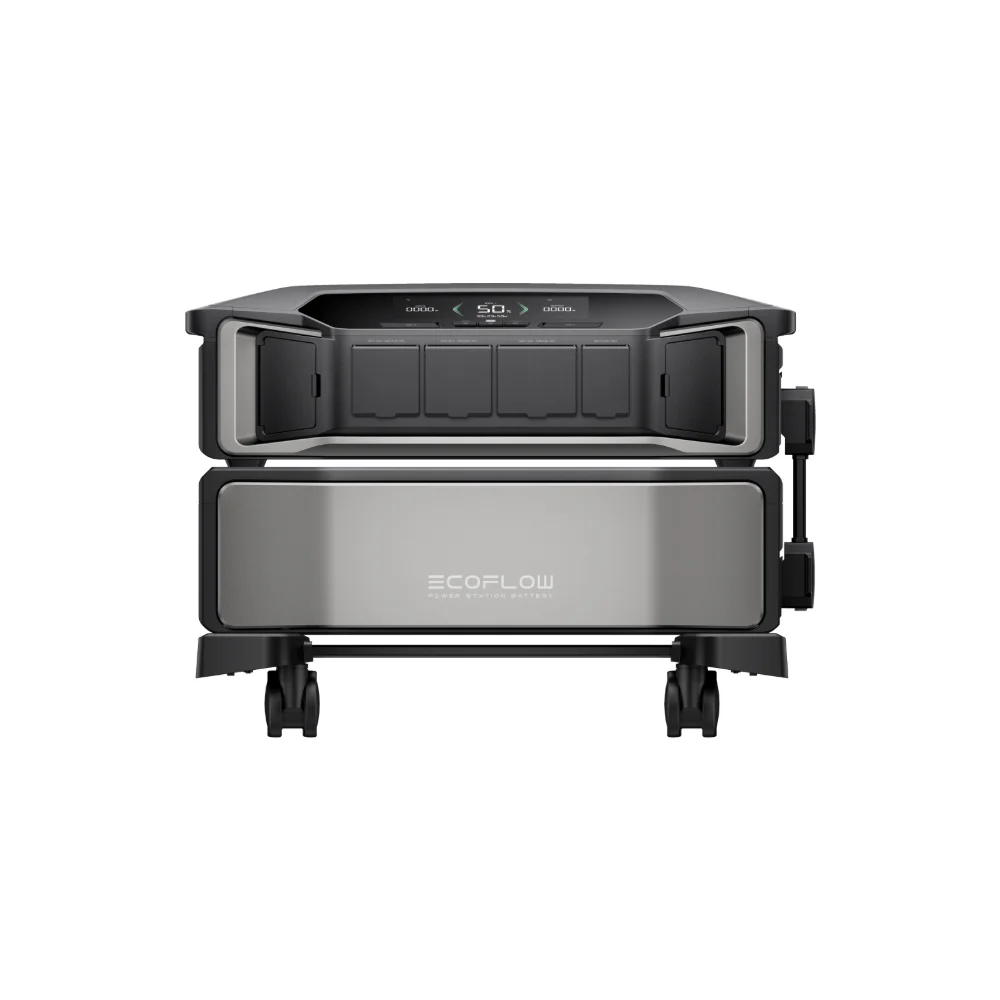
For households that go down this path after consulting their elevator installer, whole-home-scale battery systems are the realistic category to look at rather than a portable unit — something in the range of the Anker SOLIX E10, which scales up to 30kWh with up to 30kW of turbo output and is designed for hardwired, whole-home integration through an electrician rather than a simple plug-in setup. That kind of capacity and output is in the right neighborhood for a motor-driven load like an elevator, but sizing it correctly requires your elevator’s actual specifications, not a general estimate.
Frequently asked questions
Will my stairlift stop working immediately if the power goes out?
Most modern stairlifts won’t, because they run on an onboard battery that’s already charged and ready, independent of live AC power at the moment of use. The outage only becomes a problem if it runs long enough to drain that battery without a chance to recharge — which is exactly the gap a small power station can fill.
Can I just plug my home elevator into a large power station during an outage?
Generally, no — home elevators are hardwired to a dedicated circuit rather than plugged into a standard outlet, and their motors typically have starting current well above their running wattage. Powering one safely during an outage requires input from your elevator manufacturer or installer and, in most cases, a licensed electrician to integrate any backup power source properly. Don’t attempt an improvised connection to hardwired elevator equipment.
How do I find out if my specific stairlift or elevator has battery backup?
Check the owner’s manual that came with your unit, or contact the manufacturer or the company that installed it — they can confirm whether backup batteries or emergency lowering features are standard or optional on your specific model, and what the documented backup runtime or capability actually is.