

Most national park campgrounds don’t have electrical hookups — even the ones with paved sites and flush toilets. Places like Yosemite, Zion, and the Grand Canyon’s developed campgrounds are almost entirely dry camping, and if your trip is a multi-day loop through several parks, you might go a week or more without seeing a real outlet. That’s a fundamentally different power problem than a weekend trip: it’s not about running one appliance, it’s about stretching a fixed battery — plus whatever solar you can generate — across several full days of fridge, lighting, and device charging with no guaranteed recharge point. Here’s how to actually plan for it.
What you’re actually powering on a multi-day park loop
- A 12V or compressor fridge. This is your biggest continuous draw by far — typically 40–60 watts running, averaging somewhere around 0.5–1.5 kWh per day depending on heat and door use.
- Lighting. LED camp lights and interior lighting draw very little, generally well under 50 watts total even used for hours each evening.
- Phone, camera, and GPS charging. Higher than usual on a road trip since phones and cameras are working hard on navigation and photos all day.
- A laptop for trip planning or remote work. If you’re working from the road, this adds a steady 45–65 watt draw for several hours a day.
- A CPAP machine, if needed overnight. These typically average 30–60 watts over a full night’s use, and it’s a load that can’t be skipped, which makes it worth budgeting for explicitly.
- Occasional cooking — a kettle or small burner. Brief but high-draw, 1,000 watts or more for a few minutes at a time.
The real constraint is days between charges, not any single appliance
A weekend trip is forgiving — even an undersized power station usually makes it two days before you’re back near an outlet. A week-long loop through several parks is not forgiving in the same way, because there’s no guaranteed recharge point until you hit a town with a place to plug in, and driving between parks doesn’t always mean daily charging if you’re not using an alternator-based setup. That’s why the right approach for national park road trips is to calculate total daily energy use, multiply by the number of days you’ll realistically go without a reliable recharge, and size for that number rather than for a single day’s peak.
For a fridge running continuously plus lighting, charging, and occasional laptop use, most two-person setups land somewhere around 1–1.5 kWh per day. Over three days without a recharge, that’s 3,000–4,500 watt-hours — well beyond what a single power station holds, which is exactly why solar becomes less of a luxury and more of a requirement for this specific use case.
Picking a unit built for multi-day dry camping
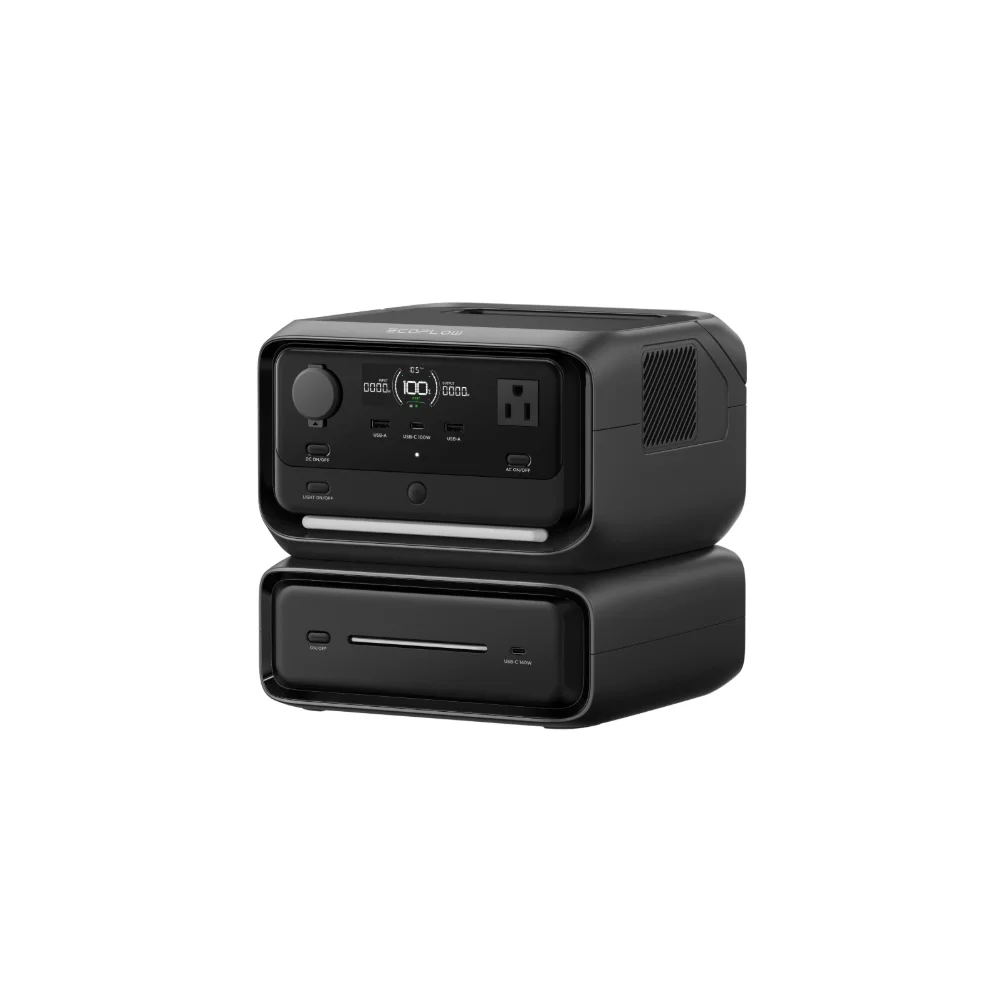
The Anker SOLIX S2000, at 2,010Wh, gives you roughly two days of typical fridge-plus-electronics use before needing any recharge at all, which is a meaningfully longer runway than smaller units for exactly the kind of trip where you might not see an outlet for several days in a row. Paired with a 400W solar input rating, it also recharges efficiently once you do get sun, which matters in canyon or forest campsites where shade limits your solar window to a few hours a day.
For lighter rigs — a rooftop tent setup or a smaller SUV build where every pound of gear matters — the Jackery Explorer 1500 v2 strikes a good balance between capacity and weight, and its 400W solar input keeps recharge times reasonable when you do find good sun exposure at a campsite.
Solar is the piece that makes multi-day trips work
Without solar, you’re purely running down a fixed battery and hoping you reach a town before it’s empty. With even a modest panel, you’re offsetting daily use and extending your range significantly — a 100–200W panel in good sun for four to six hours can realistically replace 300–800 watt-hours of the day’s fridge and charging draw, which is often the difference between needing a recharge every two days versus every four or five. Park terrain varies a lot here: open desert campsites in places like Joshua Tree get excellent solar exposure, while forested sites in places like Great Smoky Mountains or Redwood offer far less — worth factoring into how many “solar days” you can actually count on for a specific itinerary.
Frequently asked questions
How many days can a power station run a fridge without recharging?
A fridge alone, drawing roughly 0.5–1 kWh per day, can run for two to three days on a 2,000Wh unit with no other loads. Add lighting, charging, and a laptop, and that typically drops to one and a half to two days, which is why solar or a driving recharge matters for longer stretches.
Do national park campgrounds ever have electrical hookups?
A small number of developed campgrounds in some parks offer limited hookup sites, usually in higher-demand, more developed areas, but the majority of national park campsites — especially in backcountry-adjacent or more remote campgrounds — are dry camping only. Always check the specific campground’s site listing before assuming hookups will be available.
Is it better to charge a power station while driving between parks?
If your vehicle has a 12V or alternator-based charging setup for the power station, yes — driving time between parks is essentially free recharge time. Without that setup, you’re relying entirely on solar and whatever outlets you find in towns along the way, so it’s worth confirming your charging cable options before the trip.
How much solar do I actually need for a week-long park loop?
For a fridge-plus-electronics load of around 1–1.5 kWh per day, a 100–200 watt panel getting four to six hours of good sun can offset a meaningful share of daily use, though it rarely eliminates the need to recharge fully every few days in shaded or forested park terrain.