
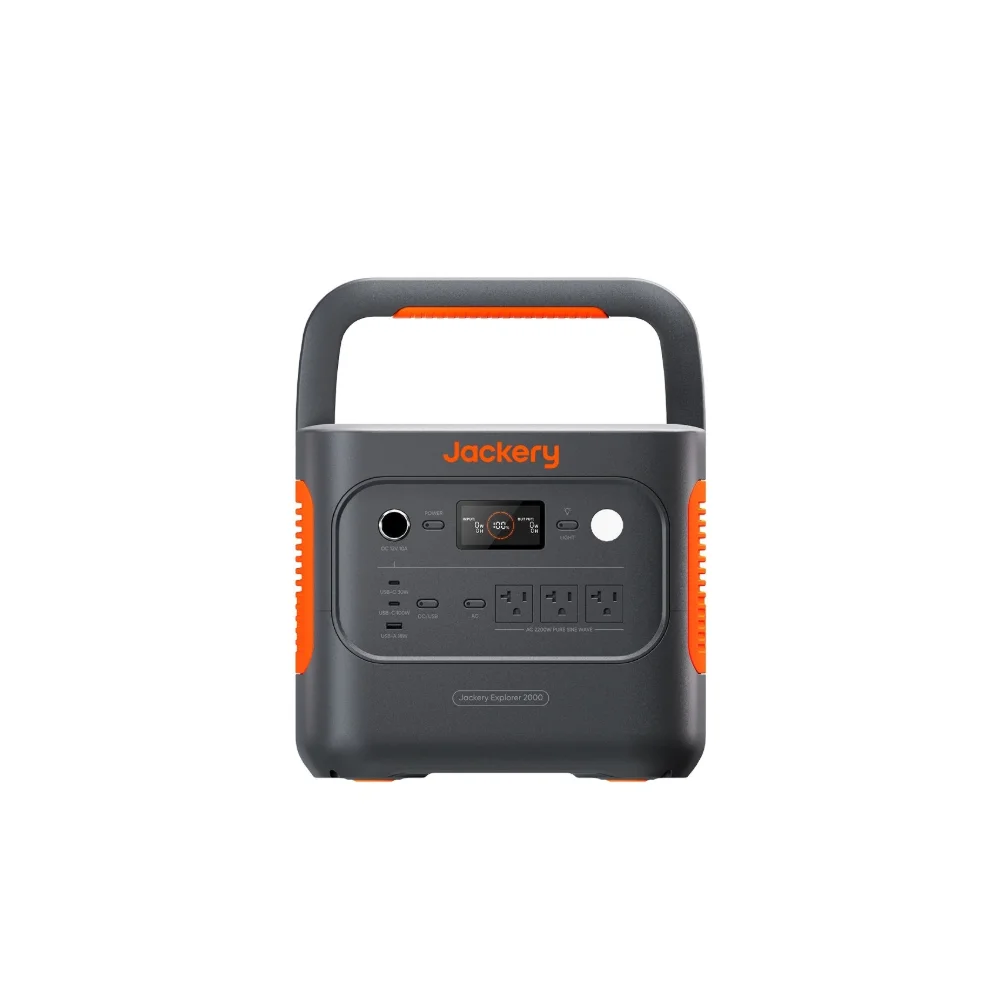

A rideshare or delivery shift runs on a phone — navigation, the driver app, payment confirmations, sometimes a second phone for a different platform running at the same time. Run that setup for eight or ten hours straight while the screen stays on and GPS stays active, and a single phone can burn through more battery than a car’s 12V outlet comfortably replaces, especially with a dash cam and a phone mount pulling from the same socket. Drivers end up choosing between navigation and charging, or driving around with a phone perpetually at 40%, worried about it dying mid-trip. A small power station solves this cleanly: enough dedicated outlets to run everything at once, enough capacity to outlast a full shift, and small enough to live in a footwell or console without eating cargo space you need for deliveries.
Why the car’s built-in outlet often isn’t enough
A car’s 12V outlet is a single shared circuit, usually fused around 10–15 amps, or roughly 120–180 watts total. Split that between a phone charger, a dash cam, and a phone mount with a wireless charging pad, and each device gets a fraction of what it could otherwise draw, which is why phones charge noticeably slower plugged into a car than into a wall. A power station sidesteps this by giving each device its own dedicated port — USB-C, USB-A, and AC outlets that don’t compete with each other for the same limited circuit — so a phone charging via USB-C PD actually gets its full rated wattage instead of a diluted share.
What a driver actually needs to power
- Primary phone running navigation and a driver app. 10–18 watts while actively navigating with the screen on, which adds up fast over a long shift.
- Second phone for a delivery platform. Similar draw, often run at a lower brightness or in the background, closer to 5–10 watts.
- Dash cam. 3–6 watts continuous for most models, low but constant for the entire shift.
- Small 12V cooler for food delivery. 40–60 watts while actively cooling, cycling on and off rather than running continuously.
- Laptop or tablet for order management. 30–60 watts if used between rides.
Two phones, a dash cam, and occasional laptop use lands most drivers around 40–70 watts of average continuous draw across a shift — well within what a compact station handles easily.
Sizing for a full shift without recharging mid-day
At roughly 50 watts average draw, a 288Wh station like the Jackery Explorer 300 Plus covers around five hours — solid for a half-shift or a driver who tops it up during breaks — while topping out around eight to nine hours on a lighter phones-and-dash-cam-only load. Drivers working long full-day shifts, or running a cooler bag on top of the phone and dash cam load, are better served stepping up to something with more headroom, since the cooler’s cycling draw eats into runtime faster than steady electronics do. Either way, the point of sizing correctly is not having to think about it mid-shift — plug in at the start, forget about it until you’re home.
Fitting it in the car without losing space
For delivery drivers especially, cargo space is the constraint, not power. A compact unit like the EcoFlow TRAIL 200DC is small enough to sit in a footwell, cupholder tray, or strapped into a passenger seat without eating into the trunk space food or packages need. It skips a full AC inverter in favor of high-output USB-C and 12V DC ports — a real plus for this use case specifically, since almost everything a driver is charging (phones, a dash cam, most laptops) runs off USB-C or 12V anyway, and skipping the AC inverter keeps the unit lighter and more compact for the same battery capacity.
Recharging between shifts
Most drivers will get the best results charging the station at home overnight on a wall outlet rather than relying on car charging, since a 12V car charge is slow and defeats some of the purpose of having dedicated outlets in the first place. Treat the station like a phone: plug it in when you park for the night, unplug it full in the morning, and you start every shift at 100% without having to think about it during the day.
Frequently asked questions
Will a power station charge my phone faster than my car’s outlet?
Usually yes, especially if you’re also running a dash cam or second device off the same car outlet. A power station’s dedicated USB-C PD port delivers its full rated wattage to your phone without sharing the circuit with anything else.
How long will a compact power station last during a full shift?
For two phones and a dash cam running around 40–50 watts combined, a 288Wh unit typically lasts five to nine hours depending on how much of that time is active navigation versus idle background use. Adding a 12V cooler shortens that window meaningfully.
Is it safe to leave a power station in a hot car during a delivery shift?
Occasional exposure during a shift is generally fine, but lithium batteries degrade faster with repeated extreme heat exposure. Avoid leaving it in a parked car on very hot days for extended periods when you’re not using it, and bring it inside overnight rather than storing it in the car long-term.
Do I still need my car’s 12V outlet if I have a power station?
Not really, once the station is charged — most drivers use it as the primary charging source for the whole shift and reserve the car outlet as a backup for the drive home if the station runs low.