
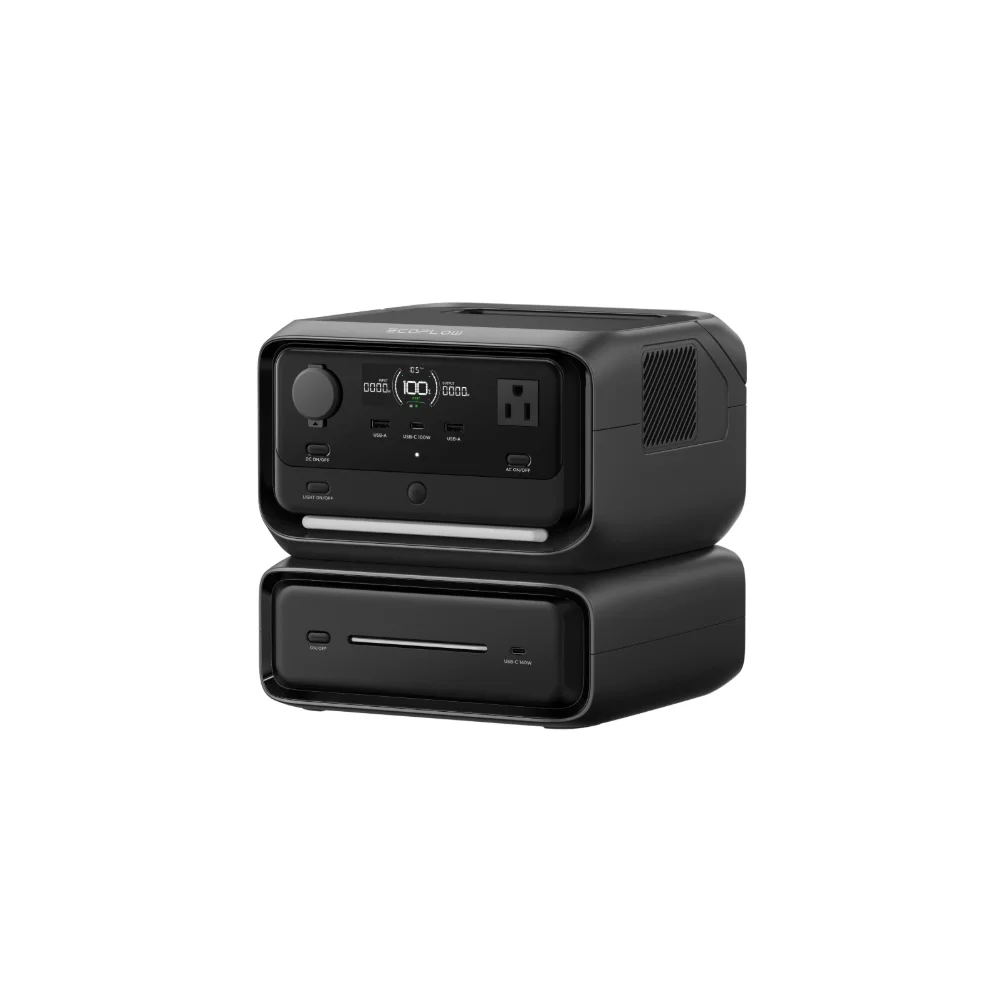

Nothing kills a tailgate faster than the TV cutting out during the second quarter because your power station tapped out. Between a screen, a speaker, a phone charging station for six people, and a griddle for burgers, a tailgate setup pulls more continuous and peak power than most people expect — and a lot of tailgaters find that out the hard way, three hours before kickoff, standing next to a dead battery. Sizing this right isn’t complicated, but it does require doing actual math instead of guessing based on a product photo of someone grilling next to a power station. Here’s what really draws power at a tailgate, how to add it up, and which capacity gets you from the parking lot opening to the final whistle without rationing.
What’s actually pulling power at a tailgate
Every tailgate is different, but the load list tends to repeat itself. Here’s what typically draws power and roughly how much:
- A TV. A 32–43 inch LED television running off a power station draws somewhere around 30–60 watts continuously — small, but it runs for hours, which adds up.
- A Bluetooth speaker or portable sound system. A single speaker might pull 20–40 watts at moderate volume; a bigger party speaker or PA-style rig can climb toward 100–150 watts, especially with bass boosted.
- A 12V or thermoelectric cooler. These cycle on and off rather than running flat-out, so a unit rated around 45–60 watts usually averages closer to half that over several hours.
- An electric griddle or induction warmer. This is the big one — griddles and portable induction burners commonly draw 1,200–1,800 watts, and that’s the number that eliminates small power stations from consideration entirely.
- Phone and tablet charging. Individually trivial at 10–20 watts each, but multiply that by everyone in your group over a five-hour tailgate and it’s a real chunk of your battery.
- String lights or a lantern. LED string lights are cheap on power, usually 10–30 watts for a full strand, so they’re rarely the limiting factor.
Doing the math: a real game-day power budget
The trick with tailgate power isn’t just adding up wattage — it’s separating what runs continuously from what spikes briefly. A TV, speaker, and cooler running together for five hours might average around 120–150 watts combined, which works out to roughly 700–800 watt-hours over the whole tailgate. That’s already pushing a 500Wh-class unit like the EcoFlow RIVER 2 Max close to its limit before anyone’s even cooked anything.
Add a griddle into the mix — even just 30–45 minutes of cooking at 1,500 watts — and you’ve added another 750–1,100 watt-hours on top. That single appliance can double your total energy budget for the day, and it also requires a power station whose continuous output rating actually clears 1,500–1,800 watts, not just one with a big battery. This is where a lot of shoppers get tripped up: they size for capacity (watt-hours) and forget to check the output rating (watts), and then the griddle simply won’t turn on, or it trips the unit’s overload protection.
Why the output rating matters as much as the battery size
A power station’s watt-hour rating tells you how long it lasts. Its watt rating tells you what it can actually run at once. For tailgating, both numbers matter because you’re combining a handful of continuous small loads with one or two appliances that draw a lot for a short burst. A unit like the EcoFlow DELTA 3 — 1,024Wh with an 1,800W continuous output — covers a TV, speaker, cooler, and full day of phone charging with real headroom left, and its output rating clears most griddles and induction warmers without issue.
For bigger groups running a griddle, a coffee maker, and a bigger sound system all at once, step up to something like the Jackery Explorer 1500 v2. Its 2,000W output and 1,536Wh capacity give you enough margin that you’re not doing mental math every time someone plugs in a new device, and the extra capacity means you’re not fully drained by the time the game actually starts.
Sizing by crew size and cook setup
- Small group, no cooking appliance. Just charging phones, running a speaker, and maybe a small TV — a 500Wh-class unit is plenty for most of a day.
- Medium group with a TV and cooler running all day. Plan for 1,000Wh and an output rating of at least 1,000–1,500W to leave room for the occasional appliance.
- Full spread with a griddle or induction burner. You need both capacity (1,000Wh or more) and a continuous output rating of 1,800W or higher — this is non-negotiable, not a nice-to-have.
- Multi-game weekends or all-day pregame-to-postgame setups. Consider bringing a spare charging option or a compact solar panel so you’re not starting Sunday’s game with a half-charged unit.
Keeping it charged in the parking lot
Most tailgaters top off their power station from a wall outlet the night before and call it done, which works fine for a single game. If you’re doing a full weekend of tailgating or driving to the lot the night before, a car charging cable extends your runway, and most modern power stations recharge meaningfully from a 12V outlet over a few hours. Solar is a secondary option in a parking lot — you’re often boxed in by other vehicles and awnings — but a panel propped against a tailgate on a sunny early game day can still add a useful amount of charge if you have the space for it.
Frequently asked questions
Can a power station run a full-size griddle?
Most portable griddles and induction warmers draw 1,200–1,800 watts, so you need a power station with a continuous output rating that clears that number, not just a large battery. Units rated 1,800W or higher, like the EcoFlow DELTA 3 or Jackery Explorer 1500 v2, handle this comfortably; smaller 300–600Wh units generally will not.
How long will a power station run a TV and speaker at a tailgate?
A TV and speaker together typically draw somewhere around 60–100 watts combined. On a 1,000Wh unit, that’s realistically 8–12 hours of runtime, more than enough for a full tailgate window even with some phone charging mixed in.
Is a smaller power station ever the better choice for tailgating?
Yes — if you’re not cooking with an electric appliance and just need to charge phones, run a speaker, and maybe a small TV, a compact 500Wh unit is lighter to carry and easier to stash in a truck bed. Save the bigger units for setups that include a griddle, induction burner, or a larger sound system.
Do I need a generator instead for tailgating?
For most tailgate loads, no. A gas generator is louder, requires fuel, and many stadium lots restrict or ban them outright. A battery-based power station covers TVs, speakers, coolers, and even griddles quietly and without fuel logistics, which is why they’ve largely replaced small generators in tailgate lots.