
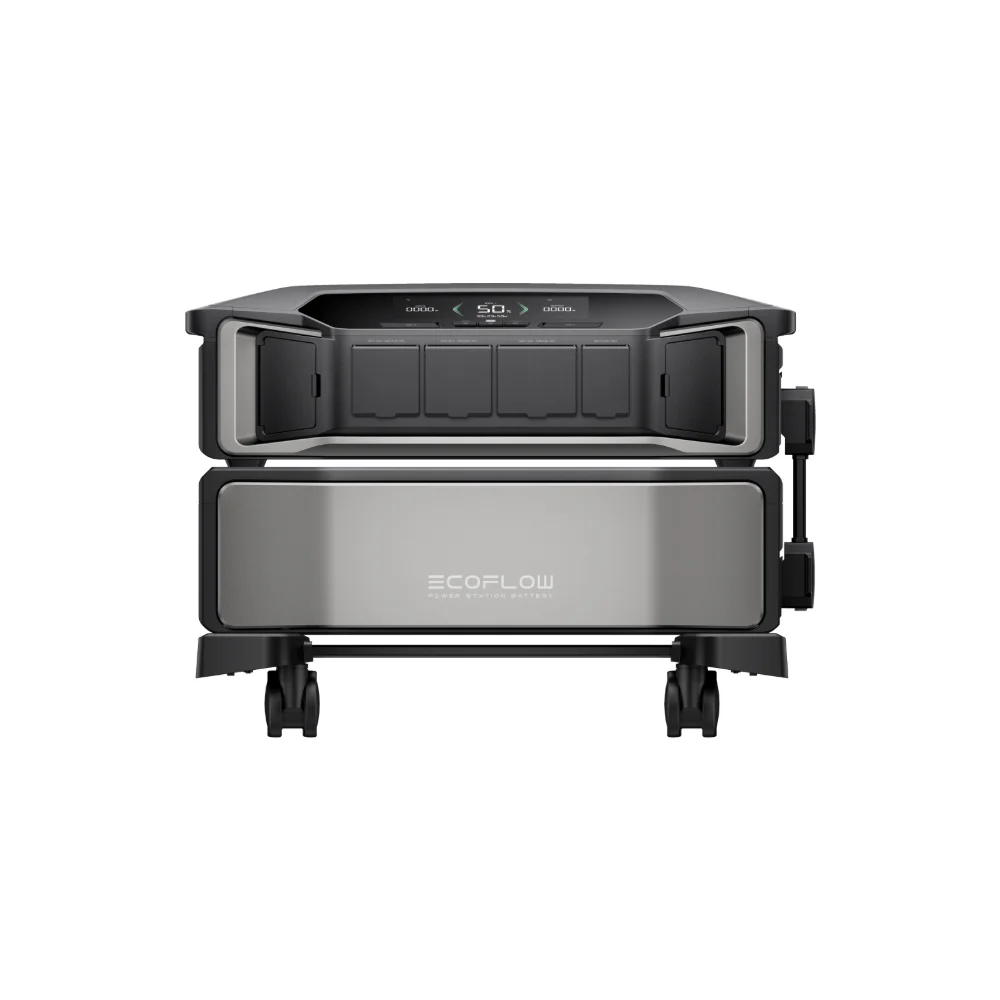

A sump pump is one of the toughest loads you can put on a portable power station — not because it draws much power continuously, but because of its startup surge, and because of an overlooked drain that has nothing to do with the pump itself. Sizing this wrong doesn’t show up as an inconvenience; it shows up as water in your basement during exactly the storm you were trying to prepare for.
Wattage by pump size
| Pump size | Running watts | Startup surge |
|---|---|---|
| 1/3 HP | 600-800W | 1,300-2,900W |
| 1/2 HP | 800-1,050W | 2,150-4,100W |
| 3/4 HP | 1,000-1,500W | 2,000-4,000W |
Real hands-on testing with actual submersible pumps — not just spec sheet comparisons — found that a 1/2 HP pump running at roughly 800W needs 2,000-2,400W of surge capacity just to start. The complication: many power stations advertise impressive surge ratings that only actually sustain for 100-200 milliseconds. Older pumps, or ones handling a higher lift height (how far up the pump has to push water), can need a longer startup window than that — which means a unit with an “adequate” surge spec on paper can still fail to start your specific pump in practice.
The recommended surge capacity, by scenario
Based on real testing rather than spec-sheet math alone: a 1/3 HP pump calls for at least 3,000W of surge capacity; a 1/3-1/2 HP pump is better matched to 4,500W surge; a straight 1/2 HP pump wants roughly 4,000W peak; and 1/2-3/4 HP pumps, or setups running multiple pumps, need 5,200W or more surge headroom. If your pump’s exact HP and surge behavior are unknown, err toward the higher end of this range rather than the minimum — a pump that fails to start during an actual flood defeats the entire purpose of the backup.
The overlooked drain: idle inverter draw
This is the detail most sizing guides miss entirely, and it matters more than it sounds. A power station’s inverter draws standby power continuously just by being on and ready — typically 20-50W — even during the stretches when the pump itself isn’t actively running. Over a 48-hour outage, that idle draw can consume nearly as much total energy as the pump’s actual cycling: one real-world estimate put pump cycling at roughly 320Wh over 48 hours for an 800W pump on light cycling, while idle inverter draw over that same period consumed close to 960Wh — three times more than the pump itself used. Size only for the pump’s running and surge wattage, ignoring this idle draw, and you’ll come up meaningfully short on total capacity.
Realistic runtime by capacity
For a typical 1/3 HP pump (roughly 700W running) cycling 5-10 minutes per hour during heavy rainfall — about 117Wh consumed per hour of storm — a 1,024Wh power station provides roughly 8-9 hours of storm cycling, while a 2,048Wh unit stretches to about 16-18 hours. These estimates shrink fast if the pump is working overtime during sustained, heavy flooding rather than the lighter cycling pattern used in the estimate. Once you factor in the idle inverter draw discussed above, most guidance converges on a practical minimum: at least 2,000Wh of capacity for any real sump pump backup plan, and 3,000Wh or more for flood-prone areas where multi-day outages during storms are a realistic scenario.
What to do before the next storm, not during it
Test your actual setup now: fully charge the power station, connect the real sump pump, and confirm it actually starts and runs through at least a few cycles — don’t assume compatibility from spec sheets alone, since real startup behavior varies by pump age and lift height in ways a datasheet can’t fully capture. Keep the unit charged and know exactly where it is before storm season, and if your area sees genuinely extended multi-day outages during major flooding events, plan for solar recharging capability or a way to top off the unit mid-event rather than assuming a single charge will cover the whole storm.
FAQ
Why did my power station’s specs look sufficient but the pump still wouldn’t start?
This is almost always the surge duration issue — the unit’s surge rating may only hold for a fraction of a second, while your specific pump’s motor needs longer than that to reach running speed, especially if it’s older or lifting water a greater height.
Does a bigger battery capacity fix a surge problem?
No — capacity (Wh) and surge capability (W, and its duration) are separate specs. A larger battery with an inverter that can’t sustain the needed surge duration still won’t start the pump.
Can I reduce the idle inverter draw somehow?
Some units offer an eco or sleep mode that reduces standby draw when no load is detected — check if your specific power station has this feature and whether it’s compatible with a pump’s intermittent on/off cycling pattern without causing startup delays.
Should I test the setup with the pump running dry, or does it need to actually be pumping water?
Testing with the pump actually submerged and moving water gives a more realistic picture of real load than running it dry, since the actual pumping load affects both startup surge and running wattage.
Bottom line
Size for your pump’s real startup surge — tested, not assumed — and don’t forget the inverter’s own idle draw, which can rival the pump’s actual energy use over a multi-hour outage. For most residential sump pumps, that means a minimum of 2,000Wh capacity and 3,000-5,200W of genuine surge capability, tested with your actual pump before you need it for real.
This post may include affiliate links — if you buy through them, we may earn a small commission at no extra cost to you. It doesn’t change what we cover or how we rank anything.
Sources externes citées
- Power Station Pick — Best Portable Power Station for Sump Pump Backup (Tested Against Real Startup Surge)
- PoweredThrough — Will a Portable Power Station Actually Run Your Sump Pump?