
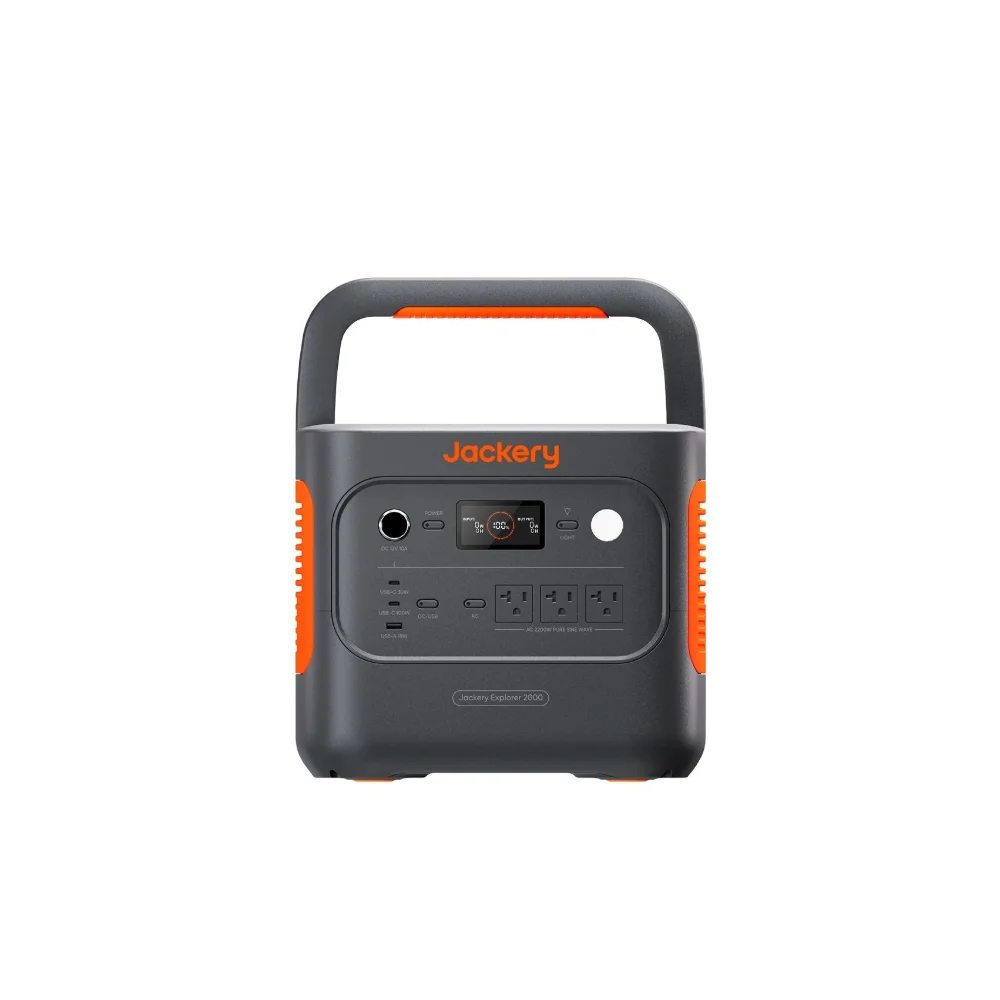

Solar charging a power station is the feature that sells the fantasy — infinite power, no plug required, fully off-grid. The reality is a bit more arithmetic than that, and the number on the panel’s box is rarely the number you’ll actually see. Here’s how solar charging power station setups actually work, and how to size one that won’t leave you disappointed on a cloudy afternoon.
This article may include affiliate links — if you buy through them we may earn a small commission at no extra cost to you, but our recommendations are based on our own independent research.
The Basic Math of Solar Charging Power Station Setups
A solar panel’s wattage rating (say, 200W) is its output under ideal lab conditions — full sun, perfect angle, cool temperature. In real-world use with good sun and a reasonably angled panel, expect somewhere around 70-85% of that rated output. So a 200W panel in roughly 5 hours of strong midday sun will typically generate somewhere in the range of 700-850Wh — close to a full recharge for a 1,000Wh power station in a single good day.
Higher-efficiency panels push that further. Premium monocrystalline panels in the 350W class with efficiency ratings north of 23% can generate 1,225-1,487Wh over the same 5-hour window under good conditions — nearly double the output for less than double the wattage rating, which is exactly why panel efficiency matters as much as raw wattage when you’re comparing options.
What Actually Slows Solar Charging Down
- Cloud cover. Even light cloud cover can cut output by 50% or more. Overcast days can drop generation to a fraction of rated output.
- Panel angle. A flat panel loses significant output compared to one angled to face the sun directly. Repositioning a panel every hour or two as the sun moves makes a real, measurable difference.
- Heat. Counterintuitively, panels lose some efficiency in extreme heat. Good airflow behind the panel helps.
- The power station’s max solar input rating. This is the one people miss most often — pairing a 400W solar array with a station that only accepts 200W of solar input means you’re wasting half your panel’s potential output.
Matching Your Panel to Your Power Station
Before buying panels, check your power station’s maximum solar input wattage — it’s usually listed separately from the AC charging speed and is often lower than you’d assume. Entry-level units might cap out around 100-200W of solar input, mid-range units often accept 400-600W, and premium models with MPPT charge controllers can handle 1,000W or more, letting you pair multiple panels for genuinely fast recharge times. Buying more solar wattage than your station can accept is a common and avoidable mistake — check this number before you check the panel’s price.
My Honest Take on Solar Charging
Solar charging is genuinely useful for extending a station’s usefulness during a multi-day outage or an off-grid camping trip. But I’d push back on anyone who buys a power station specifically because “it charges from the sun” without accounting for real conditions. On a genuinely sunny day with a properly sized panel, you can expect a full recharge in roughly a day. On an overcast day, or with an undersized panel, that same recharge could stretch to two or three days. Plan around the second scenario, not the marketing photo of the first.
Bottom Line
Match your panel’s real-world output (not its rated wattage) to your station’s maximum solar input, keep the panel angled toward the sun and repositioned through the day, and treat solar as a way to extend your power during an extended outage — not as a guaranteed instant recharge whenever you need one.
Sizing Your Panel: A Worked Example
Let’s say you own a 1,000Wh power station and want to fully recharge it via solar within a single day. Working backward: with roughly 75% real-world efficiency and about 5 hours of strong midday sun, you’d need a panel rated around 270-300W to comfortably hit that target in one day. Want a safety margin for a partly cloudy day, or to recharge in half a day instead? Size up to 400-500W. This is exactly the kind of back-of-envelope math worth doing before buying panels, rather than guessing and hoping it works out.
Portable vs Fixed Panel Setups
Foldable portable panels are the most common pairing with power stations — they pack down for storage or travel and can be repositioned through the day to track the sun. Rigid panels (like those used on RV roofs or semi-permanent setups) generally offer better durability and slightly higher efficiency but lose the ability to be angled toward the sun, which costs you some real-world output compared to a well-positioned portable panel. For most people using a power station for emergency backup or camping, portable foldable panels are the more practical choice — you can chase the sun as it moves, which a fixed panel simply can’t do.
AC Wall Charging vs Solar: Speed Comparison
Worth being clear about this since it surprises people: plugging into a wall outlet is almost always faster than solar, often charging a mid-size unit from empty in under two hours versus a full day of good sun via panels. Solar’s value isn’t charging speed — it’s charging where there’s no wall outlet at all. My take: think of solar as your off-grid charging method and AC wall charging as your fast, reliable top-up whenever you have access to it, rather than expecting solar to match wall-outlet speeds under any circumstances.
A lot of buyers are disappointed by solar charging speed simply because they expected wall-outlet performance from panels. Once you recalibrate that expectation, solar’s real value as a slow, quiet, fuel-free trickle charge over the course of a day becomes obvious rather than disappointing.
Frequently Asked Questions
Can I charge from solar and use the power station at the same time?
Yes, most units support pass-through charging, meaning you can draw power while solar input is simultaneously topping up the battery. Just be aware that your net charging rate drops by however much you’re actively drawing.
Do I need special cables to connect solar panels?
Most brands use proprietary connectors matched to their own panels and stations, so mixing brands often requires an adapter cable, which is sometimes but not always included. Check compatibility before assuming any solar panel will plug directly into any power station.
Is it worth buying solar panels if I mostly charge from a wall outlet?
If solar charging is purely a “nice to have” backup for the rare extended outage, a smaller, more affordable panel is a reasonable insurance policy. If you’re genuinely planning off-grid use — camping, van life, remote work — investing in a properly sized panel setup pays off much faster.
Seasonal Variation Is Bigger Than Most People Expect
The math earlier in this article assumes a strong summer sun angle. In practice, solar output varies dramatically by season and latitude — a panel that comfortably delivers 800Wh on a June afternoon might only manage half that on a shorter, lower-angle December day, even with identical weather. If you’re relying on solar as genuine emergency backup rather than a fair-weather camping bonus, it’s worth mentally budgeting for winter-case numbers, not summer-case ones, especially if you live somewhere with genuinely short winter days. It’s an easy thing to miss until it actually happens: a “one sunny day” recharge that feels routine in summer can easily stretch to two full days once you’re into a shorter, lower-angle December sun.
One more practical tip: keep a small log (even just a note on your phone) of how many watt-hours your panel actually delivered on a given day versus its rated wattage. After a season or two of casual tracking, you’ll have a far more accurate personal benchmark for planning than any generic percentage estimate — including the ones in this article.
Related Reading
- Portable Power Station Buying Guide for Beginners (2026)
- Lithium-ion vs LiFePO4 Batteries in Portable Power Stations: What’s the Difference?