
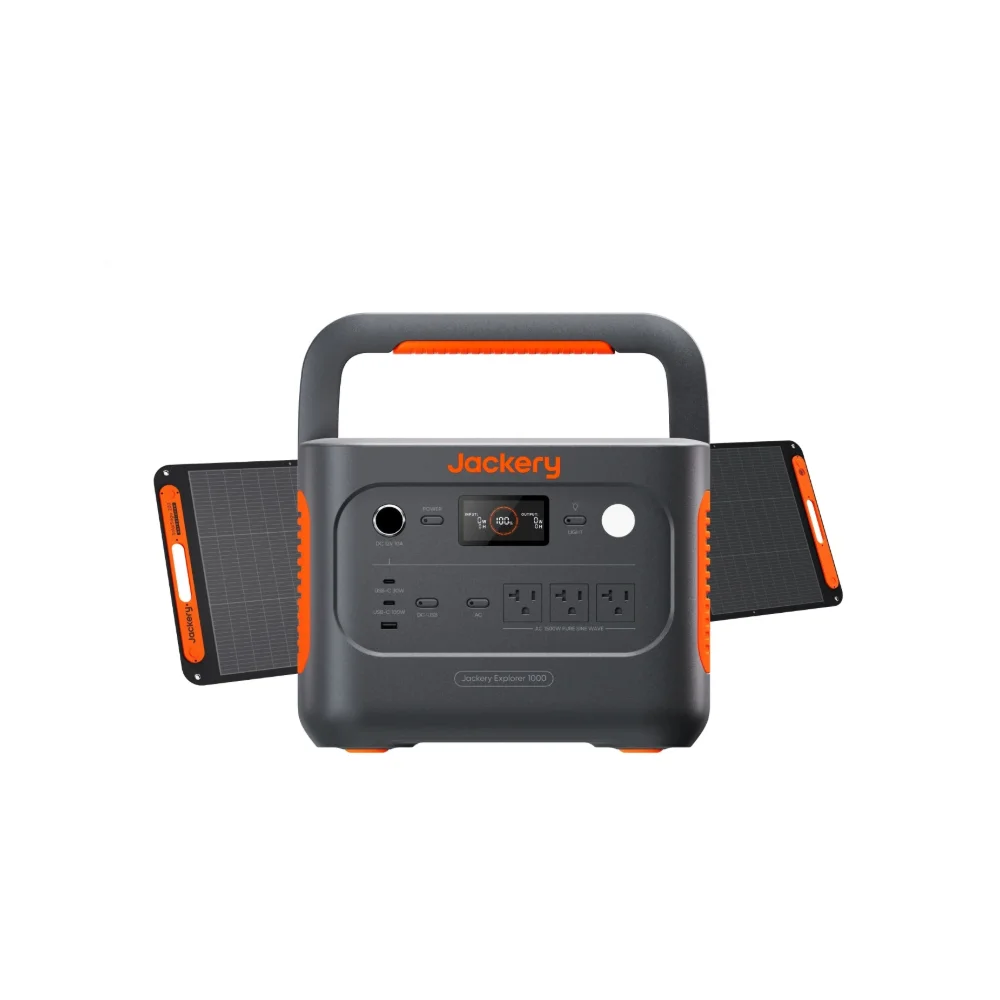

The honest starting point for any food truck operator researching solar generators: a battery power station is not going to replace your cooking equipment’s generator, and any guide that suggests otherwise is overselling. What a solar generator setup actually does exceptionally well is protect the systems that keep your business running and your card payments processing — which, for many vendors, matters more than the griddle staying on for one more minute.
Sizing your actual cooking load first
Before considering any solar or battery setup, the standard approach for sizing generator capacity is straightforward: list every piece of equipment (refrigerator, fryer, griddle, exhaust fan, lighting, POS, water heater, and any AC), note each item’s running wattage from its nameplate or manual, calculate running watts plus the single largest starting surge among them, then add 20-30% headroom on top of that total. Rough generator sizing by truck type: 2,000-5,000W for small trucks, 6,000-12,000W for standard trucks, and 12,000-20,000W+ for high-power setups running heavier equipment.
Why noise is a compliance issue, not just a comfort one
This is a genuinely underappreciated point: health departments and local regulators are increasingly citing open-air food vendors for operating gas generators within 10-25 feet of food preparation and service areas — noise and exhaust proximity to food handling is becoming an actual enforcement issue in some jurisdictions, not just a customer-experience concern. Battery power stations operate in the 20-50 decibel range, compared to 65-75dB for gas generators — the difference between something like a gentle breeze and something like a loud vacuum cleaner running the whole service. For vendors operating in shared markets, festival settings, or areas with tightening noise ordinances, that gap can be the difference between compliant and cited.
The hybrid strategy that actually works
Given that cooking equipment exceeds what a portable battery system can reasonably power, the practical setup most guides converge on is hybrid: keep a conventional commercial generator for primary cooking loads (griddle, fryer, the equipment that actually needs serious continuous wattage), and use a portable power station as a dedicated, silent secondary system specifically for refrigeration, POS protection, lighting, and device charging. This isn’t a compromise — it’s matching each power source to what it’s actually good at.
The real numbers behind protecting your POS system
Here’s the case for the secondary battery system in concrete terms: a food truck’s secondary electrical load — refrigeration, POS, lighting, ventilation — typically totals around 4,730Wh across a full day of operation. That’s comfortably within reach of a large portable power station like the EcoFlow DELTA Pro (3,600Wh capacity, 7,200W surge), which can handle a commercial refrigerator’s roughly 1,200W startup surge while sustaining everything else, and with 400W of solar panel input during market hours, can maintain a viable reserve through teardown and transit.
The financial argument is direct: card reader downtime costs roughly $340 per hour in lost sales for a typical vendor. A dedicated power station protecting your POS system from even a single main generator hiccup or fuel-related outage during a busy service can pay for itself in that one averted incident alone — a rare case where the ROI math on backup equipment is almost embarrassingly simple.
What to actually prioritize when shopping
For the secondary system specifically: prioritize enough surge capacity to handle your refrigerator’s startup (check the nameplate — commercial units often surge higher than residential fridges), enough total capacity to cover a full service day’s secondary loads (the ~4,730Wh figure above is a reasonable starting target), and genuine portability since the unit needs to fit in an already-tight truck alongside your other equipment. Solar panel input is a real bonus if you’re parked in the same sunny spot for hours during service — it directly extends your reserve without needing a recharge stop.
FAQ
Can a portable power station ever fully replace my main cooking generator?
For most food trucks, no — griddles, fryers, and similar equipment draw well beyond what portable battery systems are built to sustain. Treat a power station as a dedicated secondary system, not a generator replacement.
Is it worth getting a power station just for POS protection alone?
Given the roughly $340/hour cost of card reader downtime, protecting just your POS and a bit of lighting with even a modest-capacity unit is one of the easier ROI cases in this category — it doesn’t need to power everything to be worth having.
Do local health codes actually specify a minimum distance for generators?
Requirements vary significantly by jurisdiction — check with your specific city or county health department and any market or event organizer’s rules, since the 10-25 foot range cited here reflects a general trend, not a universal number.
How much solar panel capacity do I realistically need for a full service day?
It depends on your parking duration and sun exposure, but 400W of panel input is a reasonable middle-ground target for meaningfully extending a large power station’s reserve during a multi-hour service window in good sun.
Bottom line
Don’t try to replace your cooking generator with a battery system — instead, size a dedicated power station around your secondary loads (refrigeration, POS, lighting) and treat it as protection for the revenue-critical systems a generator hiccup would otherwise take down. The quieter operation is a genuine compliance and comfort advantage on top of that.
This post may include affiliate links — if you buy through them, we may earn a small commission at no extra cost to you. It doesn’t change what we cover or how we rank anything.
Sources externes citées
- Anker SOLIX — Food Truck Generator Power Guide: How to Choose
- Portable Power Lab — Best Portable Power Station for a Food Truck and Outdoor Vendor