
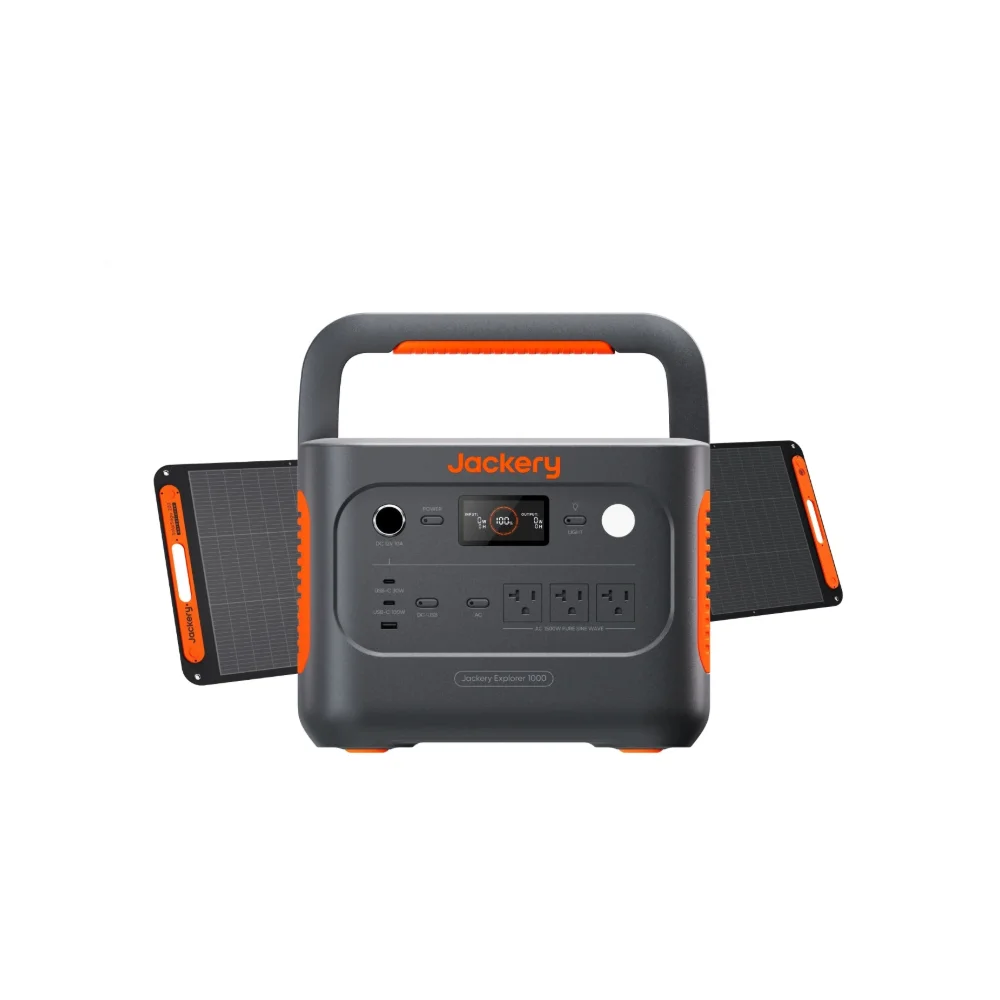

Somewhere between “buy a $900 power station” and “spend $15,000 on a whole-home battery installation” is a real decision most homeowners have to make with a real budget ceiling. The two categories solve overlapping problems — keeping the lights on, the fridge cold, medical equipment running — but they do it at completely different scales, price points, and levels of commitment. Picking the wrong one means either overspending on capacity you’ll rarely use, or ending up with a unit that can’t cover the outage that actually happens. Here’s how to think about the trade-off honestly, without the sales pitch either category tends to lean on.
What each category actually is
A portable solar generator is a self-contained battery, inverter, and set of outlets in one box, ranging from around 300Wh up to roughly 3,000–4,000Wh for the largest consumer units. It plugs into whatever you want to power directly, charges from a wall outlet, a car, or a solar panel, and needs no installation. A whole-home battery system is wired into your electrical panel, typically sized from 5kWh up into the tens of kWh, installed by a licensed electrician, and often paired with rooftop solar and sometimes an automatic transfer switch that kicks in during an outage without you touching anything.
The real cost gap
- Portable units run roughly $500–$3,000. A capable mid-size unit like the Jackery Explorer 1500 Ultra lands solidly in that range and can cover a handful of essential circuits during a short outage, no installation required.
- Whole-home systems typically run $10,000–$25,000+ installed. That figure includes the battery hardware, inverter, electrical work, permitting, and often solar panels bundled into the same project — a hybrid system like the Anker SOLIX E10 scales from 6kWh to 30kWh and sits toward the more accessible end of that category, but it’s still an installed system with electrician labor as part of the total cost.
- Installation labor is a bigger cost driver than most people expect. Panel upgrades, permitting, inspection, and electrician time can add thousands to a whole-home project regardless of which battery brand you choose.
- Portable units have no ongoing installation cost, ever. You can move, upgrade, or add a second unit without touching your home’s wiring.
What each one can actually power
A portable unit is built for a handful of specific things — a fridge, some lighting, a router, a laptop, maybe a well pump for short stretches. It’s not designed to run your whole house, and trying to stretch it to do so during a multi-day outage usually ends in disappointment. A whole-home system, by contrast, can be sized to carry an entire home’s essential circuits, or even the whole panel, for hours to days depending on battery size and how aggressively you manage usage. That capability is exactly why the price gap exists — you’re paying for scale and for the system managing itself automatically rather than you plugging things in as needed.
Where portability actually wins, budget aside
Even homeowners who could afford a whole-home system sometimes choose portable units, or a mix of both, because portability itself is a feature. A power station goes camping, rides in the truck bed for a job site, and comes inside during a hurricane — a wall-mounted battery does none of that. If your budget forces a choice, ask honestly how often you need whole-house coverage versus how often a portable unit covering the essentials, refilled by a car charger or generator if needed, would actually get you through.
A middle path: start portable, scale later
One underrated strategy for a smaller budget is buying a portable unit now and treating a whole-home system as a future upgrade rather than a now-or-never decision. A quality portable power station holds its value as a useful tool even after you eventually install a larger system — it becomes the unit that goes camping or covers a garage workshop instead of sitting unused. That’s a lower-risk way to get real backup power now without locking in a five-figure decision before you’ve lived with an outage or two and learned what you actually need covered.
Frequently asked questions
Can a portable solar generator power a whole house during an outage?
Not a whole house in the way a whole-home battery can. A portable unit is realistically sized for a handful of essential circuits or specific appliances plugged directly in, not for your entire electrical panel at once.
Is a whole-home battery worth it if I only lose power a few times a year?
For infrequent, short outages, most homeowners get more value per dollar from a portable unit or two. Whole-home systems make the most financial sense when outages are frequent, long, or when the battery is also doing daily work offsetting peak electricity rates alongside solar.
Do whole-home battery systems require solar panels too?
Not always — some are designed to charge from the grid alone. But most homeowners installing one also add or already have solar, since pairing the two lets the battery recharge for free during the day rather than relying entirely on grid power.
Can I add a whole-home battery system later if I start with a portable unit?
Yes, and this is a common path. The two systems don’t conflict with each other, and a portable unit remains useful for camping, travel, or garage power even after a whole-home system is installed.