
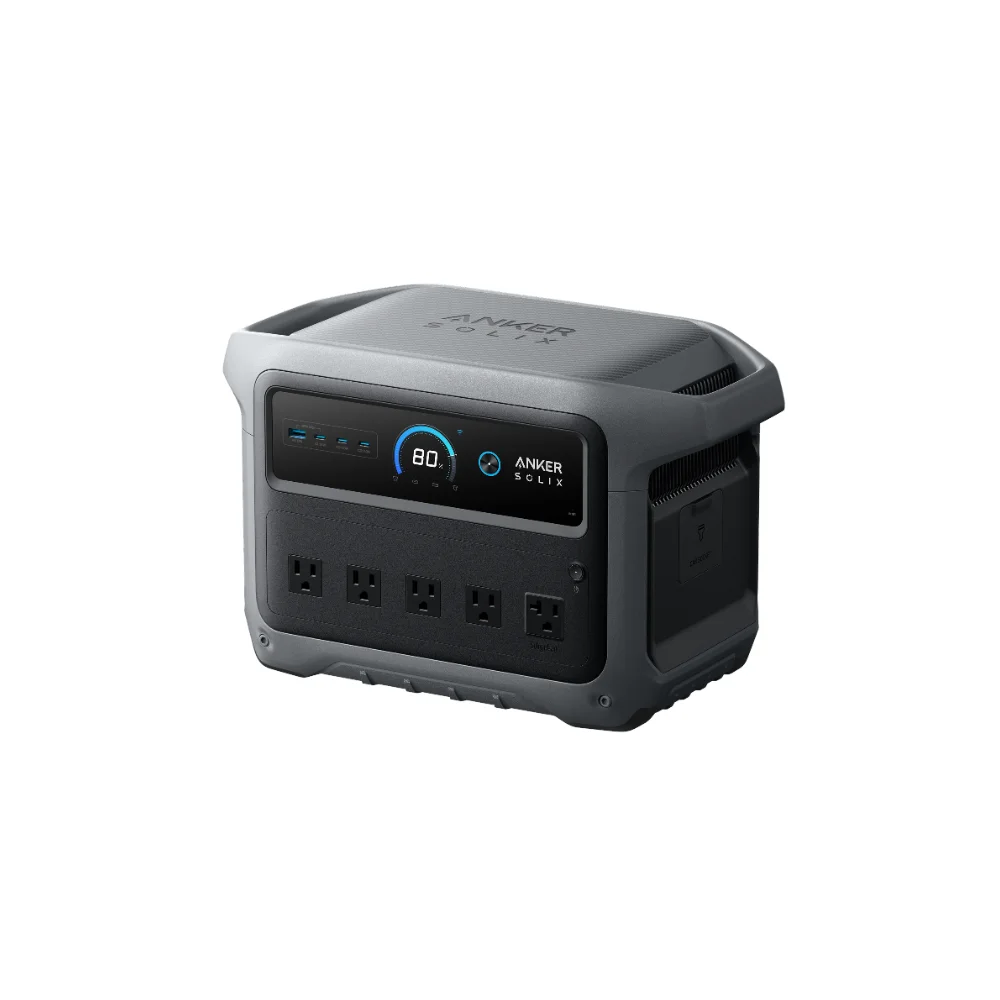

The single most common question I get about power stations isn’t about capacity or price — it’s “will this actually run my [insert appliance]?” The honest answer is that watt-hours (Wh) tell you how long something runs, but watts (W) tell you whether it runs at all. Get those two numbers confused and you’ll either overspend on capacity you don’t need or underspend on output you do. Here’s a practical, appliance-by-appliance breakdown.
Continuous Watts vs Surge Watts: The Distinction That Trips People Up
Every power station lists two output numbers: continuous watts (what it can sustain indefinitely) and surge or peak watts (a short burst it can handle for a few seconds). Appliances with motors or compressors — fridges, power tools, air conditioners — draw a big surge for a moment at startup, then settle into a much lower running wattage. A power station can have plenty of continuous capacity but still trip out if its surge rating can’t cover that startup spike. Always check both numbers against the appliance’s actual startup draw, not just its “normal operating” wattage printed on the label.
Small Electronics (Under 100W)
Phones, tablets, laptops, routers, and most USB-charged gadgets draw well under 100W combined. Any power station on the market, including entry-level units like the Jackery Explorer 300D, handles this category without breaking a sweat. This is the easiest use case there is, and it’s not where you need to spend extra on output headroom.
Medical Devices (CPAP: Roughly 30–60W)
A CPAP machine, including the humidifier, typically draws somewhere in the 30–60W range overnight, which is a tiny fraction of even a compact 1kWh-class unit’s capacity. The bigger consideration for medical devices isn’t wattage, it’s making sure the power station outputs pure sine wave power, since some CPAP machines and other sensitive electronics can behave unpredictably on modified sine wave output. Most name-brand power stations from Jackery, EcoFlow, BLUETTI, and Anker SOLIX use pure sine wave inverters across their current lineups, but it’s worth confirming for the exact model you’re considering.
Mini-Fridges and Coolers (60–180W Running, Higher Surge)
A typical mini-fridge or portable compressor cooler runs at somewhere between 60 and 180 continuous watts, but the compressor’s startup surge can spike several times higher for a second or two. This is exactly the kind of load where checking surge ratings matters more than continuous output — a power station rated for 1,800W continuous but with a weak surge rating could still struggle with a fridge’s startup kick.
Coffee Makers and Electric Kettles (700–1,500W, UK Kettles Higher)
This category catches people off guard. A basic drip coffee maker draws around 700–1,000W, but electric kettles are surprisingly power-hungry — US kettles often draw 1,000–1,500W, and UK kettles commonly hit 3,000W because of the different mains voltage. If you’re testing a power station’s kettle compatibility, check your specific kettle’s wattage label, since “a kettle” can mean wildly different numbers depending on where it was made.
Microwaves (600–1,200W)
Most countertop microwaves draw 600–1,200W while running, which sits comfortably within the continuous output of any 1,800W-class unit like the EcoFlow Delta 3 Plus or Jackery Explorer 1500 Ultra. Larger, higher-wattage microwaves can push closer to 1,500W, so it’s worth checking the specific model if you’re running one alongside other appliances simultaneously.
Hair Dryers and Space Heaters (800–1,800W)
These are genuinely demanding loads. A hair dryer on high can pull 1,500–1,800W, and space heaters often run in a similar range or higher. Running one of these alongside anything else on a sub-2,000W power station will eat your entire output budget, so plan to run them alone rather than alongside other appliances.
Power Tools (Varies Widely, Check Surge Closely)
Drills and small saws typically draw a few hundred watts running, but brushed-motor tools can surge to several times their running wattage at startup. This is another category where a unit’s surge rating — not just continuous watts — determines whether the tool starts up cleanly or trips the power station’s protection.
Quick Reference: What Fits Where
- Under 300W-class units (Jackery Explorer 300D, BLUETTI Elite 30 V2): phones, laptops, lighting, small fans
- 600–1,000W-class units (BLUETTI Elite 100 V2, EcoFlow River-tier): CPAP, microwave, coffee maker, mini-fridge
- 1,800-2,000W-class units (EcoFlow Delta 3 Plus, Anker SOLIX C1000 Gen 2, Jackery Explorer 1500 Ultra): most kitchen appliances, hair dryers, power tools individually
- 2,400W+ units (BLUETTI Elite 300, larger Jackery and EcoFlow units): multiple demanding appliances at once, small window AC units, short power-tool bursts
My Take
The mistake I see most often isn’t buying too little capacity — it’s assuming that a big Wh number automatically means an appliance will run. Before you buy, make a short list of the specific things you actually plan to power, look up their real running and startup wattage (not just a guess), and match that against the power station’s continuous and surge ratings, not just its capacity. That five-minute exercise prevents almost every disappointed-review complaint I’ve read about power stations “not working” for someone’s fridge or kettle.
Frequently Asked Questions
How do I find an appliance’s actual wattage?
Check the label or nameplate on the appliance itself, usually on the back or bottom, or look up the exact model number’s spec sheet online. Avoid relying on generic averages for anything with a motor or compressor, since actual draw varies a lot by model.
What happens if I exceed a power station’s wattage rating?
Most units will trip an internal overload protection and shut off output rather than being damaged, but it’s still an inconvenience worth avoiding by sizing correctly upfront.
Do I need to add up every appliance’s wattage separately?
Yes, if you plan to run them simultaneously. Add up the continuous wattage of everything you’ll have plugged in at once, and separately check that the highest individual startup surge among them doesn’t exceed the unit’s surge rating.
Related Reading
- Continuous vs Peak Power: What These Numbers Actually Mean
- What Size Power Station Do You Need to Run a Fridge?
- How to Choose the Right Power Station Capacity (Wh) for Your Needs
This post may include affiliate links — if you buy through them, we may earn a small commission at no extra cost to you. It doesn’t change what we cover or how we rank anything.
Khalid Zirari is the founder of Marjajo, where he researches and compares portable power stations, solar generators, and related backup power gear to help readers cut through spec-sheet marketing and find the right fit for their needs.