
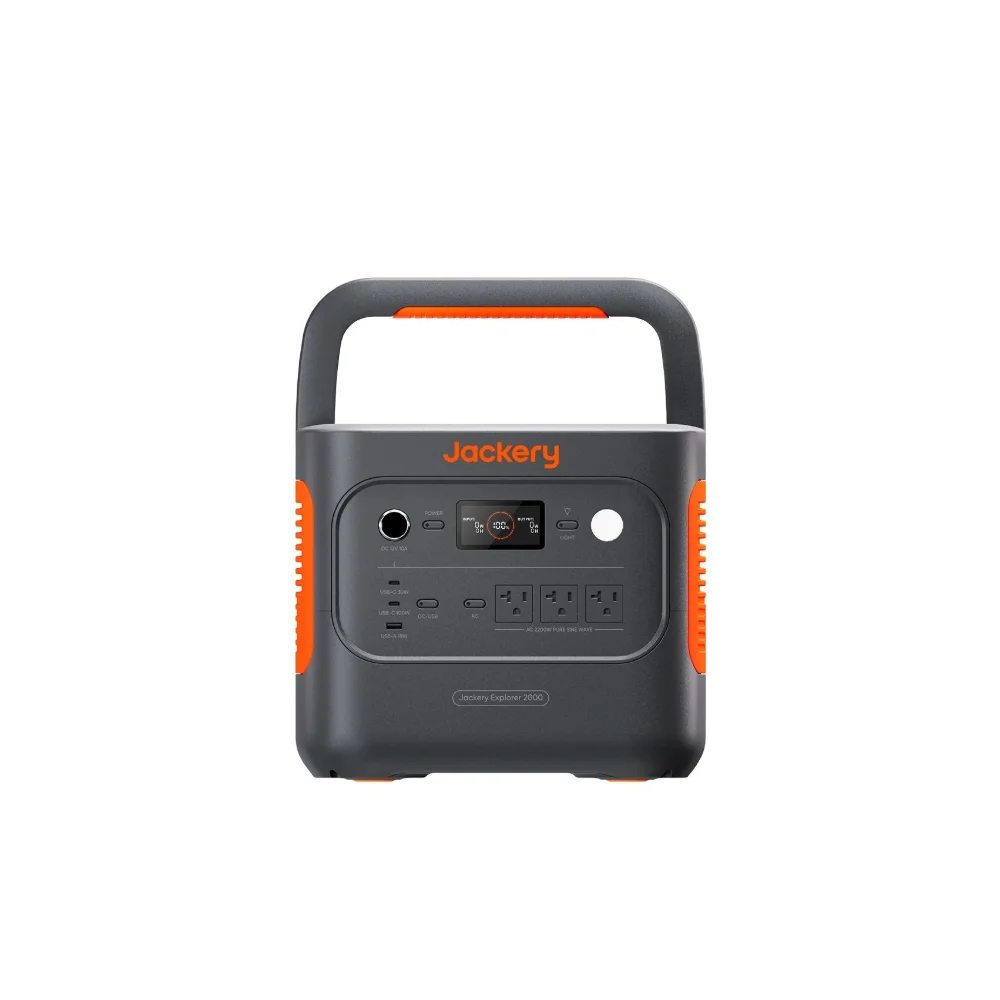

If you do any kind of contracting, remodeling, or property maintenance work, you’ve probably had the thought: could a power station for power tools job site setups replace a gas generator? It’s a reasonable question, and the answer genuinely depends on which tools you’re running and how you value quiet, fume-free operation against raw runtime. Let’s get into the specifics rather than a generic yes-or-no.
This article may include affiliate links — if you buy through them we may earn a small commission at no extra cost to you, but our recommendations are based on our own independent research.
Why Contractors Are Looking at Power Stations in the First Place
Gas generators are loud, they need fuel logistics, and a lot of residential job sites — especially in noise-restricted neighborhoods or indoor renovation work — are increasingly unfriendly to running one at all. A power station runs silent, produces zero exhaust, and can sit right next to you without hearing protection. The trade-off is capacity: you’re working with a fixed battery instead of a fuel tank you can top off indefinitely, so this is genuinely a better fit for some job types than others.
Matching Tool Wattage to Power Station Specs
Corded power tools vary enormously in their draw. A drill or impact driver might pull 300-800W under load. A circular saw or reciprocating saw is often in the 1,000-1,500W range. A miter saw or table saw can spike considerably higher on startup, particularly larger contractor-grade models. As with any compressor or motor-driven appliance, the startup surge — not the steady running wattage — is usually what determines whether a power station can handle a given tool at all.
This is where a rugged, high-surge unit like the Jackery Explorer 1500 Ultra earns its keep on a job site. It’s rated at 1,536Wh capacity with 1,800W continuous output and a 3,600W surge rating, and — just as relevant for job site use — it carries an IP65 dust and water resistance rating, which is a genuinely meaningful spec when a unit is going to live on a truck bed or a dusty framing site rather than a climate-controlled garage. At 38.6 lbs, it’s not something you’re carrying up a ladder, but it’s built to take the abuse of being loaded, unloaded, and knocked around daily.
Check current price on Jackery →
What a Power Station Handles Well on a Job Site
- Drills, impact drivers, and other handheld cordless tool chargers running all day
- Circular saws, jigsaws, and most handheld corded tools for intermittent use
- Job site lighting, radios, and laptops or tablets for plans and paperwork
- Small shop vacs for cleanup between tasks
Where a Generator Still Wins
If your day involves continuous heavy-draw equipment — a large compressor running constantly, a big table saw doing extended rip cuts, or multiple high-draw tools simultaneously — you’ll burn through a power station’s capacity fast, and recharging mid-shift isn’t always practical unless you’ve got a generator or shore power to top it off from. For crews doing that kind of continuous heavy-load work all day, a traditional generator, or a power station used alongside one rather than instead of one, is usually the more realistic setup. Our comparison of portable power stations vs traditional generators goes deeper into that trade-off if you’re weighing a full switch.
Recharging Between Jobs
A job-site power station typically gets recharged one of three ways: overnight from a wall outlet at the shop, from a truck’s 12V outlet during transit, or via solar if you’re working somewhere without reliable grid access. Fast AC charging matters more here than in most other use cases, since a unit that’s dead at 7am and needs six hours to top off isn’t useful for a crew that starts early. Check the specific charging time on whichever unit you’re considering rather than assuming — this is one spec that varies a lot between brands and models.
Setting Up a Realistic Test Before You Commit
Before relying on a power station for actual paid job site work, run your specific tool lineup off it for a real work session rather than trusting spec sheets alone — plug in your actual drill, saw, and whatever else you’d normally run, and confirm runtime and performance match what you’re expecting under real conditions, not idealized lab numbers. This catches mismatches (a tool’s startup surge that’s higher than its nameplate rating suggests, or a duty cycle that drains the battery faster than the math implied) while you’re testing on a slow day rather than discovering it mid-job when a client is waiting.
Why Power Quality Matters More on a Job Site Than at Home
Variable-speed tools — routers, some drills, anything with electronic speed control — are exactly the category of load that performs noticeably worse on cheap, dirty power. This is one more reason to confirm any power station you’re considering for job site use outputs pure sine wave power rather than a modified sine wave signal; the latter can cause a variable-speed tool to run rough, overheat, or behave unpredictably in ways that are hard to diagnose if you don’t know waveform quality is the culprit. Our explainer on pure sine wave vs. modified sine wave power covers exactly why this matters for motor-driven tools specifically, beyond the simpler wattage-matching math above.
One Large Unit or Multiple Smaller Ones for a Crew
If you’re outfitting more than a one-person operation, it’s worth thinking about power station strategy the same way you’d think about tool strategy: one large, expensive unit is a single point of failure if it’s damaged, stolen, or simply in use on a different part of a job site than where you need it. Several smaller units distributed across a crew or across different tool stations add redundancy and flexibility, at some cost in total efficiency and per-unit price. Our comparison of one big power station vs. two smaller ones covers this tradeoff in a home-backup context, but the same underlying logic — redundancy and flexibility versus raw efficiency — applies directly to a job site crew deciding how to split up their power budget.
Frequently Asked Questions
Can a power station run a table saw?
Smaller benchtop table saws often fit within a mid-to-large power station’s continuous and surge ratings, but larger contractor or cabinet saws can draw enough on startup to exceed even a high-surge unit. Check your specific saw’s nameplate rating before assuming it’ll work.
How long will a power station run tools on a typical job site day?
It depends entirely on your tool mix and duty cycle — a day of intermittent drill and saw use looks very different from continuous compressor operation. Estimate using your heaviest tools’ running wattage against the unit’s capacity, and build in a healthy margin.
Is a power station durable enough for daily job site use?
Look specifically for an IP-rated unit (IP65 or similar) if it’s going to be exposed to dust and moisture regularly — not every power station on the market is built for that kind of daily abuse, so this is worth confirming rather than assuming.
Can I run a power station off a generator to extend a full day’s work?
Yes, and this is a common hybrid setup — use the power station for quiet, portable power at the point of work, and periodically recharge it from a generator kept at a central location or in a truck, rather than running extension cords from the generator to every tool station directly.
Does cold weather affect job site performance the same way it affects camping use?
Yes, the same charging-below-freezing limitation and temporary cold-weather capacity reduction apply regardless of use case — a power station left in an unheated truck overnight on a winter job site needs the same warm-up consideration before charging as one used for winter camping or ice fishing.
Is it worth buying a ruggedized power station specifically marketed for job sites, or is a standard consumer unit fine?
For occasional or light use, a standard consumer unit with a reasonable IP rating is often adequate. For daily use across a demanding job site — regular drops, dust, temperature swings — a unit specifically built and rated for that environment tends to hold up better over time, even at a price premium.