

Somewhere in the middle of comparing power stations, you’ll run into a spec that most buyers skim right past: inverter waveform, listed as either “pure sine wave” or “modified sine wave.” It sounds like the kind of detail only an electrician would care about, but the pure sine wave vs modified sine wave power station question actually determines which of your devices will run safely and which might get damaged or simply refuse to turn on. Here’s the honest, non-technical version of what you need to know.
This article may include affiliate links — if you buy through them we may earn a small commission at no extra cost to you, but our recommendations are based on our own independent research.
What an Inverter Actually Does
Your power station stores energy as DC (direct current) in its battery, but most of the things you plug in — laptops, lamps, kitchen appliances, medical devices — expect AC (alternating current) from a wall outlet. The inverter’s job is to convert that stored DC power into AC power that mimics what comes out of your home’s electrical outlets. The “waveform” is literally the shape of that converted electrical signal when you graph it over time.
Pure Sine Wave: The Smooth, Accurate Signal
A pure sine wave inverter produces a clean, smooth curve that closely matches the power delivered by the utility grid. This is the gold standard, and the good news for anyone shopping in 2026 is that it’s become the default across almost the entire portable power station category — not a premium upgrade you have to hunt for. Brands rarely even advertise it as a headline feature anymore because it’s simply expected.
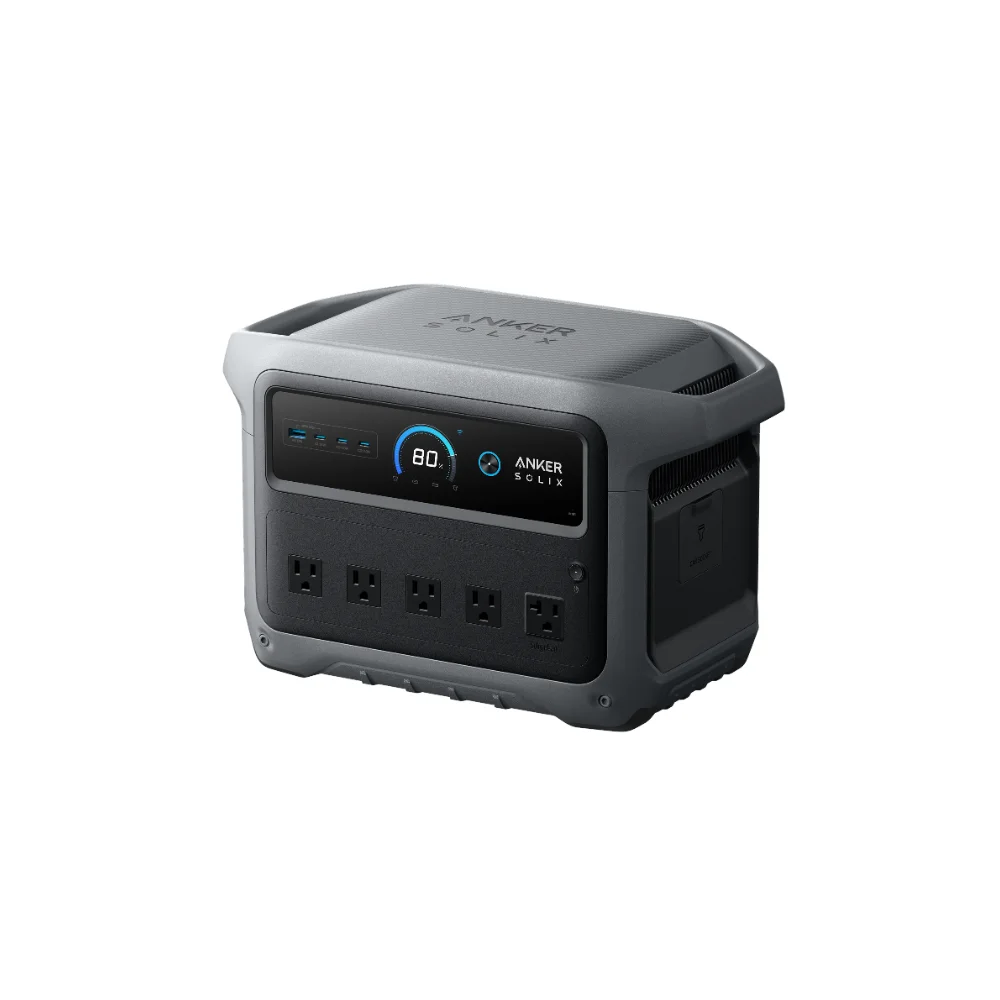
The spec sheet for the Anker SOLIX C1000 Gen 2 confirms this directly: its AC outlets use pure sine wave output, which is exactly why it’s safe to run sensitive electronics and medical devices like CPAP machines from it without hesitation. That’s genuinely representative of where the market sits right now — a 1,024Wh, 2,000W-continuous unit like this one delivers grid-quality power, not a compromise.
Check current price on Outbound Power →
Modified Sine Wave: The Choppier, Older Approach
A modified sine wave inverter approximates that same curve using a stepped, blocky signal instead of a smooth one. It’s cheaper to produce, which is why you’ll still occasionally find it on older or rock-bottom-budget units, but it comes with real trade-offs. Sensitive electronics can run hotter, less efficiently, or noisier on modified sine wave power, and some devices — particularly ones with motors, compressors, or sensitive charging circuitry — may refuse to run at all, run poorly, or in rare cases sustain damage over repeated use.
The practical upshot: if you’re shopping for a new portable power station in 2026 from any reputable brand, you’re very unlikely to run into modified sine wave output at all. It’s more of a legacy concern than a live decision point for most buyers today.
Why This Still Matters Even Though It’s Not a Real Decision Anymore
If pure sine wave has basically won, why bring it up at all? Two reasons. First, it’s worth confirming rather than assuming — always check a specific unit’s spec sheet for “pure sine wave” or “modified sine wave” language before buying, especially with lesser-known brands or heavily discounted off-brand listings, since assuming isn’t the same as confirming. Second, understanding the distinction explains why certain devices behave oddly on cheap generators or older inverters you might already own, which is a common troubleshooting question we see.
Devices Where Waveform Quality Matters Most
- CPAP machines and other medical equipment
- Laptops and other devices with sensitive internal power supplies
- Anything with an AC motor, like a mini-fridge compressor or box fan
- Audio equipment, where modified sine wave can introduce audible humming
For all of these, pure sine wave isn’t a nice-to-have — it’s the difference between the device working correctly and not working at all, or working in a way that shortens its lifespan.
A Quick Way to Check Before You Buy
If you’re evaluating a specific power station and the spec sheet doesn’t clearly state the waveform type, that’s worth a direct question to the manufacturer or retailer before buying, especially if you plan to run anything from the sensitive-device list above. Reputable brands list it plainly, usually right alongside the AC output wattage rating — its absence from an otherwise detailed spec sheet is a reasonable signal to look elsewhere rather than assume the best and find out the hard way after your CPAP machine or audio interface starts misbehaving.
Devices That Are Genuinely Sensitive to Waveform Quality
Most everyday electronics — phones, laptops, LED lights, most chargers — have internal power supplies that handle either waveform type without complaint, which is part of why modified sine wave units survived in the market for so long despite being technically inferior. A smaller set of devices actually care, and it’s worth knowing which ones: motors with speed controllers (some power tools, some fans), audio equipment with sensitive amplifier circuits, medical devices like CPAP machines and oxygen concentrators, and anything with a microwave-style transformer. For medical equipment specifically, the stakes are high enough that pure sine wave isn’t a nice-to-have — our guide on power stations for oxygen concentrators and home medical equipment covers why waveform quality matters even more when the device involved is life-support adjacent.
Motor-driven appliances are the other category worth flagging specifically. A window air conditioner’s compressor motor, for instance, is exactly the kind of load that performs noticeably worse — running hotter, less efficiently, sometimes triggering protective shutdowns — on modified sine wave power. If you’re sizing a power station specifically to run an AC unit, our breakdown of whether a power station can run a window air conditioner factors waveform quality into that calculation alongside the more commonly discussed wattage math.
Why You’ll Rarely Encounter This Choice Today Anyway
It’s worth being direct about something implied earlier: nearly every power station worth buying in 2026 ships with pure sine wave output as standard. Modified sine wave inverters persist mainly in cheap standalone inverters sold separately for DIY solar or automotive projects, not in name-brand portable power stations. So in practice, this comparison matters less as an active purchasing decision and more as background knowledge — useful for understanding why a power station’s spec sheet lists “pure sine wave” prominently, and for recognizing a red flag if you ever encounter a battery power station that doesn’t.
Frequently Asked Questions
How do I know if a power station uses pure sine wave output?
Check the AC output section of the manufacturer’s spec sheet — reputable brands state the waveform type explicitly. If you can’t find it listed anywhere, that’s worth treating as a yellow flag rather than assuming the best.
Can a modified sine wave inverter damage my electronics?
It’s possible with certain sensitive devices, though outright damage is less common than simply poor performance — overheating, humming, or reduced efficiency. Still, running medical devices on modified sine wave power isn’t a risk worth taking when pure sine wave units are now the norm and rarely cost significantly more.
Is pure sine wave the same thing as “true sine wave”?
Yes, the terms are used interchangeably in marketing copy — both refer to the same clean, grid-matching waveform.
Does pure sine wave output cost more in terms of battery efficiency?
Marginally, since a pure sine wave inverter is a more complex piece of electronics than a modified sine wave one, but the difference in real-world runtime is small enough that it shouldn’t factor into a buying decision — the reliability and compatibility benefits far outweigh a minor efficiency difference.
If I already own an old modified sine wave inverter, should I replace it?
Not necessarily just for the sake of upgrading — if it’s been reliably running your specific devices without issue, it’s likely running a device set that tolerates modified sine wave fine. It’s worth replacing before adding a new sensitive device (audio gear, medical equipment, a variable-speed motor) to what you run off it.
Do generators have the same pure vs. modified sine wave distinction?
Yes — inverter generators typically produce clean, near-pure sine wave output, while older conventional generators often don’t, which is one of several reasons inverter generators are generally the better pairing for sensitive electronics even outside the power station context.