

If you’ve been thinking about finally getting a standby generator installed before this hurricane season peaks, there’s a good chance you’re already too late for that specific goal. Installers in storm-prone regions are currently quoting lead times that push a realistic in-service date well past the point where you’d actually need it.
This article may include affiliate links — if you buy through them we may earn a small commission at no extra cost to you, but our recommendations are based on our own independent research.
Why Generators Are Taking So Long Right Now
Home standby generator demand spikes every year as hurricane season approaches, and this year is no exception. Installers in storm-prone regions describe lead times that can stretch well past hurricane season once permitting, utility coordination, and the electrician’s own backlog are factored in. We couldn’t verify a single authoritative, named source for an exact week-count on residential installs, so treat that as a general pattern rather than a hard statistic. Put it next to a request placed in August, and a “before storm season” install can easily slip into October or later.
The numbers get more concrete on the commercial and industrial side: GeneratorSource’s own August 2026-February 2027 lead-time tracking puts small-to-mid commercial and industrial units (25-400kW) at roughly 12 to 26 weeks, and the largest 1,250-3,250kW units at 52 to 70 weeks. That’s a different market than the 20-26kW home standby units most homeowners are shopping for, but directionally the same story: generator supply chains across the board are stretched thin heading into peak season.
What This Means If You’re Still Unprotected
If you don’t already have a standby generator installed, you’re very likely going into this hurricane season without one, regardless of how motivated you are right now. That’s a real gap, but it’s not an unsolvable one — a portable power station won’t run your whole house indefinitely, but it can keep the loads that matter most running the moment the grid goes down, with zero installation wait.
A Faster (Partial) Backup Plan
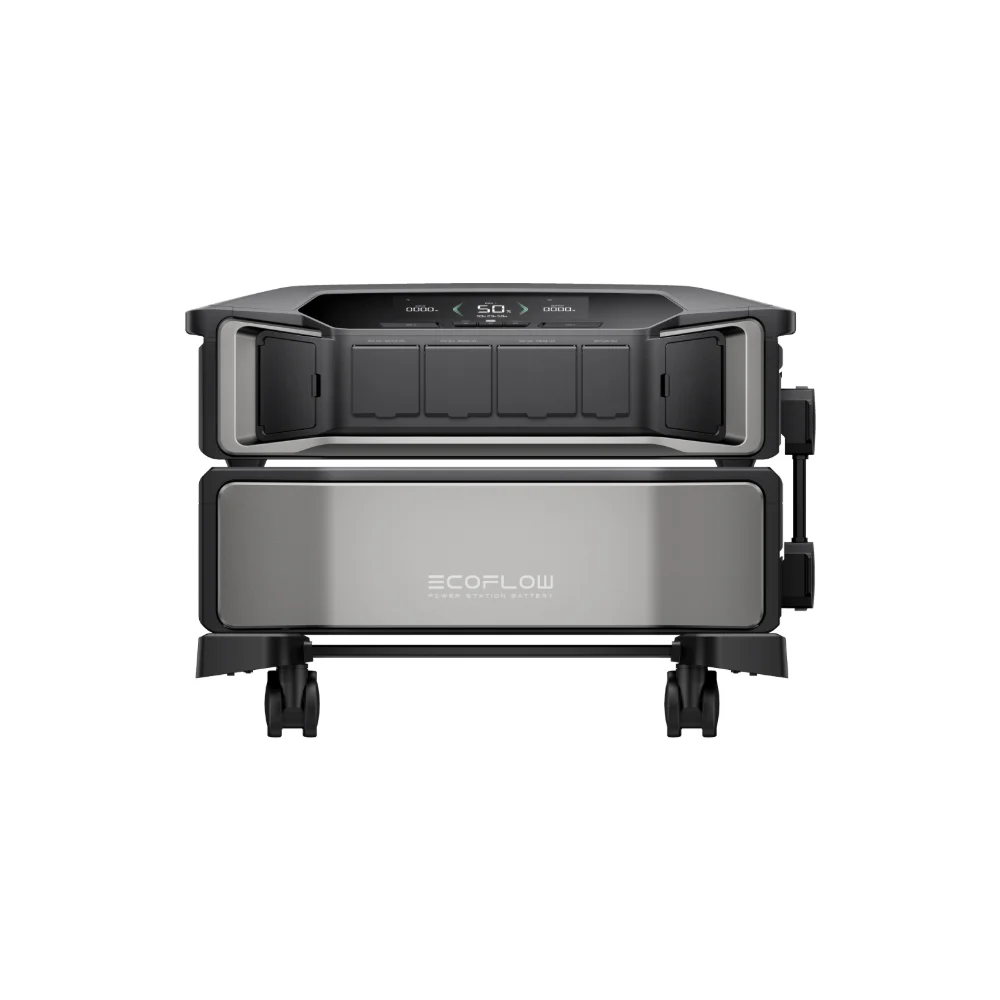
A large portable power station can’t replace a properly sized whole-home standby generator for extended, multi-week outages — that’s still the better long-term answer if your budget and timeline allow it. But for the specific problem of “I need something now, before storm season peaks,” a power station in the 2,000-3,000Wh range can comfortably run a refrigerator, a few lights, phone and laptop charging, a CPAP machine, and a Wi-Fi router for a day or more per charge, and it recharges from solar panels or a car if the outage runs long.
The BLUETTI Apex 300 (2,764.8Wh, 3,840W output, expandable with add-on batteries) is a reasonable example of this category — it ships immediately rather than requiring an installation appointment, and it’s currently discounted from $2,399 to $1,499. Check current price on Outbound Power →
How to Prioritize While You Wait for a Permanent Solution
If a full standby generator is still in your future but not your present, it helps to rank your critical loads now rather than during an actual outage: refrigeration first, medical equipment second, communication and lighting third, and everything else after that. A portable unit sized to your top two or three priorities will get you through the gap far more reliably than trying to stretch it across your entire house.
What to Look for If You’re Buying a Stopgap Unit
Not every portable power station is a good fit for this specific job. A few things matter more than usual when you’re buying one specifically as a hurricane-season bridge rather than a general-purpose gadget: look for a genuine UPS or pass-through mode with a fast switchover time (10 milliseconds or less is common on newer units) so sensitive electronics don’t reboot during a switch; check the realistic solar recharge time in case the outage runs longer than your battery, since a unit that takes two full days of sun to refill isn’t much of a bridge; and don’t undersize it — buyers consistently underestimate how much a full-size refrigerator actually draws on startup, so it’s worth checking the specific appliance’s wattage rather than guessing.
It’s also worth thinking about timeline honestly. A power station ships in days, not months, but if you wait until a storm is already in the forecast, shipping delays and local stock shortages can still catch you off guard — the same way bottled water and plywood disappear from shelves. Buying before there’s an active storm in the forecast is still the safer play, even with a “fast” product.
My Take
This pattern repeats every storm season: demand for permanent backup power spikes right when it’s least possible to act on it quickly. I don’t think portable power stations and standby generators are really competing products — they solve different problems on different timelines. But if you’re staring down a hurricane season with a generator quote that says “December,” a power station is a legitimately useful stopgap, not just a consolation prize. I’d rather see someone have partial coverage now than full coverage four months after they needed it.
Rethinking Whether You Need the Generator At All
Long wait times are also a reasonable prompt to revisit an assumption a lot of households make by default: that a standby generator is the obvious end goal and a power station is just the interim solution until it arrives. For some households, that’s true — genuinely high, sustained power needs during multi-day outages really do call for a generator’s continuous output and indefinite runtime. For others, especially households whose actual outage needs are a fridge, some lights, medical equipment, and device charging rather than whole-home coverage, a well-sized battery setup (potentially with solar recharging) may turn out to be the better long-term answer, not just a stopgap while waiting on a generator installer. Our full comparison of power stations vs. standby generators for home backup is worth revisiting with this in mind — some households considering both end up canceling the generator order once they’ve actually priced out and tested a battery-based alternative that covers their real needs.
Sizing Up If a Longer Wait Is Realistic
If your generator lead time is genuinely stretching into months rather than weeks, it may be worth treating your interim power station setup as a more serious, longer-term solution rather than a bare-minimum stopgap. That could mean sizing up to a larger-capacity unit than the bare minimum covered above, or adding solar panels to reduce how often you need grid or generator recharging in the meantime. Our roundup of large-capacity solar generators for extended off-grid living covers units built for exactly this kind of extended, more serious backup role, in case your “temporary” solution ends up needing to last considerably longer than originally planned.
Frequently Asked Questions
Can a portable power station replace a whole-home generator?
Not for extended outages. It can cover critical loads for a day or more per charge, but a properly sized standby generator is still the better solution for multi-day or multi-week outages.
Why are generator lead times so long right now?
Seasonal demand spikes ahead of hurricane season, combined with permitting and installer backlogs, are the main drivers for residential units; broader supply chain constraints affect larger commercial units as well.
What size power station do I need as a stopgap?
For a fridge, some lights, device charging, and a router, most households find 1,000-2,700Wh workable for a day or two between charges, depending on what you run.
Should I cancel my generator order if a power station ends up covering my needs?
Not necessarily — many households keep both, using the power station as quiet, everyday-usable backup for shorter or partial outages, and reserving the generator for genuinely extended multi-day events where its continuous runtime matters most. Whether to cancel entirely depends on how confident you are that your outage needs will stay within what a battery setup covers.
Are generator lead times improving or getting worse?
It varies by region and by installer, and tends to fluctuate seasonally — demand spikes ahead of and during active storm seasons, then eases in quieter months. Checking with local installers for their current specific lead time is more reliable than assuming a national trend applies to your area.
Does buying a power station now, while waiting on a generator, waste money if the generator eventually replaces its role entirely?
Generally not — a power station remains useful for portable, quiet, everyday backup needs (a home office outage, camping, powering equipment away from an outlet) even after a standby generator is installed, so it’s rarely a wasted purchase even once the generator arrives.