
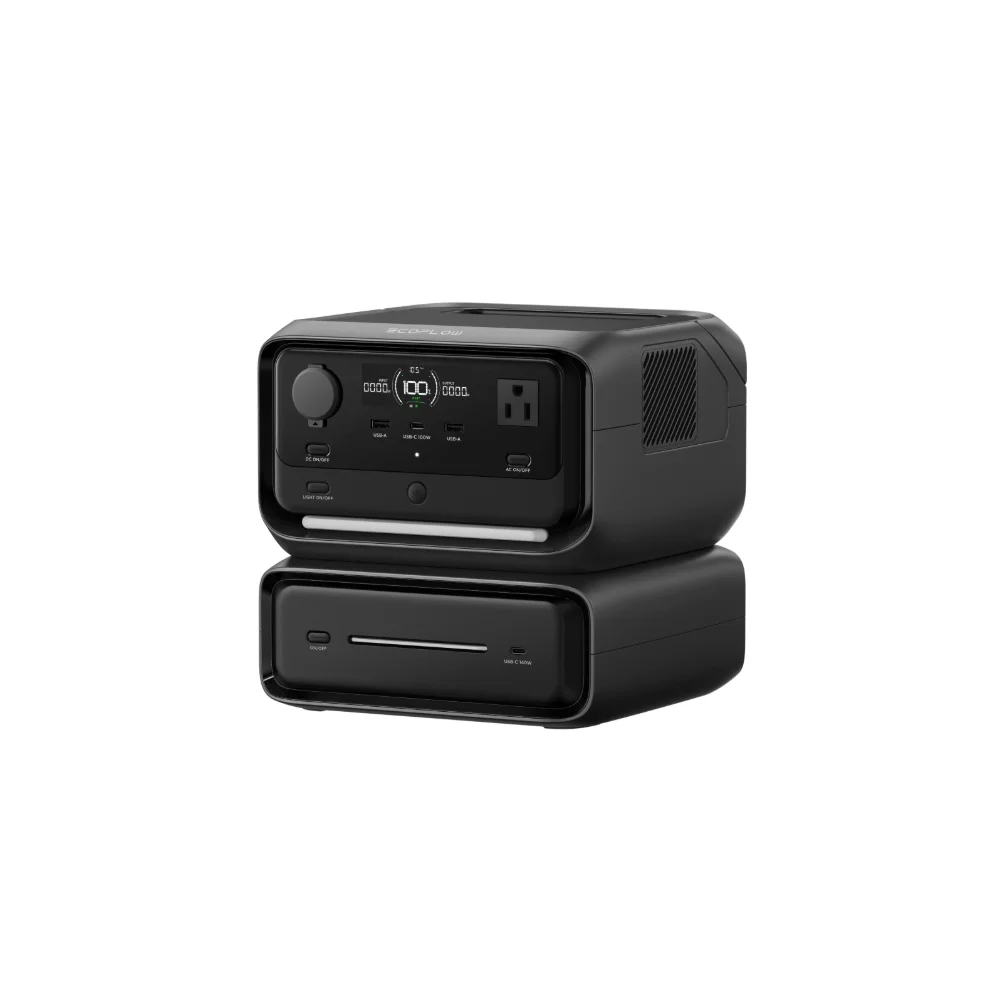

Ice fishing is one of the few places where the biggest threat to your power station isn’t how much you’re asking it to run — it’s the temperature itself. LiFePO4 batteries, the chemistry in nearly every power station worth buying, have a hard rule that catches people off guard: you generally can’t charge them below freezing, even though you can discharge them well below it. Get that backwards and you’ll be sitting in a shanty with a battery that won’t take a charge no matter how long you leave it plugged in.
Short version: per Anker’s own published specs for its SOLIX line, LiFePO4 units charge safely from 32°F to 104°F (0°C to 40°C) but can discharge — meaning run your gear — down to -4°F (-20°C). That gap is the single most important thing to plan around for ice fishing, more than capacity or wattage.
The rule that actually matters: charge indoors, discharge on the ice
Every major LiFePO4 power station shares roughly the same charging floor around freezing, because it’s a chemistry limitation, not a brand choice — charging a lithium iron phosphate cell below 0°C risks lithium plating on the anode, which can permanently reduce capacity and, in worse cases, create a safety risk. Manufacturers build battery management systems that simply refuse to charge below that threshold to protect the cells, which is a safety feature, not a defect, even though it’s frustrating in the field.
What this means practically: charge your power station to 100% inside your house or a heated vehicle the night before, not in an unheated garage and definitely not in the shanty once you’re set up. Once it’s charged, you can run it well below freezing without an issue — the discharge floor is far more forgiving than the charge floor.
What actually happens to capacity in the cold
Cold doesn’t damage a healthy LiFePO4 battery the way charging it improperly can, but it does reduce how much usable power you get. As internal resistance increases in the cold, the battery works harder to deliver the same output, and in extreme conditions performance can fall meaningfully below the manufacturer-rated spec. This capacity loss is generally temporary — warming the unit back up typically restores most of its rated output — but it means you shouldn’t plan a full day on the ice around a battery’s warm-weather runtime rating. Budget extra capacity beyond what you’d need on a mild day.
What to actually look for in a cold-weather power station
- A clearly published discharge rating below 0°F. Anker’s SOLIX line, for example, publishes -4°F (-20°C) as its discharge floor — look for an equivalent published number from whatever brand you’re considering rather than assuming.
- LiFePO4 chemistry specifically, not older lithium-ion or lithium-polymer cells, which handle cold and repeated cycling worse.
- A case and port design that tolerates condensation. Moving a cold power station into a warm truck cab repeatedly creates condensation risk around the ports; keeping vents clear and the unit dry matters as much as the cold spec itself.
What NOT to do
- Don’t charge a cold-soaked unit immediately. If your power station has been sitting in a cold truck bed, let it warm to at least freezing before plugging it in, even if the BMS would technically allow a slow trickle — warming first protects the cells and gets you a fuller, healthier charge.
- Don’t rely on built-in “self-heating” as a way to charge in deep cold as your primary plan. Some batteries in other categories (like certain EV and marine batteries) include self-heating elements, but this isn’t standard across consumer power stations — treat proper storage and pre-charging as the reliable method, not a heating feature you may not actually have.
- Don’t block the vents with blankets or insulation to try to keep the unit warm in the shanty — venting matters for both heat dissipation during use and moisture control.
What Size Power Station Actually Makes Sense for Ice Fishing
Most ice fishing power needs are modest compared to home backup or extended off-grid use — the question is usually less “how much total capacity” and more “does it hold up in the cold and recharge reliably between trips.” A typical day on the ice running a portable heater’s fan and igniter (not the heater’s fuel-burning itself, which power stations don’t power), a fish finder, a phone or two, and some LED lighting rarely draws more than a few hundred watt-hours across a full day. That puts most ice anglers comfortably in the 500-1,000Wh range for a single-day trip, with more capacity mainly useful if you’re running a space heater’s blower motor for hours, powering an auger, or staying out for multiple days without recharging.
| Typical ice fishing load | Approximate draw |
|---|---|
| Fish finder / flasher | 5-15W continuous |
| LED shanty lighting | 10-30W |
| Phone charging | 10-20W while charging |
| Portable heater blower/igniter (fuel-burning heat itself isn’t powered by the station) | Varies by model — check the heater’s electrical spec, not its BTU rating |
| Auger (electric models only) | 500-1,000W+ while cutting |
Because cold reduces usable capacity somewhat (see above), it’s worth sizing up from your mild-weather estimate rather than buying exactly to the minimum. If budget is the main constraint for a single-day setup, our roundup of budget power stations under $500 covers compact options that fit this kind of load without a lot of unused capacity sitting idle in a cold shanty.
How This Compares to Cold-Weather Use in General
Ice fishing is really a specific, more extreme case of a broader cold-weather question that applies to anyone using a power station outdoors in winter — winter camping, tailgating, job sites, or just an outage during a cold snap. The charge-below-freezing rule and the temporary capacity loss described above apply the same way in any of those contexts, not just on the ice. If you want the general explanation of how cold affects power station batteries beyond this specific use case, see our full breakdown of how cold weather affects your power station’s battery. And if you split time between ice fishing in winter and hot-weather camping or boating the rest of the year, it’s worth knowing that heat — not cold — is actually the bigger long-term threat to battery health; our guide on whether extreme heat damages your power station’s battery covers that side of the picture.
FAQ
Can I charge my power station with a solar panel while ice fishing?
Only if the battery itself is above freezing, same as AC charging — solar input still runs through the same battery management system and the same charging-temperature floor applies.
Will running my power station in the cold damage it long-term?
Discharging in the cold, within the manufacturer’s published range, isn’t damaging on its own. The real risk is charging too cold or letting the unit sit fully depleted in freezing temperatures for extended periods, which is harder on any lithium battery regardless of temperature.
Does a bigger battery just solve the cold-weather problem?
It helps with the capacity loss, since you have more buffer, but it doesn’t change the charging-temperature rule at all — a bigger unit still can’t charge below freezing.
Can I keep the power station in an insulated bag or cooler to keep it warmer on the ice?
Yes, and it’s a reasonable way to slow heat loss during use, as long as you’re not blocking the unit’s vents — a loosely insulated bag that still allows airflow is fine, a sealed container is not.
Is it safe to leave a power station in the truck overnight before an early-morning trip?
It’s safe, but remember it counts as cold-soaked once you arrive — don’t plug it in to top off at the lake if it’s been sitting below freezing overnight. Charge it fully at home instead, then keep it in the truck cab (not the bed) during transport to minimize how cold it gets before you start using it.
How much does cold actually reduce runtime in practice?
It varies by unit and by exactly how cold it gets, but planning for meaningfully reduced runtime compared to the room-temperature rated spec is the safe assumption for any deep-cold outing — which is why oversizing capacity slightly, as discussed above, matters more for ice fishing than for most other use cases.
Bottom line
For ice fishing, the spec that matters most isn’t peak wattage — it’s the published discharge-temperature floor, paired with a charging routine that always happens somewhere above freezing. Charge fully indoors before you head out, oversize your capacity slightly to account for cold-weather losses, and let a cold-soaked unit warm up before you plug it back in.
This post may include affiliate links — if you buy through them, we may earn a small commission at no extra cost to you. It doesn’t change what we cover or how we rank anything.