

Quick Verdict
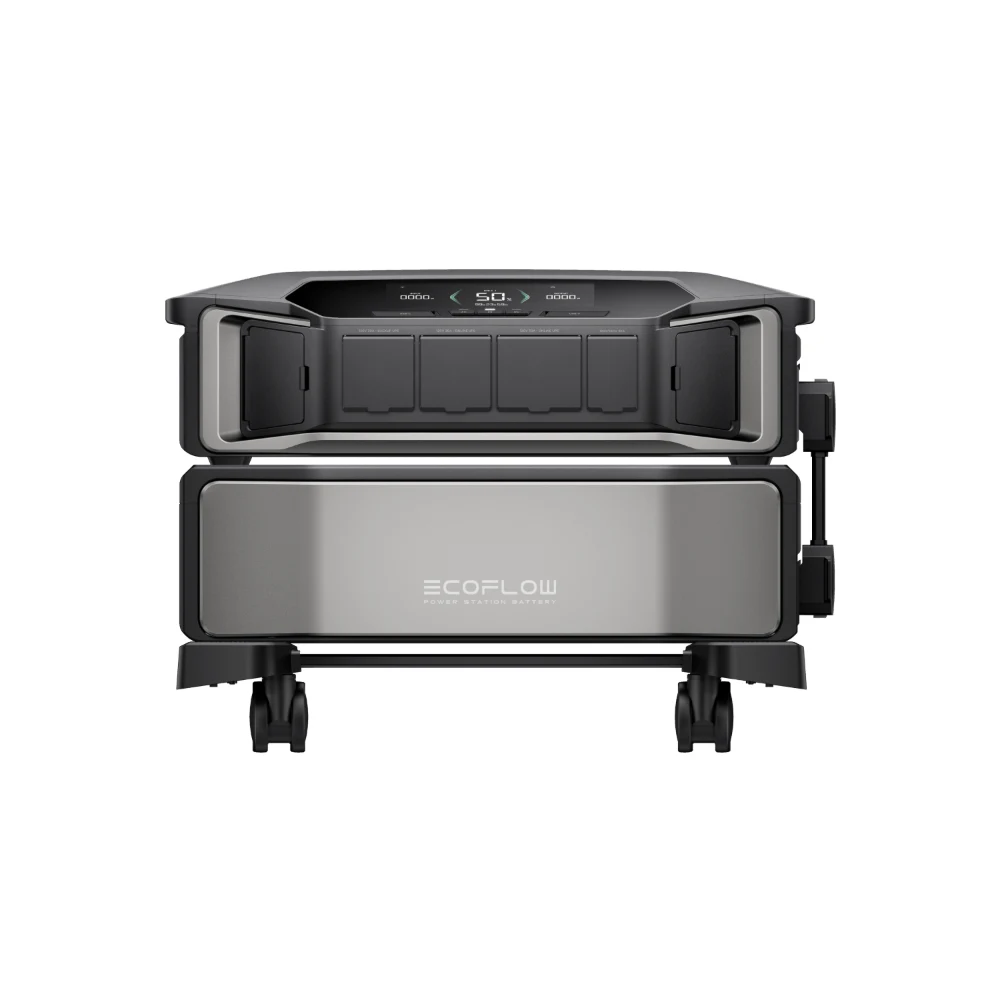
EcoFlow’s DELTA Pro Ultra isn’t really competing with portable power stations anymore — it’s competing with entry-level home battery systems like the Tesla Powerwall. With a 7,200W continuous output and a base capacity that scales from roughly 6kWh up to 90kWh across multiple battery modules, it’s designed for hardwired whole-home backup, not weekend trips. If you’re comparing it to a Jackery or a smaller EcoFlow River unit, you’re comparing the wrong things — this is a different category entirely.
How We Evaluated This Review
This review is built from EcoFlow’s published specifications and official installation documentation for the DELTA Pro Ultra, cross-checked against verified owner and installer feedback from forums and discussion threads covering real hardwired deployments. We have not physically installed or tested this specific system ourselves. Where a conclusion is our own judgment rather than a manufacturer-stated fact — projected runtime, how it stacks up against competing whole-home systems, or what a “typical” installation involves — we say so directly rather than presenting it as verified lab data. Our full editorial approach is outlined on our About page.
EcoFlow DELTA Pro Ultra Specs at a Glance
| Base capacity | Roughly 6kWh, expandable to 90kWh with additional battery units |
| Continuous output | 7,200W |
| Installation | Can be installed with a hardwired inverter for whole-home switching, or run portably |
| Battery chemistry | LiFePO4 (LFP) |
| Solar input | High-capacity input designed for pairing with rooftop or ground-mount solar arrays |
| Monitoring | EcoFlow app with remote monitoring and generator-start automation |
Who It’s Actually For
This is a system for homeowners who’ve decided a generator isn’t the answer — either because of noise, fuel storage, or maintenance — and want battery backup that can scale over time. Because the capacity is modular, you can start with a base setup that covers your essential circuits and add battery units later as budget allows, which is a meaningfully different buying decision than a fixed-capacity generator purchase. It costs what it costs — this isn’t an impulse purchase, it’s closer to a home improvement decision.
It’s also a reasonable fit for buyers who want the option to go fully off-grid eventually. Because the base unit can run portably before you commit to hardwiring, some buyers start with a semi-portable setup covering a subset of circuits and formalize the installation later once they’ve confirmed the system meets their needs.
Real-World Runtime: What the Base Capacity Actually Covers
A 6kWh base system translates to roughly the following, using standard LiFePO4 efficiency assumptions (85-90% of rated capacity delivered after inverter losses):
| Appliance / Load | Typical draw | Approx. runtime on base 6kWh |
| Refrigerator + freezer combo | ~300W average | ~15-17 hours |
| Central AC (small residential unit) | ~3,000W running | ~1.5-2 hours continuous |
| Well pump (intermittent use) | ~1,000W when running | ~5-6 hours of active pump time |
| Essential circuits (fridge, lights, router, outlets) | ~400-500W combined | ~10-12 hours |
Add battery modules and these numbers scale linearly — a household running essential circuits only could realistically stretch a two- or three-module setup across a multi-day outage, which is the entire premise behind buying a scalable system instead of a fixed-capacity power station.
Solar Recharge: Keeping It Topped Up Off-Grid
The DELTA Pro Ultra’s solar input is sized for rooftop or ground-mount array pairing, not the small folding panels used with portable units. With a properly sized array, EcoFlow’s published specs point to meaningful daily recharge even during a multi-day outage with intermittent sun — the kind of top-up that keeps a hardwired system running indefinitely as long as there’s some daylight, rather than a slow drain toward zero. As with any solar-paired system, actual recharge speed depends on your installed panel wattage matching the unit’s input ceiling, your roof orientation, and regional sun hours — figures worth confirming with an installer rather than assuming from the spec sheet alone.
What Installation Actually Involves
For buyers considering the hardwired route, the installation typically involves a licensed electrician mounting the inverter unit, tying it into a sub-panel or transfer switch for the circuits you want covered, and configuring the EcoFlow app for monitoring and automation. This is not a weekend DIY project for most homeowners; treat the installation cost as a real line item in your total budget, separate from the unit price itself, the same way you would with a generator transfer switch. Buyers who skip hardwiring and run the unit portably avoid that cost and complexity entirely, at the expense of not having automatic circuit switching during an outage.
How It Compares
Against Anker’s SOLIX F3800, the Delta Pro Ultra has a higher continuous wattage ceiling and a much larger maximum expandable capacity, but the F3800 recharges from empty noticeably faster. Against Bluetti’s AC500 system, the Delta Pro Ultra leans harder into whole-home hardwired installation, while the AC500 stays closer to a flexible, semi-portable modular setup. If your end goal is something that functions like a small home battery system rather than a portable power station, the Delta Pro Ultra is built with that specific goal in mind.
Strengths and Weaknesses, Beyond the Spec Sheet
Pros: Genuinely scalable capacity for growing backup needs, output high enough for major appliances including central AC, strong app-based monitoring and automation, works both as a hardwired system and a portable unit.
Cons: Full installation with hardwiring often requires an electrician, cost scales quickly as you add battery modules, size and weight make it a fixed installation for most households rather than something you move around.
The comparison to a home battery system rather than a power station is the right frame for evaluating this purchase. Buyers who treat it like an oversized portable unit tend to be disappointed by the installation friction; buyers who go in expecting a generator alternative tend to find it delivers on that promise. The app ecosystem is a genuine strength here — remote monitoring and automated generator-start integration are features you’d otherwise only get from a dedicated home battery brand, not a portable power station company.
The tradeoff for that home-battery-grade capability is home-battery-grade cost. Buyers who only need to keep a few circuits alive during occasional outages will generally get better value from a smaller, single-unit system — the DELTA Pro Ultra earns its price tag when the goal is genuinely comprehensive backup, not partial coverage.
Warranty and support are worth weighing too. EcoFlow backs the DELTA Pro Ultra with a multi-year warranty and an established RMA process, which matters more for a fixed installation than it would for a portable unit you could simply swap out; a system bolted into your electrical panel is not something you want sitting in a repair queue during the next outage. Buyers should also budget for the fact that, unlike a generator, there is no routine oil changes or fuel stabilizer maintenance; the tradeoff is that battery capacity degrades gradually over thousands of cycles rather than failing from lack of upkeep.
FAQ
Do I need an electrician to install it? For basic portable use, no. For hardwired whole-home switching with automatic transfer, yes — that part of the setup should go through a licensed electrician, the same as any generator transfer switch installation.
Can it run central air conditioning? The 7,200W continuous output is high enough for many residential central AC units, though you’ll want to check your specific unit’s starting and running wattage before assuming compatibility.
Is this overkill for a small apartment? Almost certainly. This system is built for houses with multiple essential circuits, not apartments — a smaller portable power station will cover apartment-level backup for a fraction of the cost.
How does it compare on cost per kWh to a Tesla Powerwall? Direct pricing comparisons shift often enough that we’d rather point you to checking current numbers on both than quote a figure that may be stale by the time you read this — but the DELTA Pro Ultra’s modular scaling and portable-mode flexibility are the features that most differentiate it from a fixed home battery installation.
Can I start portable and hardwire it later? Yes — that’s one of its more distinctive features. You can run it as a large portable unit initially and formalize a hardwired transfer-switch installation once you’ve confirmed the system meets your needs.
Is it noisy or does it require ventilation like a generator? No; as a battery system, it runs silently with no exhaust or ventilation requirements, which is one of the core reasons homeowners choose it over a fuel-burning generator for backup power.