

Quick Answer
A well-made portable solar panel built for power stations should last anywhere from 5 to 15 years of regular use before its output drops enough to matter, though most people replace theirs sooner — not because the panel died, but because a connector broke, a panel got dropped, or a newer, lighter model came along. Panel degradation and panel destruction are two very different failure paths, and almost all portable solar panel problems come from the second one. Understanding that distinction changes how you should think about caring for a panel: worrying about cell degradation is largely wasted effort, while a bit of care around heat, moisture, and handling during travel and storage is where your attention actually pays off.
How Solar Panel Degradation Actually Works
Every solar cell loses a small percentage of its output capacity every year, a process manufacturers call degradation. For rigid monocrystalline panels — the kind built into most fixed rooftop solar installations — that’s typically around 0.3-0.5% per year, meaning a panel is still producing roughly 90% of its original output after 20-25 years. Portable panels built for camping and power stations use similar cell technology, so the underlying degradation rate is comparable, but portable panels rarely last that long in practice for a simpler reason: they get physically abused in ways a rooftop panel never does.
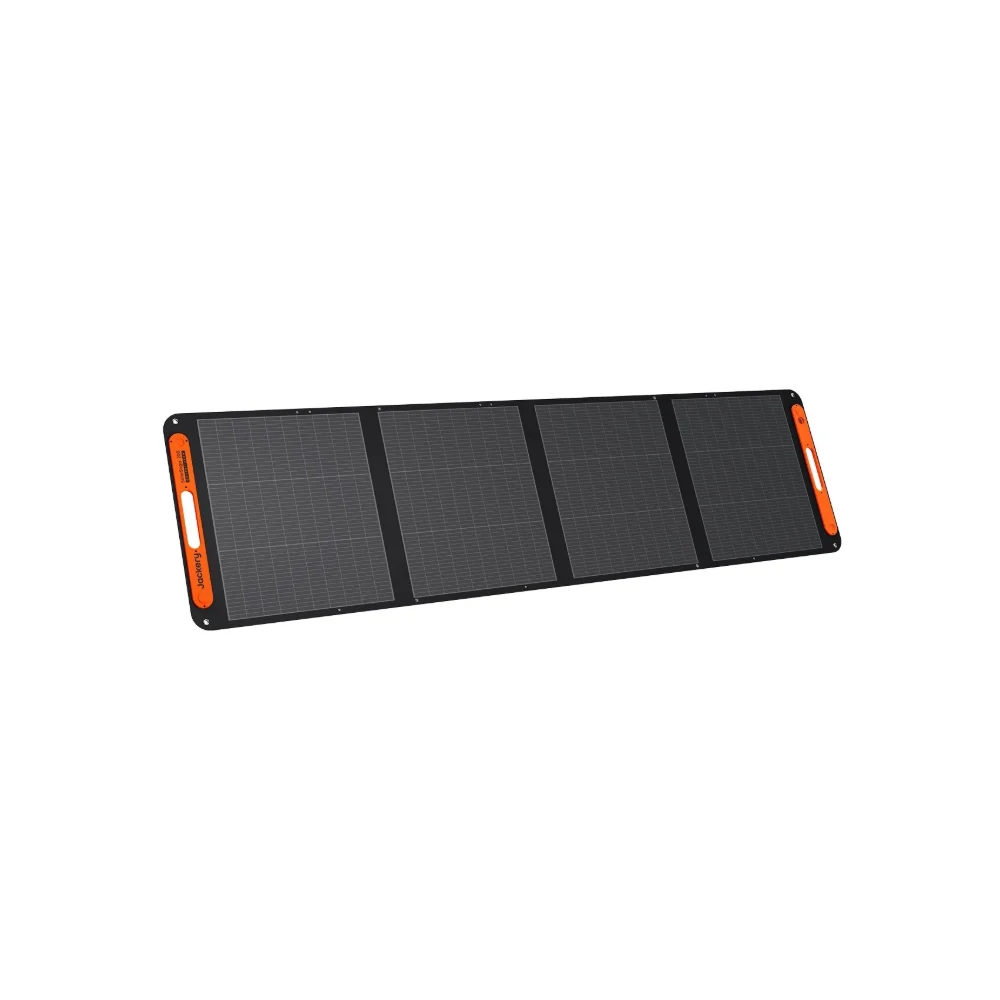
Foldable panels get packed away wet, left in hot car trunks, stepped on, and flexed at their hinges hundreds of times over a few seasons. That physical wear — microcracks in the cells, connector corrosion, delaminating layers — is what actually kills most portable solar panels, usually well before the underlying cells have degraded to any meaningful degree.
What Actually Shortens a Portable Panel’s Life
Heat is the biggest hidden factor. Solar cells lose efficiency as they get hotter, and leaving a foldable panel face-down in direct sun on hot pavement, or storing it in a sealed car trunk during summer, accelerates the same physical stress that causes long-term damage. Moisture is the second big factor — packing away a panel while it’s still damp from morning dew invites corrosion at the connector points, which is one of the most common reasons a panel’s output quietly drops over a season.
Physical flexing at the fold lines is the third factor, and it’s specific to portable panels in a way that doesn’t apply to rigid rooftop installs. Every fold and unfold cycle puts stress on the internal wiring at the hinge points. A panel folded and unfolded carefully a few dozen times a year will outlast one thrown around and forced closed at odd angles.
How to Make Your Panel Actually Last
Let panels dry completely before folding them away, store them somewhere that doesn’t bake in direct summer heat, avoid stepping on or stacking heavy gear on top of them, and handle the fold points gently rather than forcing them flat. None of this is complicated, but it’s the difference between a panel that’s still performing well in year six and one that needs replacing in year two.
Rigid, Foldable, and Bifacial: Durability Differences
Panel construction affects how much physical abuse a unit can absorb before performance suffers. Standard foldable panels are the most travel-friendly but have the most failure points, since every hinge and connector is a place where wear accumulates. Rigid panels skip the hinges entirely and tend to outlast foldables in heavy daily use, at the cost of being bulkier to transport and store. Bifacial panels — which capture light on both the front and back surface — add a different durability question, since their added complexity and typically higher price tag mean the physical-care habits described above matter even more to protect that investment. If you’re deciding whether the bifacial premium is worth it for your setup, our breakdown of bifacial solar panels for power stations weighs the extra output against the extra cost.
Cleaning and Maintenance That Actually Extends Life
Beyond avoiding physical damage, basic cleaning habits meaningfully affect a panel’s real-world output over its lifespan. Dust, pollen, and grime block light from reaching the cells, and the efficiency loss from a genuinely dirty panel is often larger than what you’d lose to several years of normal degradation. Wipe panels down with a soft cloth and plain water before each use if they’ve been sitting outdoors, and avoid abrasive cleaners or anything that could scratch the protective coating. Check connector pins periodically for corrosion, especially if the panel has been stored or used somewhere humid — a small amount of green or white buildup on the contacts is an early warning sign worth addressing before it affects charging performance, and a quick wipe with a dry cloth or contact cleaner usually resolves it before it becomes a bigger issue.
When Replacement Makes More Sense Than Repair
Most portable panel problems are either physical (a cracked cell, a damaged connector, a torn hinge) or performance-related (gradually declining output). A physically damaged panel is rarely worth repairing yourself — the sealed construction that keeps a panel weatherproof also makes DIY repair difficult, and a professional repair often costs close to what a replacement panel does. Gradual output decline is a different calculation: if a panel is still producing reasonably close to its rated output after several years of use, keeping it in service and simply working around the loss is usually more economical than replacing it early. Our cost breakdown on whether a solar panel pays for itself covers the economics of that decision in more detail, including how a panel’s expected lifespan factors into the payback math.
How Lifespan Affects Your Sizing Decisions
If you’re buying panels for the first time, expected lifespan is worth factoring into how much wattage you buy, not just your current power needs. Since portable panels rarely fail from cell degradation and mostly fail from physical wear, buying slightly more capacity than your bare minimum need gives you a buffer as output very gradually declines over years of hard use — so a setup that’s exactly sized to your needs on day one can feel undersized by year four or five even without any dramatic failure. Our guide on how many solar panels you actually need walks through sizing a setup with this kind of margin built in.
FAQ
Does a solar panel’s output drop noticeably after a few years? From pure cell degradation alone, no — a few percent over several years isn’t something you’d notice in daily use. Any sudden or dramatic drop in output usually points to physical damage, a bad connector, or dirt and grime blocking the cells rather than normal aging.
Are rigid panels more durable than foldable ones? Generally yes, since they have no hinge points to stress and are built with a sturdier frame, but they’re also heavier and less practical to pack for travel — it’s a genuine tradeoff, not a simple upgrade.
Is it worth buying a warranty on a portable solar panel? If the panel is a meaningful investment and you plan to use it hard — frequent camping, overlanding, or as your primary power station charging source — a warranty that covers physical defects is generally worth the modest extra cost.
Does storing a panel the same way as a power station battery make sense? Mostly yes on the practical side — dry, moderate temperature, away from direct sun — though panels don’t have the charge-level concerns a battery does. See our full guide on storing a power station long-term for the battery-specific side of that equation.
Can I mix an old, partially degraded panel with a new one in the same array? Technically yes in most setups, but a meaningfully weaker panel can drag down the combined output of the pair depending on how they’re wired, similar to how a weak link affects a chain of holiday lights. If you’re expanding your array, check your power station’s manual on how it handles mismatched panels before assuming it’s a non-issue.
How do I know if reduced output is degradation or just a dirty or shaded panel? Clean the panel thoroughly and retest in full, unobstructed sun before concluding it’s genuine degradation — dirt, partial shade, and a slightly wrong angle to the sun cause far more of the “low output” complaints we hear about than actual cell aging does.