

Prices and specs below are approximate and current as of mid-2026 — this category moves fast, so check Outbound Power’s listing for today’s exact numbers before buying.
This Anker SOLIX C2000 Gen 2 review exists because Anker isn’t the first name most people think of for power stations, but the C2000 Gen 2 has quietly become one of the more talked-about alternatives to the Jackery 2000-class units. I went through the specs, the pricing history, and a wide spread of owner feedback to see if the reputation holds up.
This article may include affiliate links — if you buy through them we may earn a small commission at no extra cost to you, but our recommendations are based on our own independent research.
Anker SOLIX C2000 Gen 2 Review: The Core Specs
The C2000 Gen 2 packs a 2,048Wh LiFePO4 battery with 2,400W continuous output and up to 4,000W peak — matching or exceeding the Jackery Explorer 2000 Plus on peak wattage, and comfortably enough to run a fridge, a space heater, or power tools without hesitation. Anker rates the battery for thousands of charge cycles before it drops to 80% of original capacity, which is a solid, if not class-leading, number for LiFePO4 chemistry.
Build Quality Details That Matter
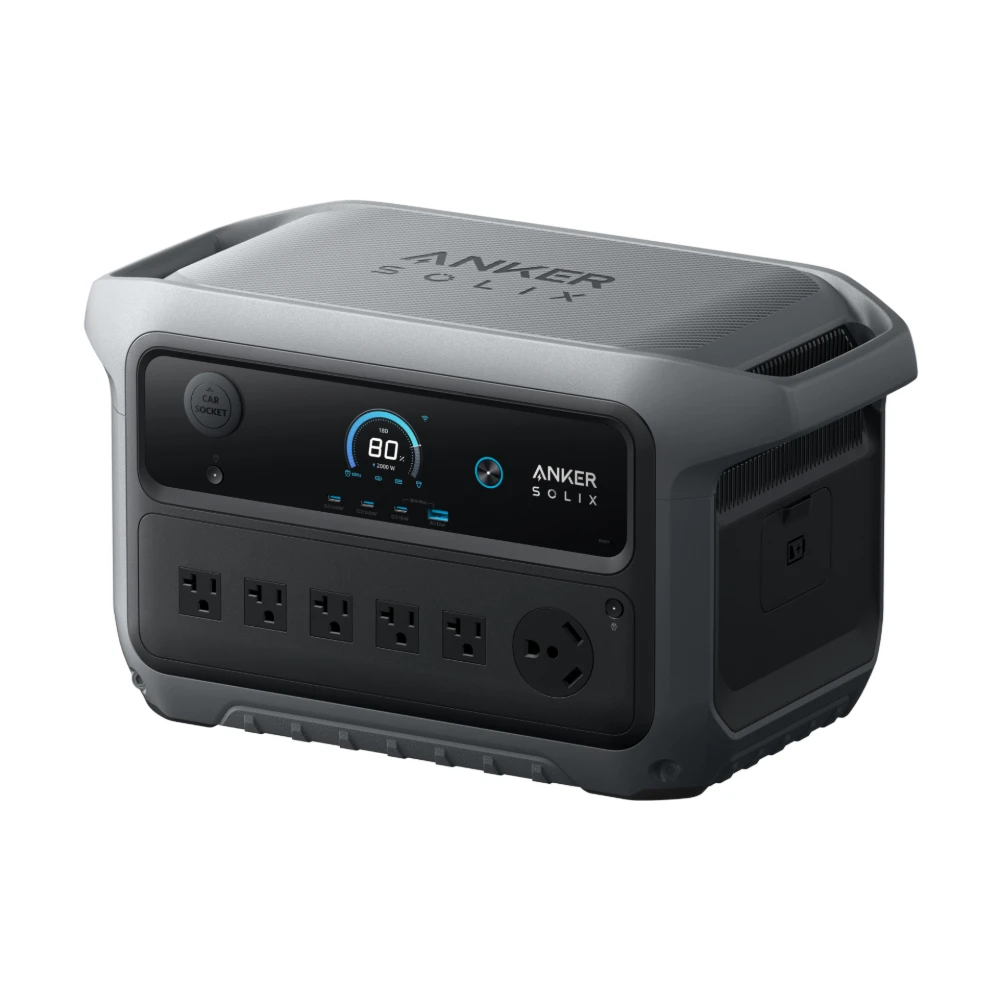
This is where the C2000 Gen 2 stands out. At around 41.7 lbs, it’s roughly 25% lighter and nearly 30% smaller than comparable units in its capacity class, with a design built around genuinely easy one-hand carrying rather than a wheeled cart. If you’ve ever struggled to fit a bulky power station into a trunk or up a flight of stairs, you know exactly why this matters. It’s a small thing on a spec sheet but a real difference in daily use.
Price and Value
Official retail sits at $999.99, with promotional pricing occasionally dipping lower during sale events. Rather than quote a number that’ll be stale by the time you read this, check current listings directly — but as a general positioning note, it tends to undercut the Jackery Explorer 2000 Pro by a meaningful margin while matching or beating it on several key specs, which is a genuinely compelling value proposition if brand name isn’t your top priority.
The Anker SOLIX C2000 Gen 2 is available through Outbound Power. Check current price on Outbound Power →
How It Stacks Up
Against the Jackery Explorer 2000 Plus, the C2000 Gen 2 gives up some continuous wattage and expansion ceiling but claws it back with a lower typical street price and, in my view, a more travel-friendly build thanks to its lighter, more compact footprint. If your use case is more “move this around a property or campsite regularly” than “bolt it to a wall as permanent home backup,” the C2000 Gen 2’s physical design advantages start to matter more than the raw wattage gap.
Who This Is For
- Buyers who want 2kWh-class capacity without paying Jackery’s brand premium
- Campers and overlanders who move their power station frequently and value a lighter, more compact build
- Anyone comparison-shopping who cares more about cycle life and portability than maximum surge wattage
My Take
What surprised me most going through the feedback on this one is how rarely the build quality gets criticized — for a brand that’s newer to this specific category than Jackery or EcoFlow, that’s a meaningful signal. If you’re cross-shopping the 2kWh tier and the Jackery premium doesn’t sit right with you, the C2000 Gen 2 deserves a serious look. It’s not the most powerful unit in its weight class, but it’s one of the most practical to actually live with day to day. If 2kWh is more capacity than you actually need, our review of the smaller, faster-charging Anker SOLIX C1000 Gen 2 is worth a look too.
Full Spec Rundown
Specs below are manufacturer-listed and approximate — confirm exact figures on Anker’s product page before purchasing.
- Capacity: 2,048Wh LiFePO4
- Continuous output: around 2,400W
- Cycle life: rated for a few thousand cycles to 80% capacity
- Mobility features: compact, lightweight build (~41.7 lbs) designed for easy one-hand carrying
- App support: Anker’s companion app for remote monitoring and firmware updates
Why the Lightweight Build Actually Matters
It sounds like a minor detail on a spec sheet, but shaving several pounds and inches off a 2kWh-class unit is the difference between a power station you’re willing to carry to the campsite yourself and one that mostly stays parked in the garage. If you’re planning to move this thing regularly — between a house and a cabin, in and out of a vehicle, across a yard — this detail is worth weighing more heavily than the wattage gap versus competing units.
App and Firmware Experience
Based on aggregated owner feedback, Anker’s app support for this unit gets generally positive marks for stability and for pushing periodic firmware updates that have added features or fixed bugs post-purchase — a reasonable sign the product is still being actively supported rather than abandoned after launch, which isn’t guaranteed across every brand in this category.
Where Anker’s Reputation Still Helps
It’s worth noting that Anker didn’t enter this category from nowhere — the brand built its reputation on chargers, cables, and portable batteries long before power stations, and that background shows in the small details: port layout, cable quality, and an app experience that feels more polished than some newer entrants to this specific category. That established consumer-electronics pedigree is part of why the C2000 Gen 2 doesn’t feel like a first-generation product trying to catch up, even though Anker is a relative newcomer to the power station space specifically compared to Jackery or Goal Zero.
Frequently Asked Questions
Is the Anker SOLIX C2000 Gen 2 a good first power station?
It’s more capacity than most first-time buyers strictly need, but if you’re planning ahead for genuine home backup rather than just device charging, it’s a reasonable “buy once” option rather than one you’ll outgrow in a year.
Does it support solar charging?
Yes, with a solar input cap that comfortably supports a multi-panel setup for a reasonably fast recharge in good sun — check current specs for the exact maximum wattage supported.
How does it handle cold weather charging?
Like most LiFePO4 units, charging in very cold temperatures is automatically limited or paused by the battery management system to protect the cells — normal behavior, not a defect, and worth planning around if you’re relying on it in freezing conditions.
Does Anker offer trade-in or upgrade programs?
Availability varies by region and changes over time — check Anker’s current site directly for any active trade-in or loyalty programs rather than assuming based on past offers.
Final Thought on Value
Price-to-spec comparisons in this category age fast, since sales and promotions shift monthly. What doesn’t shift as quickly is the underlying build quality and the lightweight, compact design that sets the C2000 Gen 2 apart physically from most of its 2kWh-class competition. That’s the part of this review I’d weigh most heavily if you’re reading this months after publication and the specific prices have moved — the physical design advantages hold up regardless of what the unit happens to cost the week you’re shopping.
And if you’re still torn between this and a same-tier competitor, my advice stays simple: whichever unit you choose, confirm the current cycle rating and warranty terms directly on the manufacturer’s site before buying, since these details do get revised between hardware revisions.
The Anker SOLIX C2000 Gen 2 is available through Outbound Power. Check current price on Outbound Power →
Related Reading
- Goal Zero vs Jackery: Which Brand Makes the Better Power Station?
- Best Portable Power Stations of 2026: Our Top 5 Picks Ranked