

E-bikes have quietly become one of the most common things readers ask me about pairing with a power station, usually from people who camp, van-travel, or just don’t want to be tied to a wall outlet to keep their bike charged. So let’s answer it properly: can you charge an e-bike with a portable power station, and if so, what do you actually need to look for?
This article may include affiliate links — if you buy through them we may earn a small commission at no extra cost to you, but our recommendations are based on our own independent research.
Yes, But Check Your Charger’s Wattage First
Most e-bike chargers are surprisingly modest in their power draw — typically somewhere in the 65-250W range depending on battery size and charger type, which is well within what almost any portable power station can handle on the continuous output side. This isn’t like trying to run a window AC or a well pump, where surge and continuous ratings get tight. The real question isn’t “can my power station handle this,” it’s “how many charge cycles can I actually get before I need to recharge the power station itself.”
Grab your e-bike charger’s label or manual and note its output in watts (or volts x amps, which multiplies to watts). That’s the number to compare against your power station’s capacity, not its continuous output rating.
Doing the Runtime Math
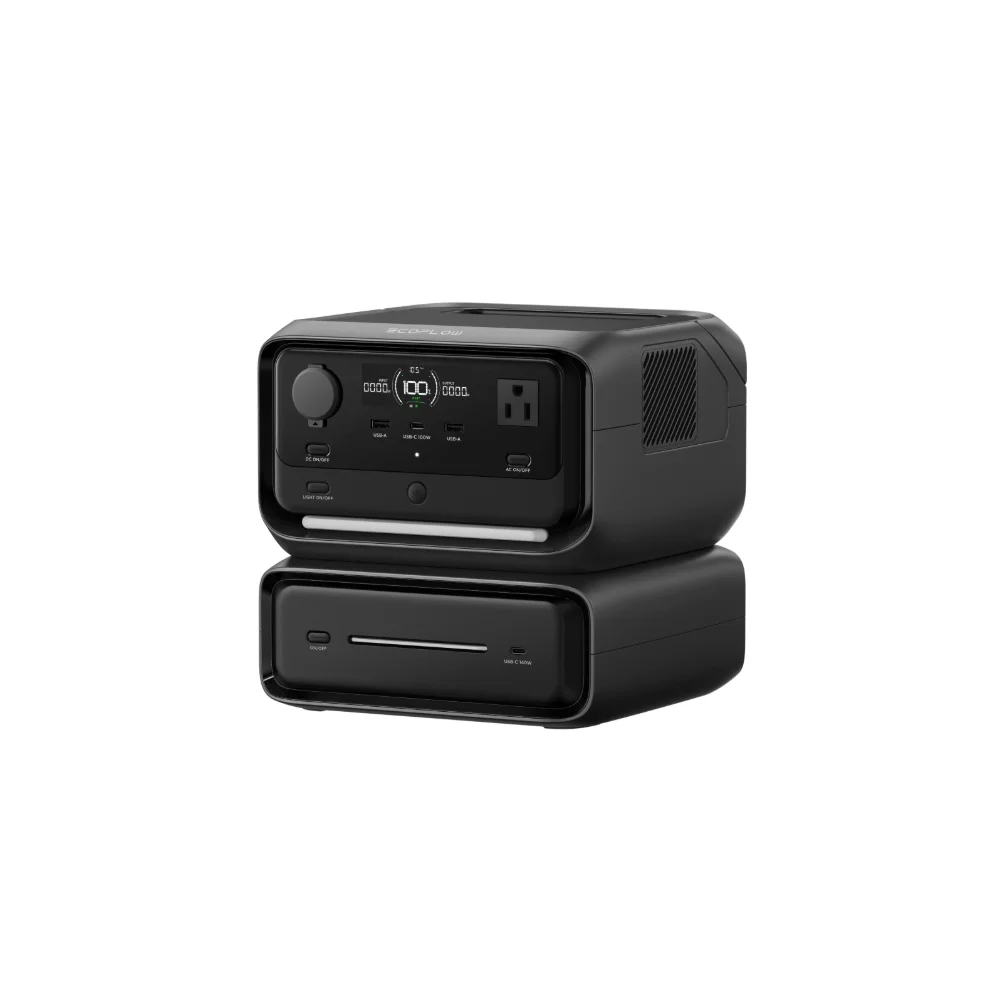
Take your power station’s usable capacity in Wh and divide by your charger’s wattage to estimate charging time, then think in terms of full charges rather than hours. As a working example, the Jackery Explorer 1000 v2 is rated at 1,070Wh capacity with 1,500W continuous output and a 100W USB-C port alongside three AC outlets — plenty of headroom for an e-bike charger plugged into one of its AC outlets. With a typical 250W e-bike charger, that capacity works out to roughly one full e-bike charge with meaningful power left over for phones and other small devices, though your specific bike’s battery size will shift that number up or down.
Check current price on Jackery →
If you’re regularly charging a higher-capacity e-bike battery, or want to charge the bike and still have capacity left for camp lighting, a fridge, or a laptop, sizing up to a larger-capacity unit is the more realistic plan — check our guide on how to choose the right power station capacity for your needs if you want to work through that decision.
Efficiency Losses Are Real, So Budget for Them
The math above is a useful starting point, but real-world charging is never 100% efficient — expect to lose somewhere in the ballpark of 10-20% of the power station’s stated capacity to conversion losses during AC charging. That’s not a defect in the power station; it’s just how DC-to-AC-to-DC conversion works when you’re pulling power from a battery, through an inverter, into a wall-style charger, and back into another battery. Build in that margin when you’re planning how many charges you’ll realistically get per full power station charge.
Recharging Options While You Travel
If you’re combining e-bike trips with camping or van travel, solar recharging keeps the whole system running without needing a wall outlet at all. Match your power station’s solar input rating to a foldable panel and you can trickle-charge during the day while you ride, so the unit’s topped off again by the time you’re back. Our guide on solar charging speed for power stations walks through realistic recharge times if you’re planning around this.
What to Look for in a Power Station for This Use Case
- At least one full-size AC outlet — most e-bike chargers use a standard AC plug, not USB, so confirm your power station has a compatible outlet rather than assuming.
- Enough capacity for more than one charge if you’re riding daily and don’t have reliable access to a wall outlet or strong sun for solar recharging.
- Portability that matches your trip. A 1,000Wh-class unit is a reasonable middle ground for car camping or van life; backpacking with an e-bike is a different, more weight-conscious calculation entirely.
Commuters Who Just Want a Reliable Backup Charge
Not every e-bike-and-power-station pairing is about off-grid adventure — plenty of commuters simply want a reliable way to top off at work, avoid depending on an office outlet that may or may not be available, or have backup charging on hand for an unexpectedly long ride home. For that use case, the sizing math is simpler than the multi-day off-grid scenario: a compact, mid-capacity unit that covers one or two full charges comfortably is usually enough, without needing to plan around solar recharging or multi-day capacity budgets at all.
Bikepacking and Multi-Day Trips Off the Grid
Charging an e-bike from a power station gets more interesting — and more capacity-constrained — when you’re bikepacking or otherwise off the grid for multiple days rather than just topping off overnight at a campsite with other charging options. In that scenario, a single e-bike full charge can represent a large fraction of even a substantial power station’s total capacity, so pairing the setup with solar recharging becomes less of a nice-to-have and more of a practical necessity if you’re stringing together several riding days without a wall outlet. If your trips combine e-bike charging with other off-grid gear — coolers, lights, a satellite communicator — our guide on power stations for overlanding and off-road trips covers sizing a setup for that broader multi-device, multi-day load rather than e-bike charging in isolation.
How This Affects Your Power Station’s Own Battery Over Time
Regularly pulling a large charge session — the kind an e-bike full charge represents — cycles your power station’s own battery meaningfully more per session than charging phones or a laptop. That’s not a reason to avoid the use case, but it does mean an e-bike-charging power station accumulates cycle count faster than one used mainly for light device charging, which is worth factoring into your expectations for how many years of useful life you’ll get from it. Our explainer on LiFePO4 cycle life and what 3,000+ charge cycles really means covers how cycle count translates into real-world lifespan, which is directly relevant if e-bike charging is going to be a regular, heavy-use part of how you use the power station.
Frequently Asked Questions
Will charging an e-bike drain my power station faster than other devices?
Not faster in terms of the inverter working harder, but e-bike batteries hold meaningfully more energy than a phone or laptop, so a single charge session pulls a larger share of your power station’s total capacity. Plan around full charges, not just wattage.
Can I charge my e-bike and run other things at the same time?
Yes, as long as the combined load of everything plugged in stays under your power station’s continuous output rating. An e-bike charger’s modest wattage leaves plenty of headroom for lights, phones, or a laptop simultaneously on most mid-size and larger units.
Is it safe to leave an e-bike charging on a power station overnight?
Follow the same guidance you’d follow charging from a wall outlet — most e-bike chargers have built-in cutoff circuitry to stop charging once full. The power station itself doesn’t change that safety equation either way.
Do I need a specific type of power station to charge an e-bike, or will any model work?
Any power station with a standard AC output and enough continuous wattage to match your e-bike charger’s draw will work — there’s no e-bike-specific power station category. The main things to confirm are wattage compatibility and enough total capacity for how many charges you need between recharge opportunities.
Can I charge multiple e-bikes from one power station?
Yes, if the unit has enough AC outlets and the combined wattage of both chargers stays under the continuous output rating, though you’ll want proportionally more total capacity if you’re charging multiple e-bikes regularly rather than just one.
Does cold weather affect e-bike charging from a power station the same way it affects other charging?
Yes — the same below-freezing charging restriction that applies to any device charging from a LiFePO4 power station applies here too. Charge in a warmer environment if you’re riding in genuinely cold conditions, the same guidance that applies to any other charging use case.