
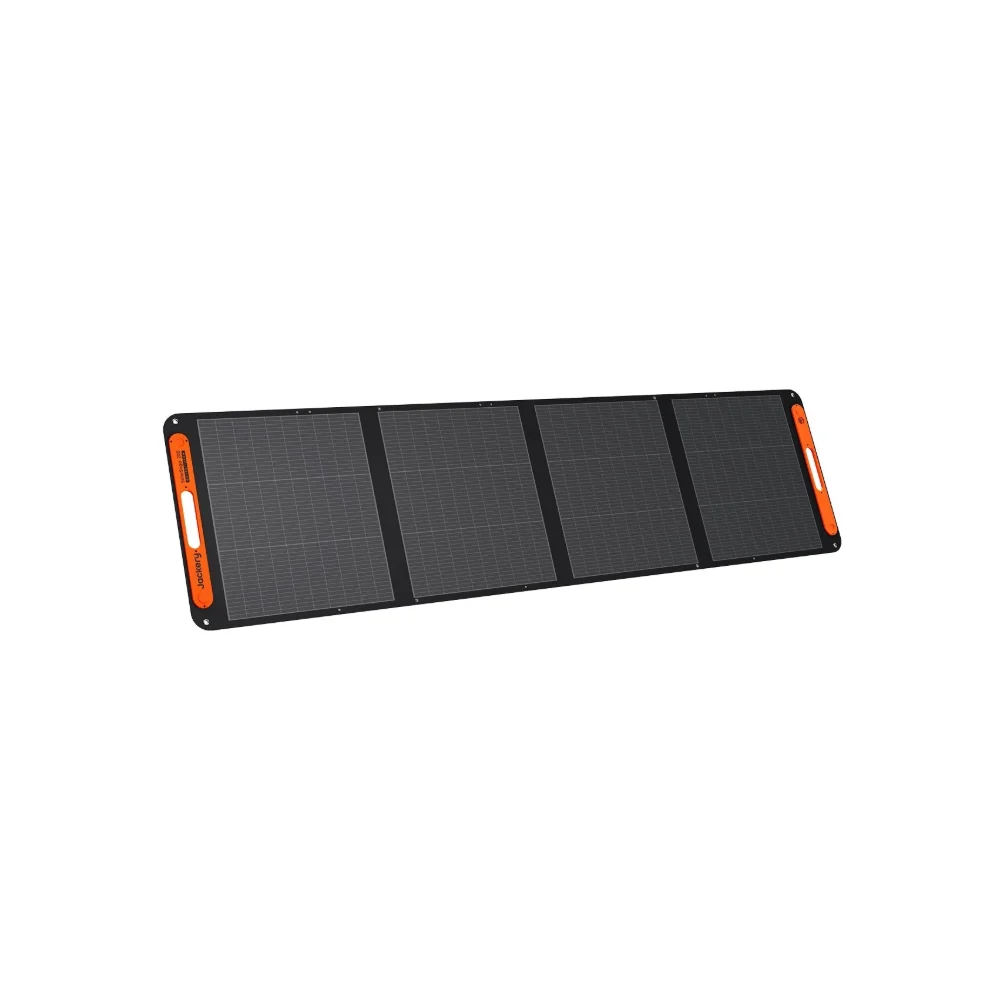

Buy a power station from one brand and you’ll naturally be steered toward that same brand’s solar panels — matching cables, matching design language, one-stop shopping. But the actual electrical requirements underneath that marketing are far less proprietary than they look. In most cases, a solar panel from a completely different brand will charge your power station just fine, as long as a few specific numbers line up. The connector is rarely the real obstacle — it’s voltage and current limits that actually matter, and those are things you can check in about two minutes before you buy anything.
The connector problem is smaller than it looks
Almost every portable solar panel on the market, regardless of brand, terminates its cable in an MC4 connector — that’s the genuine industry standard for solar, not a brand-specific choice. Where brands actually differ is on the power station side: some use MC4 directly, but many use a proprietary DC barrel plug, XT60, or Anderson-style connector instead. This mismatch is why adapter cables exist, and it’s a solved problem, not a real barrier — an MC4-to-barrel or MC4-to-XT60 adapter is inexpensive and widely available, and many power stations even ship with one in the box.
What actually determines compatibility
- Open-circuit voltage (Voc) must stay under your power station’s rated solar input voltage. This is the single most important number to check. Every power station lists a maximum solar input voltage in its specs; exceeding it with a panel that outputs too high a Voc can damage the station’s internal charge controller. This matters more in cold weather, since a panel’s open-circuit voltage actually rises as cell temperature drops — a panel that’s fine on a warm afternoon can output a higher voltage on a cold morning.
- Current (amps) needs to stay within the input’s rated maximum. Pairing multiple panels in parallel, or using a single high-current panel, can push more amps than a station’s input or its adapter cable is rated for. Thin-gauge adapter wiring on a high-current connection is a real fire risk, not just a performance issue — use appropriately rated cabling.
- Polarity has to be correct. Reversed polarity on a DIY or third-party adapter can damage a power station’s input circuitry. If you’re assembling your own adapter rather than buying a pre-made one, verify polarity with a multimeter before connecting.
- MPPT range matters for maximizing output, not just avoiding damage. Even within a safe voltage range, a panel whose voltage sits outside your power station’s MPPT charge controller’s optimal tracking window will charge, but less efficiently than a well-matched pairing would.
Where brand-matching genuinely does help
Buying the same brand’s panel isn’t just marketing in every case. Some ecosystems offer smart features — like automatic performance data reporting to an app, or panel-specific firmware optimizations — that only activate with matched hardware. If those features actually matter to you, same-brand pairing has a real edge. For pure charging performance, though, a well-specified third-party panel that respects the voltage and current limits above will deliver essentially the same watts into the battery as the branded option.
A practical compatibility checklist before buying
- Find your power station’s solar input specs. Look for maximum voltage (Voc), maximum current (amps), and maximum total wattage — usually printed on the unit itself or in the manual’s specifications page.
- Find the panel’s rated Voc and short-circuit current (Isc). These are on the panel’s own spec label, usually near the connector or on a sticker on the back.
- Confirm the panel’s Voc stays comfortably under the station’s max voltage, accounting for colder-weather voltage rise. Leave some margin rather than running right at the limit.
- Confirm you have (or can buy) the correct adapter for the connector mismatch. This is usually the easiest part to solve, but don’t skip verifying it before your trip.
Panels like the EcoFlow 400W portable panel or the Anker SOLIX PS400 both use standard MC4 output, meaning they’re realistic options to pair with a power station from a different brand — like a Jackery Explorer 1000 v2 — as long as the voltage and current numbers check out and you’ve got the right adapter cable.
Frequently asked questions
Will using a third-party panel void my power station’s warranty?
Usually not, as long as you stay within the manufacturer’s stated solar input specifications — most power station warranties cover the unit’s own components, not damage from misuse outside spec. Check your specific warranty terms, since policies do vary by brand.
Can I connect two different panels from two different brands to the same power station at once?
Often yes, if your power station has multiple solar inputs or you use a parallel combiner, but you need to keep the combined voltage and current within the station’s total input limits. Mismatched panel voltages wired together can also cause the weaker panel to underperform, so pairing similar-spec panels works best when combining them.
What happens if I accidentally exceed my power station’s max solar input voltage?
Best case, the station’s protection circuitry simply refuses to charge. Worst case, it can damage the internal charge controller, which is a repair that typically isn’t cheap. Always check Voc against your station’s rated limit before connecting, especially in cold weather when voltage runs higher than a warm-day reading would suggest.
Do I need a special adapter for every brand combination, or is one adapter universal?
Since panels standardize on MC4 while power stations vary, you generally just need an adapter matching your specific power station’s input connector — MC4-to-barrel, MC4-to-XT60, and similar cables are widely sold and not brand-specific once you know which connector your station uses.