
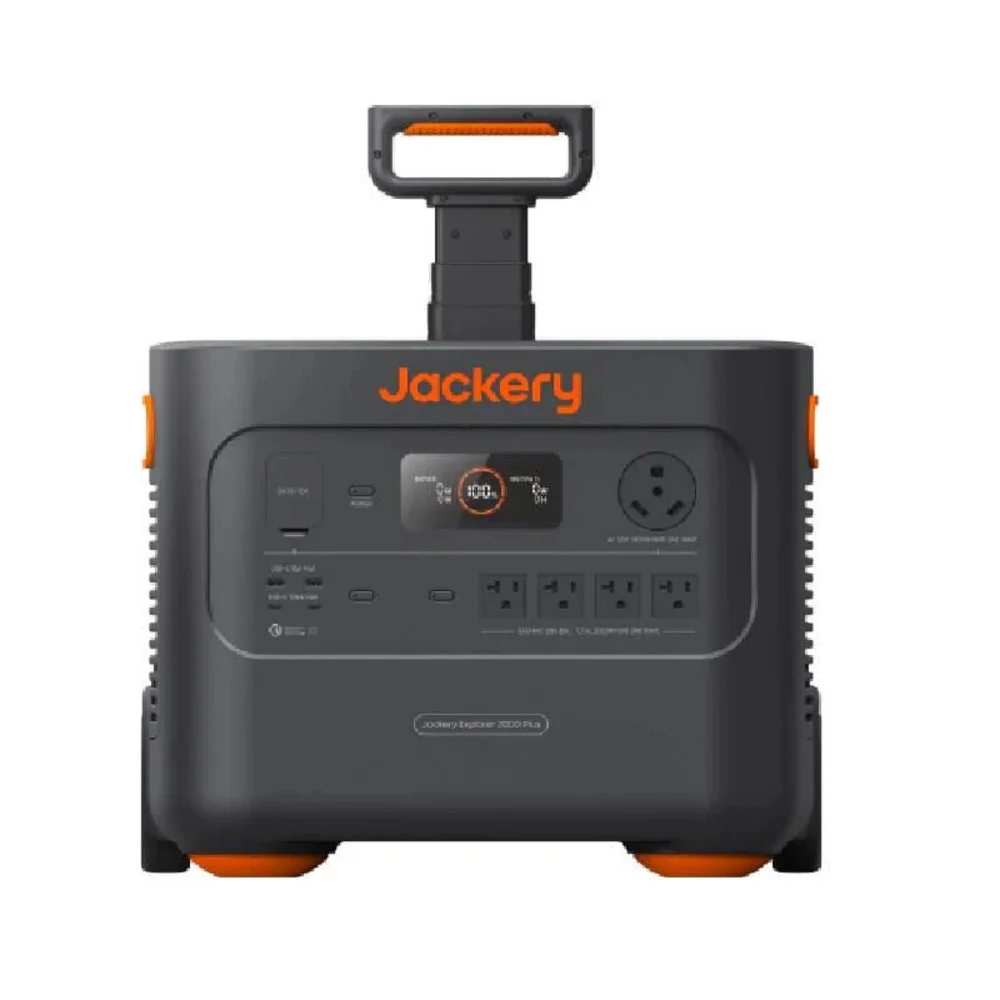

This Jackery Explorer 2000 Plus review exists because of how often it comes up: if you’ve spent any time shopping for a serious home-backup power station, you’ve run into this unit. It’s the one everyone brings up when the conversation turns to “what if I actually lose power for three days.” I’ve spent a good chunk of this year digging through spec sheets, teardown data, and real owner reports on this unit, and I want to walk you through what actually matters before you spend real money on it. One caveat up front: this review is based on in-depth research — published specs and aggregated owner reports — rather than my own bench testing, so treat the numbers below as a starting point and confirm anything critical directly with Jackery before you buy.
This article may include affiliate links — if you buy through them we may earn a small commission at no extra cost to you, but our recommendations are based on our own independent research.
Jackery Explorer 2000 Plus Review: What You’re Actually Buying
At its core, the Explorer 2000 Plus is a roughly 2,000Wh-class LiFePO4 power station with a continuous output in the 3,000W range and a surge rating around double that. That surge number matters more than most buyers realize — it’s what lets you start a fridge compressor or a well pump without the unit tripping. Most competitors in the same weight class cap out noticeably lower on continuous output, so Jackery is genuinely pushing harder here, not just matching the pack. (Confirm the exact current figures on Jackery’s spec page — this class of product gets firmware and hardware revisions over time.)
The part that separates the “Plus” from a standard 2000-class unit is the expansion system. You can bolt on additional battery packs and scale the whole system up into a genuinely large capacity range — check Jackery’s page for the current maximum, since expansion options tend to grow over a product’s lifecycle. That’s the difference between “I can run my fridge for a day” and “I can run half my house for a week.” Nobody needs the full expanded ceiling on day one, but knowing it’s there changes how you plan a purchase — you can start with just the base unit and grow into it.
Ports and Everyday Usability
You get multiple AC outlets and a fast USB-C port that’ll top off a laptop well under an hour — check Jackery’s current spec sheet for the exact port count and wattage, since these details do shift between hardware revisions. In practice, the port layout is generous enough that you’re not doing the “unplug one thing to plug in another” dance during an outage, which is a bigger quality-of-life factor than it sounds like on paper.
Pricing: What You’ll Actually Pay
Jackery’s list price for the Explorer 2000 Plus is well into four figures, but almost nobody pays full list. It shows up in flash sales at major retailers multiple times a year, sometimes dropping dramatically for a short window. I don’t have verified, current pricing to quote you here — sale pricing on this unit changes too often for a number in this article to stay accurate — so check Jackery’s site and a couple of major retailers directly before you buy, and don’t be surprised if you see it meaningfully below list. My take: if you catch it during one of those flash-sale windows, that’s typically a genuinely excellent price for this capacity and output. At full list price, it’s a much harder sell against the competition.
Who This Is Actually For
- Storm-prone homeowners who want to keep a fridge, some lights, and a router running through a multi-day outage
- Heavy RV users who need real continuous wattage, not just enough for a phone charger and a fan
- Off-grid campers who want the option to scale up later without replacing the whole system
What I don’t think this is for: someone who just wants to charge a phone and run a mini-fridge at a weekend campsite. That use case doesn’t need this much continuous output, and you’d be paying for headroom you’ll never touch.
The Trade-Offs
It’s heavy — this isn’t a station you casually toss in a backpack, though I’d rather link you to Jackery’s exact listed weight than quote a number I can’t verify against the current hardware revision. And the expansion batteries aren’t cheap, so building out toward the top of that capacity ceiling is a serious financial commitment, not an impulse add-on. What surprised me digging through the reviews was how consistently the continuous output rating held up in owner reports and third-party write-ups, rather than being an optimistic marketing number that falls apart the moment you plug in something demanding. That’s not always the case in this category, and it’s worth something.
My Take
If you’re building a home backup system and want a unit that can genuinely grow with you, the Explorer 2000 Plus earns its reputation — provided you don’t pay full list price for it. At a realistic sale price, it undercuts or matches most of its direct competitors in the same capacity class while offering more continuous wattage than nearly all of them. If you can only justify one power station purchase for the next several years, this is one of the safer bets in the category right now.
Full Spec Rundown
The figures below are approximate and based on Jackery’s published specs at the time of writing — always verify against Jackery’s current listing before buying, since capacity, cycle life, and charge specs are periodically updated across hardware revisions.
- Capacity: roughly 2,000Wh-class, LiFePO4 chemistry
- Continuous output: in the 3,000W range, with a surge rating around double that
- Cycle life: rated for 4,000 cycles to 70%+ capacity, per Jackery’s published spec
- AC charge time: roughly two hours to full via wall outlet, per Jackery’s spec sheet
- Solar input: supports fast solar recharge in a few hours of strong sun with a sufficiently large panel array — check the current maximum wattage rating on Jackery’s site
- Weight: 61.5 lbs — genuinely a two-hands-and-some-effort unit, not something you casually toss over one shoulder
How It Compares to Its Closest Rivals
Against the EcoFlow Delta 2 Max (similar capacity class), the Explorer 2000 Plus generally offers a stronger surge rating, which matters more for starting fridge compressors and power tools. Against Anker’s SOLIX C2000 Gen 2, Jackery pulls ahead on continuous output and expansion ceiling but gives up some ground on build details like wheels and handle ergonomics. None of these is a bad choice — the differences are real but relatively narrow at this capacity tier, and current pricing at the time you’re buying often matters more than the spec gaps between them.
The EcoFlow DELTA 2 Max is available through Outbound Power. Check current price on Outbound Power →
Living With It Day to Day
Based on the aggregated owner feedback I went through, the app experience gets consistently decent marks — remote monitoring of charge level and basic controls without much complaint about bugs or connectivity issues, which isn’t universally true across this product category. The display is clear enough to read charge status at a glance, which matters more than it sounds like when you’re checking it in a dark room during an outage.
Frequently Asked Questions
Can the Explorer 2000 Plus run a central air conditioner?
Not a central AC system, no — that requires far more continuous wattage and typically 240V split-phase output. It can comfortably run a window AC unit for a period, but whole-home cooling is outside its intended use case.
How many expansion batteries can I realistically justify buying?
Most homeowners never go beyond one or two expansion packs — pushing toward the full expansion ceiling is a serious, multi-thousand-dollar investment better suited to someone building a genuine off-grid or whole-property backup system.
Does it come with a wall-mount or transfer switch option?
Home integration accessories, including transfer switches, are typically sold separately and often require professional installation if you want specific circuits to switch over automatically during an outage.
Long-Term Reliability Signals
One thing I always weigh heavily beyond the launch-window reviews is how a unit’s owner sentiment holds up a year or two after release, once the early-adopter excitement fades. The Explorer 2000 Plus continues to show up favorably in that later wave of feedback, without the drop-off in satisfaction that sometimes emerges once initial hype settles and people have lived with a product through a full range of seasons and use cases. That’s a better long-term signal than any single launch-day review, including this one.
Related Reading
- Bluetti Premium 100 V2 Review: Compact Power for Everyday Use
- Anker SOLIX C2000 Gen 2 Review: A Strong Jackery Alternative?
- Jackery Battery Pack 2000 Plus Review: Is Doubling Your Power Station’s Capacity Worth It?