
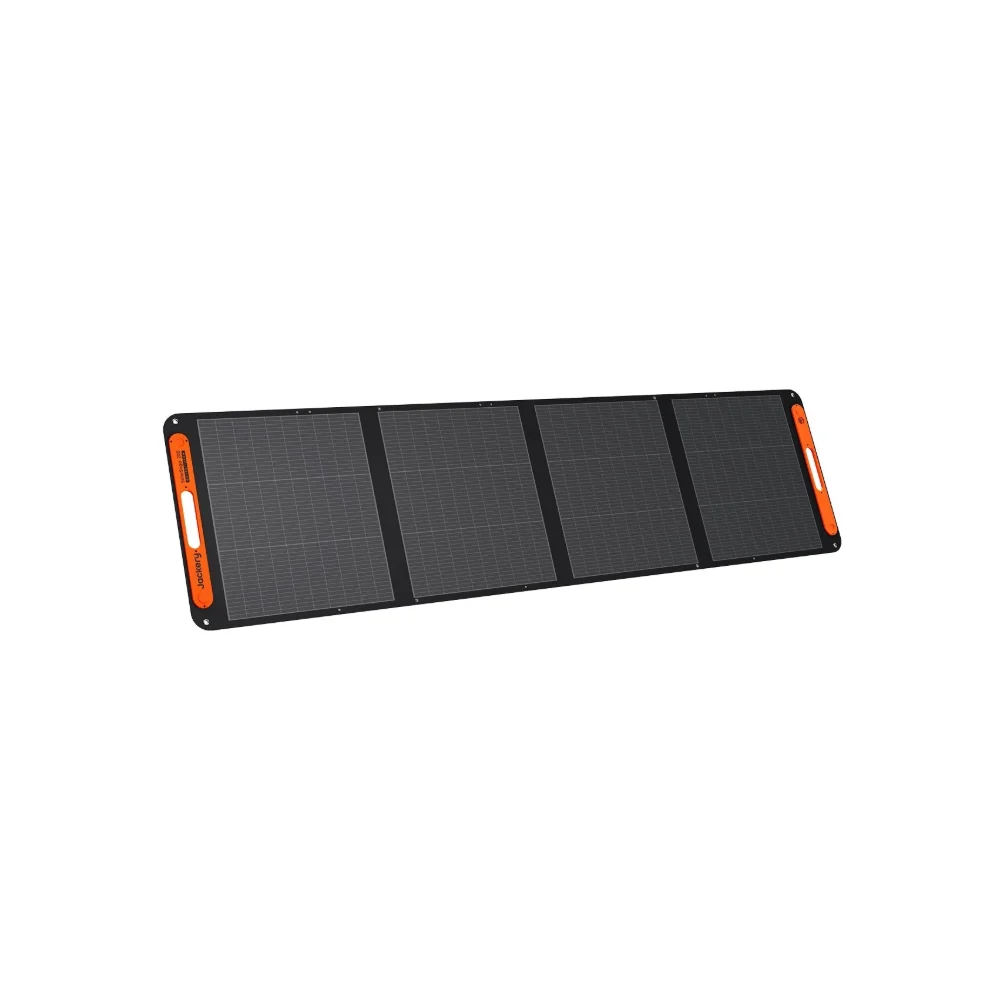

Every solar panel and power station brand seems to have picked its own connector, which is exactly why so many people end up buying an off-brand panel only to discover it physically won’t plug into their power station — or worse, forcing a connection that technically fits but isn’t actually rated for their setup. The fix is understanding what each connector type actually is, and the one rule that matters more than any single adapter: connector fit does not equal electrical compatibility.
The main connector types, explained
| Connector | Typically found on | Key trait |
|---|---|---|
| MC4 | The solar panel itself (industry standard) | Two locking, weather-sealed plugs on the panel’s own cable |
| XT60 / XT90 | Power station solar input port | Compact keyed plug; XT60 and XT90 look nearly identical but are different sizes (16mm vs. 20mm) |
| DC7909 / DC8020 (8mm barrel) | Some Jackery and UDPOWER units | Round barrel connector — despite looking alike, DC7909 and DC8020 are not interchangeable |
| Anderson Powerpole / SB-style | Higher-current setups, larger units (Delta Pro, Explorer 3000 Pro) | Used across RV, battery, and off-grid systems — not all Anderson-style housings actually mate together |
MC4 is almost universally what comes attached to the solar panel itself, since it’s the industry-standard PV connector. The mismatch usually happens on the power station side, where brands use XT60, XT90, a barrel connector, or Anderson-style plugs depending on the model — which is why an MC4-to-[whatever your power station uses] adapter cable is the piece most people actually need, not a full panel replacement.
What connector (and voltage range) your brand actually uses
| Brand / model family | Connector | Voltage range |
|---|---|---|
| Jackery Explorer 300/500 | 8mm DC barrel | 12-30V |
| Jackery Explorer 1000-2000 Plus | DC8020 | 12-50V to 12-60V |
| Jackery Explorer 3000 Pro | Anderson | 12-60V |
| EcoFlow River 2 series | XT60i | 11-30V to 11-50V |
| EcoFlow Delta 2 series | XT60i | 11-60V |
| EcoFlow Delta Pro / Pro 3 | XT150 / Anderson | 11-150V |
| Anker SOLIX C300-C800 | XT60 | 11-32V |
| Anker SOLIX C1000/F2000/F3800 | XT60 | 11-60V |
| Bluetti EB70/EB70S | XT60i | 12-28V, 200W max |
| Bluetti AC200P/MAX/AC300 | Aviation 7-pin | 35-150V |
| Bluetti Elite 200 V2 | XT90 | 12-60V, 1000W max |
The mistake that actually causes damage: voltage, not the plug
A connector fitting is not proof that the connection is safe. The Bluetti AC200P, for example, requires a 35V minimum to start charging at all — plug in a single 100W 12V panel (which outputs around 18V) and it simply won’t charge, even with a perfectly matched connector. Going the other direction, exceeding a unit’s maximum input voltage risks tripping a safety cutoff or, in a worse case, damaging the input circuit. Before wiring anything, check both ends: your panel’s actual voltage output (not just its wattage) and your power station’s rated input voltage window — the two need to overlap, and the connector is just what lets the electrons physically get there.
The cold-weather trap in voltage math
Solar panels produce higher open-circuit voltage in cold weather than their rated spec sheet number, which matters most for anyone wiring multiple panels in series (see our guide on series vs. parallel wiring). A safe rule of thumb is multiplying a panel’s rated STC (Standard Test Conditions) voltage by roughly 1.15 when sizing a series string, so a cold morning’s voltage spike doesn’t exceed your power station’s input ceiling — a calculation many people skip because it only shows up as a problem in specific weather conditions, not during a warm-day test.
Practical rules before you buy an adapter
Never assume “MC4-compatible” branding on a random third-party connector means true compatibility — check manufacturer specs directly rather than trusting a generic label. Use an MC4 tester or multimeter to verify polarity before connecting a DIY or third-party harness, since reversed polarity can short-circuit a panel or trigger a power station’s protection circuit. And treat XT60 vs. XT90 as genuinely different connectors, not interchangeable variants — forcing one into the other’s housing can work briefly but tends to cause arcing damage over repeated use.
FAQ
Can I use a generic MC4-to-XT60 adapter cable from any brand?
Generally yes for the connector fit itself, but always verify the cable’s own current rating matches or exceeds your panel’s output — a thin, low-quality clone cable is a common point of failure even when the connectors themselves are correct.
My panel and power station connectors match — do I still need to check anything?
Yes — matching connectors only confirms physical fit. Confirm your panel’s voltage falls within your power station’s rated input range before relying on the connection for real charging.
Why do some larger power stations use aviation-style connectors instead of XT60?
Bigger units accepting higher input voltages and wattages (like Bluetti’s AC200 series) often use aviation-style 7-pin connectors because they handle the higher voltage range more reliably and securely than smaller XT-series plugs.
What’s the safest way to combine multiple different-brand panels?
Match panels of identical voltage and current output where possible, verify the combined string stays within your power station’s input voltage window (accounting for cold-weather voltage rise), and use a properly rated adapter cable rather than an improvised splice.
Bottom line
Matching connectors gets your panel physically plugged in; matching voltage, current, and polarity is what actually makes it safe and effective. Look up your specific power station’s solar input specs before buying any adapter, and treat “it fits” as the first checkbox, not the only one.
This post may include affiliate links — if you buy through them, we may earn a small commission at no extra cost to you. It doesn’t change what we cover or how we rank anything.
Sources externes citées
- PowerStationTips — MC4 to XT60 Adapter Guide: Which Cable for Which Power Station
- UDPOWER — Solar Panel Connector Types: MC4, XT60, DC7909 & More