
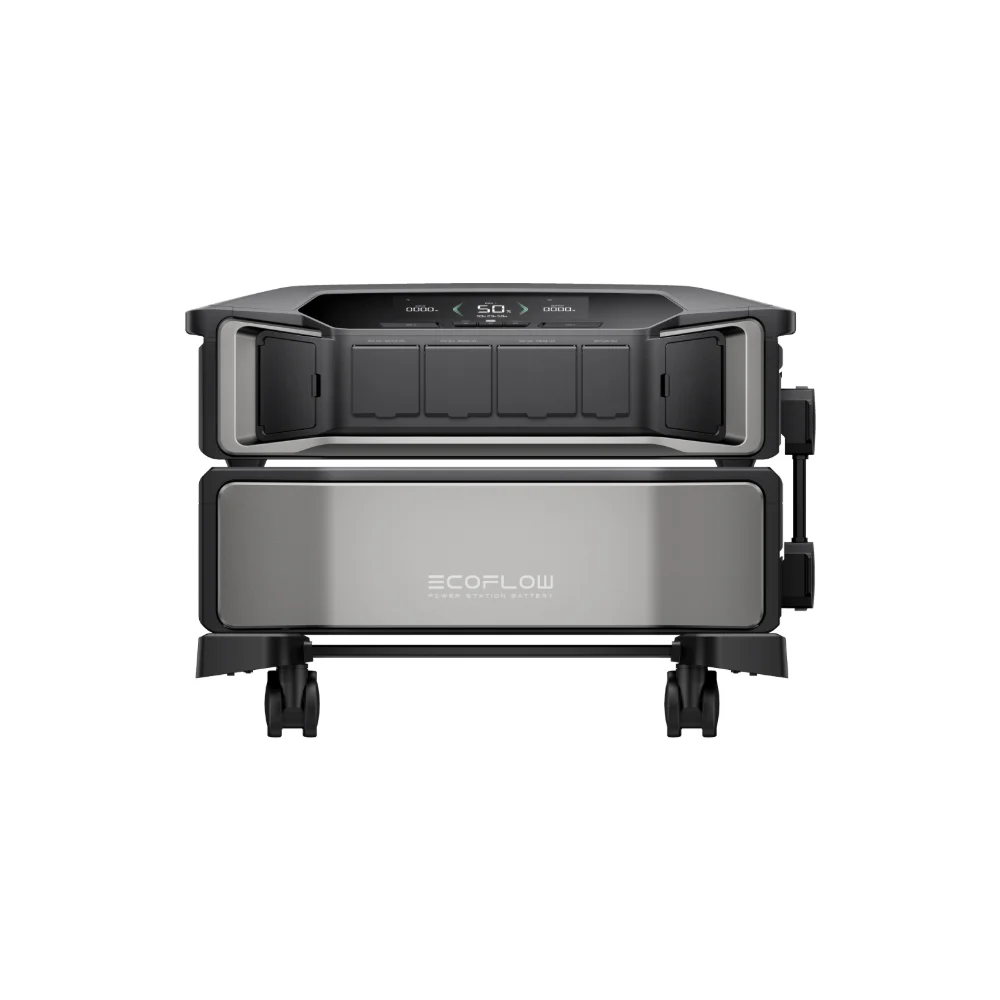
The power station vs generator home backup debate usually turns into brand loyalty pretty fast, so let’s actually lay out the real trade-offs instead. Both solve the same core problem — power during an outage — but they get there in very different ways, and the “better” choice genuinely depends on your situation.
This article may include affiliate links — if you buy through them we may earn a small commission at no extra cost to you, but our recommendations are based on our own independent research.
How We Evaluated This Comparison
This comparison is based on published manufacturer specifications and pricing for both battery power stations and standby generators, typical installation costs reported by licensed installers and homeowners, and a wide range of verified owner feedback on both sides. We haven’t installed a standby generator ourselves to test it head-to-head against a battery system — where a claim reflects our own analysis of the trade-offs rather than a documented fact, we say so directly. Our full editorial approach is outlined on our About page.
Upfront Cost: Generators Win on Paper, Batteries Catch Up Over Time
Professionally installed standby generators typically run into five figures depending on size and installation complexity, while a solid battery power station setup with transfer switch integration can often come in well under that for critical-circuit coverage — though exact quotes vary a lot by region and installer, so it’s worth getting a couple of local estimates rather than trusting a nationwide average. Generators also carry ongoing fuel and annual maintenance costs on top of that sticker price, while battery systems have essentially zero fuel cost and minimal upkeep — over a 10-year horizon, the total cost gap narrows noticeably, and sometimes reverses in the battery’s favor depending on usage.
| Standby Generator | Battery Power Station Setup | |
| Typical upfront cost | Five figures, installed, for whole-home coverage | Low-to-mid four figures for critical-circuit coverage; more for whole-home-capable units |
| Installation | Professional installation required: concrete pad, gas line or large fuel tank, transfer switch, permits in many areas | Plug-and-play for portable use; a hardwired transfer switch setup benefits from an electrician but isn’t always required |
| Annual fuel cost | Ongoing, varies with outage frequency and generator size | Essentially none — recharges from solar, a vehicle, or the grid |
| Annual maintenance cost | Oil changes, stabilizer, occasional carburetor service | Minimal — no mechanical upkeep |
| Approximate 10-year total cost | Upfront cost plus meaningful ongoing fuel and maintenance spend | Upfront cost plus minimal ongoing spend; often closes or reverses the initial cost gap |
Installation is worth calling out on its own: a standby generator is a genuine construction project — a concrete pad, a gas line or large fuel tank, a transfer switch, and often a permit and inspection, typically taking professional installers a full day or more. A battery power station setup ranges from zero installation (portable units you simply plug into) to a half-day electrician job for a hardwired transfer switch feeding specific circuits. If you’re renting, in an HOA with restrictions, or just want to avoid a permanent structural change to your property, that installation gap matters as much as the price tag.
Noise and Fumes: The Real Differentiator
My take: this is the factor that actually changes people’s minds once they’ve lived with both. A generator running for hours during an outage is loud enough to hear throughout the house and next door, and it produces exhaust fumes that require careful outdoor placement away from windows. A power station is silent and produces zero fumes, which matters a lot more at 2am during a multi-day outage than most people expect going in.
Safety Considerations: Carbon Monoxide vs Battery Risks
Generators pose a real and well-documented carbon monoxide risk if run indoors, in a garage with the door partially open, or too close to windows and doors — this is genuinely one of the more common home-safety incidents connected to backup power, and it’s entirely avoidable with correct outdoor placement and a working CO detector. Battery power stations don’t carry this specific risk since there’s no combustion involved, though any lithium battery system should still be used per manufacturer guidelines (avoiding physical damage, extreme heat exposure, or charging with damaged cables). My take: if you go the generator route, a CO detector near sleeping areas isn’t optional — it’s a genuinely important safety layer for a device that’s saved lives specifically by catching what people can’t smell or see.
Environmental and Regulatory Considerations
Some municipalities and HOAs have noise ordinances or specific rules about generator placement, run-time hours, or even permitted models — worth checking before you install one, since a loud generator running at 3am during a neighborhood-wide outage can create friction even when everyone understands why you need it. Battery systems don’t typically trigger the same noise-ordinance concerns since they’re silent, though larger installations may still have permitting requirements tied to the electrical work itself.
Runtime: Generators Win for Extended Outages
A generator with fuel on hand (or a natural gas line) can run indefinitely. A battery power station is finite — once it’s depleted, you need solar, a vehicle, or grid power to recharge it, which isn’t always available mid-outage. For regions with genuinely extended multi-day outages, this is a real limitation, and pairing a battery system with solar panels meaningfully closes this gap but doesn’t fully eliminate it.
Real-World Runtime: Essential Circuits vs. Whole Home
“Runtime” means very different things depending on what you’re trying to power. Here’s roughly how each option handles the two most common scenarios.
| Scenario | Standby Generator | Battery Power Station |
| Essential circuits only (fridge, WiFi, lighting, medical devices) | Indefinite with fuel supply; a mid-size unit comfortably covers this | A 1,000-2,000Wh unit typically covers 1-3 days between recharges; our EcoFlow Delta Pro 3 review covers a unit built for exactly this kind of extended essential-circuit coverage |
| Whole-home coverage (HVAC, well pump, multiple large appliances) | Indefinite with fuel supply; this is the scenario standby generators are built for | Requires a large-capacity unit (4,000Wh+) or an expansion battery setup; runtime is finite between recharges — see our whole-house power station math breakdown for exact numbers |
| Multi-day extended outage (a week or more) | Strong, assuming fuel supply holds or is resupplied | Requires solar recharging or a vehicle to sustain; see our solar recharge speed guide for realistic recharge timelines |
Which Households Actually Choose Which, and Why
In general, households in mild-outage regions (a few short outages a year) tend to lean toward battery systems, valuing the silence and zero maintenance for infrequent, short-duration use. Households in genuinely storm-prone or infrastructure-strained regions with regular multi-day outages more often end up with a generator as their primary system, sometimes adding a battery unit specifically for the quiet overnight hours when generator noise is least tolerable. Rural properties with well pumps and no nearby neighbors to disturb also skew generator-favorable, since the noise trade-off matters less without close neighbors.
Which Is Right for Your Household?
Short, occasional outages (a few times a year, hours to a day): A battery power station is almost certainly the better fit — you get instant, silent, fume-free power without the cost and upkeep of a standby generator you’ll rarely use. Our top portable power station picks for 2026 is a good starting point.
Regular multi-day outages (storm-prone regions, weak grid infrastructure): A standby generator’s indefinite runtime becomes genuinely valuable here. Many of these households still keep a battery unit specifically for quiet overnight coverage. Our hurricane and storm season prep guide covers this scenario in more depth.
Renters, HOA restrictions, or no permanent installation option: A battery power station is typically the only realistic choice, since standby generators require a permanent structural installation most renters and many HOAs won’t allow.
Rural properties with a well pump and no close neighbors: Generator noise matters less without neighbors to disturb, and a well pump’s power draw often exceeds what smaller battery systems comfortably handle, making a generator’s raw output advantage more relevant here.
Households that want both bases covered: See the hybrid approach below — a growing number of households don’t treat this as an either-or decision.
Fuel Storage and Availability Concerns
A generator is only as good as its fuel supply, and gas station lines or shortages are a well-documented problem during and after major regional outage events. Propane and natural gas standby generators sidestep this specific issue if you have a reliable connection, which is part of why they’re popular for permanent installations despite higher upfront cost than portable gas units. Battery systems avoid this entire category of risk, simply needing sun, a vehicle, or eventual grid restoration to recharge — no fuel logistics to manage during the exact period when logistics are hardest.
Our Recommendation
If your outages are typically short (hours to a day) and you value quiet, low-maintenance, instant-on power, a battery power station is the better fit for most households. If you regularly face multi-day outages and need to run high-draw appliances continuously without solar to rely on, a standby generator’s indefinite runtime is hard to match. Many households in high-outage regions end up using both — battery for quick, quiet coverage, generator as the extended-outage backstop.
A Hybrid Approach Some Households Choose
Rather than picking strictly one or the other, some households run a power station for quiet, everyday essentials (fridge, WiFi, lighting, medical devices) and keep a small gas generator in reserve strictly for occasional heavy loads a battery system can’t cover, like a well pump during an extended outage. This gets the quiet, fume-free convenience for 90% of outage scenarios while still having a heavier-duty fallback for the rare occasion it’s genuinely needed.
My take: this hybrid setup is underrated. It costs more upfront than picking just one option, but it matches how outages actually unfold for a lot of households — mostly needing quiet essentials, occasionally needing serious power for something specific — better than a single-solution approach does.
Maintenance Burden Over the Years
A gas generator needs periodic exercise runs, fresh fuel or a stabilizer, oil changes, and occasional carburetor attention if it sits unused for long stretches — skip this maintenance and there’s a real chance it won’t start when you actually need it. A power station, by contrast, mostly just needs an occasional top-up charge and sits ready with essentially zero mechanical upkeep for years.
My take: this ongoing maintenance gap is genuinely underrated in most comparisons. A neglected generator is a common reason backup power fails exactly when it’s needed most, while a neglected power station usually still works, just at a lower charge than ideal.
FAQ
Is a power station cheaper than a generator long-term?
Often yes over a 10-year horizon once fuel and maintenance costs are factored in, though upfront generator costs can look lower for very large systems.
Can I use both a generator and a power station?
Yes, and many households do — a battery for quiet, instant, short-outage coverage, with a generator as backup for extended multi-day situations.
Are there places where generators are restricted or banned?
Some HOAs and municipalities have noise ordinances or placement rules affecting generator use — check local regulations before installing one, especially in denser residential areas.
Which option requires more storage space?
A standby generator typically requires a permanent outdoor pad installation, while a battery power station is more flexible — smaller units can be stored indoors and moved as needed, though large whole-home battery systems still need a dedicated indoor or garage location.
How long does professional generator installation actually take?
Typically a full day or more for the physical installation, plus time for permitting and inspection depending on your municipality — budget for weeks between ordering and having a fully operational system, not days.
Can a battery power station really power a whole house?
Large-capacity units (4,000Wh and up) paired with expansion batteries can cover a meaningful portion of a home’s circuits, but “whole house” in the same sense as a properly sized standby generator usually still favors the generator for simultaneous heavy loads like central air and a well pump together. See our whole-house power station math breakdown for the exact numbers.
Do battery power stations lose capacity over time like a generator loses efficiency?
Yes, but slowly — modern LiFePO4 batteries are typically rated for 3,000+ full charge cycles before meaningful capacity loss, which translates to many years of regular use. A neglected generator can fail to start entirely without regular maintenance, which is arguably a bigger practical risk.
Is a battery power station safe to use indoors?
Yes — unlike a combustion generator, a battery power station produces no carbon monoxide and can be run safely indoors, which is one of its clearest safety advantages for apartment or close-quarters living.
What size generator do I need for home backup?
This depends entirely on which circuits you want to cover — a few thousand watts covers essentials like a fridge and lighting, while whole-home coverage with HVAC and a well pump typically requires a generator in the 15-20kW range or larger. A licensed electrician can size this precisely based on your home’s actual electrical panel.
Related Reading
- Best Whole-Home Backup Power Stations for Power Outages in 2026
- Can a Power Station Run Your Whole House? The Real Math
- Best Portable Power Stations of 2026: Our Top 5 Picks Ranked
- How We’d Grade Every Power Station Brand: A Buyer’s Framework
- Power Station Warranty Comparison 2026
- Best Power Stations for Hurricane and Storm Season Preparedness