
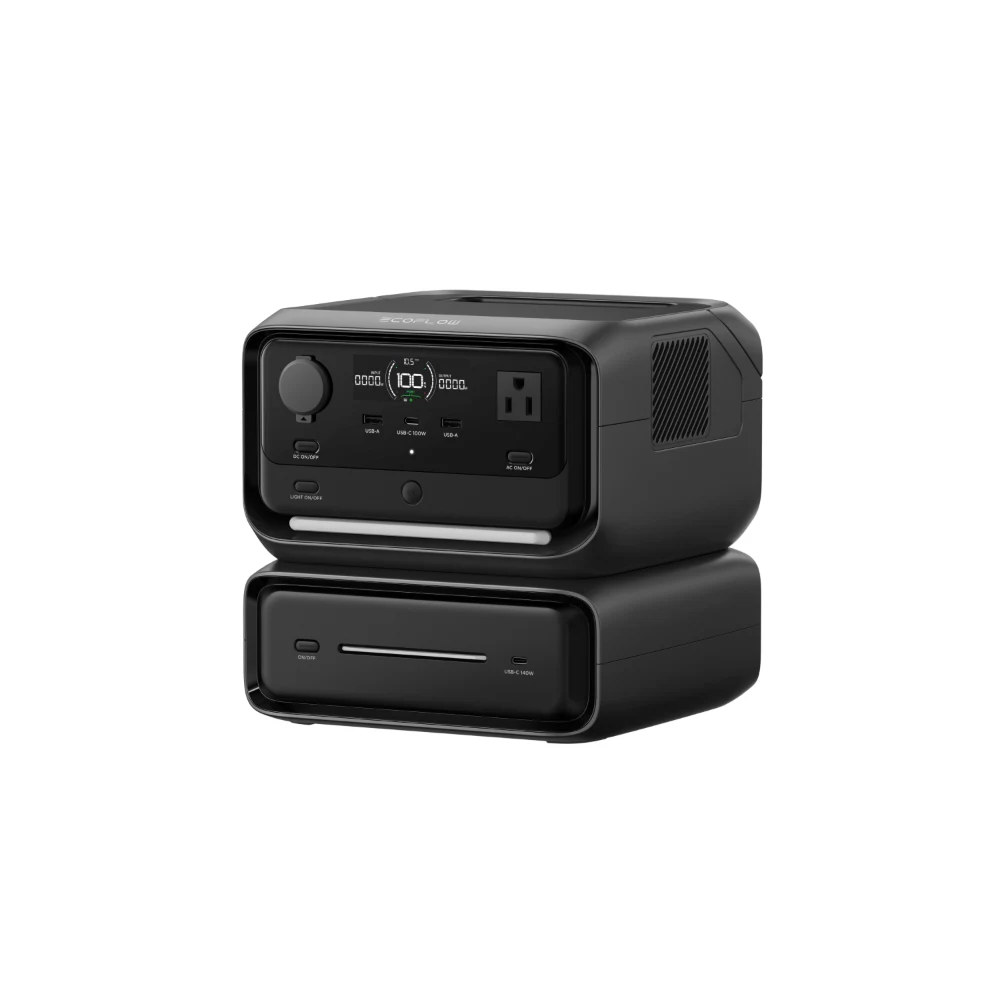

Not everyone needs a 2,000Wh power station taking up half a truck bed. The EcoFlow River 3 Plus is built for the opposite instinct: a small, genuinely pocketable-adjacent unit that covers phones, laptops, CPAP machines, and small appliances without the bulk or price tag of EcoFlow’s larger Delta lineup. We looked at where it earns its “best small power station” reputation and where its small size still shows.
EcoFlow River 3 Plus at a Glance
- Capacity: 286Wh (LiFePO4), expandable to 858Wh with an add-on battery
- AC output: 600W continuous, 1,200W with X-Boost mode
- Max solar input: 220W
- UPS switchover: under 10 milliseconds
- Weight: 10.4 lbs — light for its capacity class, though not quite one-hand-for-a-hike territory
- Street price: $299 at list, with sales periodically dropping it closer to $279
Why the Size Matters
At 10.4 lbs, the River 3 Plus is still on the lighter end for this capacity class, though it’s not quite the one-hand-for-an-extended-walk unit some marketing implies — it’s manageable for hikers, photographers, and anyone doing fieldwork away from a vehicle, but you’ll notice the weight on a longer carry. The trade-off is obvious: 286Wh is enough for phones, small laptops, and short CPAP use, not for running a fridge overnight or backing up a home during a multi-day outage.
X-Boost and Real-World Output
EcoFlow’s X-Boost mode lets the unit push higher wattage than its continuous rating by managing voltage more aggressively, which is genuinely useful for briefly running things like small space heaters or hair dryers that would otherwise trip a lower-rated unit. It’s not free extra power — you’re trading some efficiency and it’s not meant for sustained heavy loads — but as a way to occasionally punch above the unit’s weight class, it works as advertised.
The Sub-10ms UPS Feature
The under-10-millisecond UPS switchover is a genuinely useful, often overlooked feature: if you plug the River 3 Plus in between a wall outlet and a sensitive device like a desktop computer or a CPAP machine, it can take over during a power blip fast enough that most equipment won’t even register the interruption. That’s a meaningfully different use case than pure portable power, and it’s one of the more practical small-scale UPS options on the market at this price.
Real-World Runtime
- A CPAP machine: 1-2 nights per charge
- A laptop: 4-5 full charges
- A smartphone: 15-20 charges
- A Wi-Fi router (3W): up to 35 hours, per EcoFlow’s own testing
Who Should Buy the River 3 Plus
- Hikers, photographers, and fieldworkers who need real portability over raw capacity
- Buyers who want a small UPS for a desktop, router, or medical device
- Anyone building a “everyday carry” power setup rather than a home-backup system
Who Should Skip It
- Anyone needing to back up a fridge, freezer, or multiple devices during an outage
- Buyers who want to run higher-draw appliances for extended periods
- Anyone who’d rather buy one larger unit than mix a small one with an expansion battery later
My Take
The River 3 Plus is honest about what it is: a genuinely portable, genuinely useful small power station rather than a scaled-down attempt at a home-backup unit. The UPS feature is the pleasant surprise here — it’s the kind of practical detail that separates a good small power station from a merely small one. If your use case actually matches its capacity class, it’s an easy recommendation.
Value for Money in the Compact Category
Pricing in the sub-300Wh portable category moves around fairly often with sales and bundle deals, so it’s worth comparing current pricing against the expansion-battery bundle rather than assuming the base unit alone is the right purchase. For buyers who know they’ll want more than 286Wh eventually, buying the bundle upfront is often better value than buying the base unit now and the expansion battery separately later, since bundles are typically discounted versus buying the base unit and the add-on battery separately at full price.
How It Stacks Up Against Similarly Sized Competitors
The compact power station category has gotten genuinely competitive, and the RIVER 3 Plus isn’t the only strong option at this size. Anker’s SOLIX C1000 Gen 2 sits a tier above on raw capacity and charging speed, at a meaningfully higher price point — worth considering if you find yourself wanting more headroom than the RIVER 3 Plus’s 286Wh (or 858Wh with the expansion battery) comfortably provides; our full Anker SOLIX C1000 Gen 2 review covers where that extra capacity and speed actually pays off. If you’re cross-shopping the RIVER 3 Plus directly against a similarly compact Anker option for a specific use case like tent camping, our head-to-head comparison of the RIVER 3 Plus vs. Anker SOLIX C1000 Gen 2 walks through that exact matchup.
The honest tradeoff across this category: smaller, lighter units like the RIVER 3 Plus win on true portability and price, while stepping up a size class buys you meaningfully more runtime margin for the same basic feature set. Neither is objectively better — it depends on whether your primary use case is genuinely mobile (backpack, dorm room, quick trips) or something closer to a stationary backup role where a bit more bulk is an acceptable tradeoff for more capacity.
Who Should Skip It, in More Detail
Beyond the general “not for fridge or appliance backup” guidance, a few more specific buyers should look elsewhere. Anyone planning multi-day off-grid stays without reliable recharging access will run through 286Wh faster than expected — this unit shines as a supplement to solar or wall charging, not as a standalone multi-day power bank. RV and van-life users looking for a primary house-battery replacement need substantially more capacity than this category offers at all. And anyone specifically prioritizing the lowest possible cost per watt-hour will generally find better value in a larger, less portable unit, since compact size carries a real price premium in this category.
Frequently Asked Questions
Is the EcoFlow River 3 Plus worth buying in 2026?
Yes, for the specific use case it targets: genuine portability, CPAP or small-device backup, and light UPS duty. It’s not the right choice if you need to back up a fridge or run appliances for extended periods during an outage.
How long does the EcoFlow River 3 Plus last on a full charge?
It depends heavily on the device. Expect a night or two of CPAP use, several laptop charges, or well over a day of Wi-Fi router power, but only a few hours of higher-draw appliance use.
Can the River 3 Plus expansion battery increase its capacity?
Yes, EcoFlow offers an add-on battery that brings total capacity up to 858Wh, which is worth considering if you like the portability but want more runtime margin.
Does the River 3 Plus work as a UPS for a computer?
Yes, its under-10-millisecond switchover time is fast enough to keep most desktop computers and similar sensitive electronics running through brief power interruptions without a hard reset.
How does the RIVER 3 Plus handle solar charging?
It accepts solar input and charges from a compatible portable panel at a respectable rate for its size, though as with any compact unit, solar charging is meaningfully slower than AC wall charging — plan on solar as a supplement for topping off during the day rather than your primary recharge method if you need a fast turnaround.
Is this a good first power station for someone new to the category?
It’s a reasonable entry point specifically because the use cases it’s built for (portable charging, light UPS duty, CPAP backup) are common first-purchase reasons, and its price point is accessible. Just go in with the right expectations about its capacity ceiling rather than assuming it scales up to appliance or home-backup duty.
How does its weight compare to similar units?
At roughly 10.4 lbs, it’s squarely in the “carry it in one hand without strain” category that defines this size class — noticeably lighter than anything stepping up to the 1,000Wh-plus tier, which is the core tradeoff this whole size category is built around.
Related Reading
- EcoFlow Delta Pro 3 Review
- Best Budget Portable Power Stations Under $300
- Best Lightweight Power Stations for Backpacking and Hiking
- Best Power Stations for CPAP Machines
About the Author
Khalid Zirari is the founder of Marjajo, where he researches and compares portable power stations, solar generators, and related backup power gear to help readers cut through spec-sheet marketing and find the right fit for their needs.