
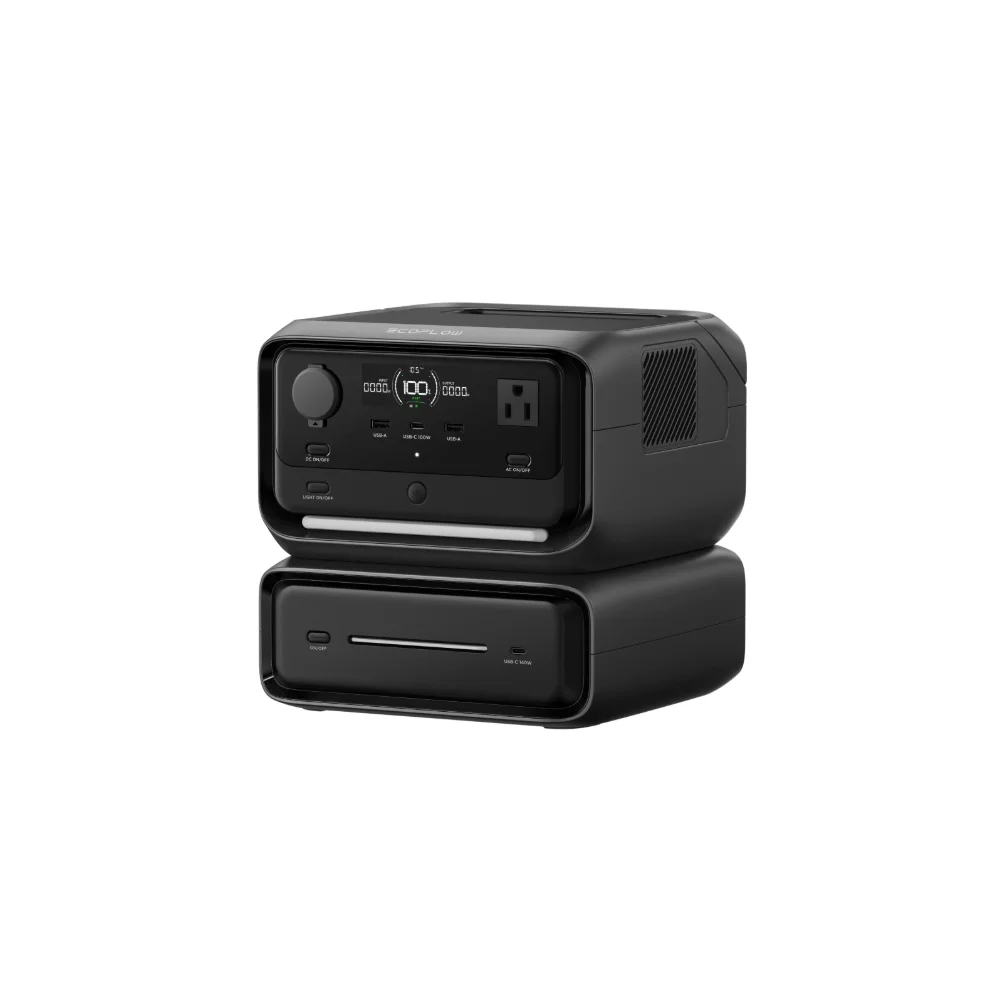

Every year, Labor Day weekend is the last big road-trip push of the summer for a lot of people — one more chance to get the RV or the truck bed loaded up before the season turns. If boondocking (camping off-grid, without hookups) is on the agenda, your power setup deserves a little more thought than “just bring the phone charger.”
This article may include affiliate links — if you buy through them we may earn a small commission at no extra cost to you, but our recommendations are based on our own independent research.
What Boondocking Actually Demands From a Power Station
Think of it as budgeting, not just packing. Without a campground’s electrical hookup, everything running off your battery needs to be accounted for: phone and laptop charging, a camp light or two, maybe a portable fan or a CPAP machine overnight, and possibly a mini fridge or cooler if you’re not running your rig’s built-in one. The good news is that a mid-size power station handles this list comfortably; the key is making sure you can recharge it before the trip ends, since boondocking (by definition) means no shore power.
Solar Recharging Is the Real Differentiator
Recharging strategy matters more for boondocking than for almost any other use case, since running out mid-trip means driving to find an outlet rather than just waiting until you get home. For a single overnight or weekend trip, you can often get by on one full charge. For a multi-day Labor Day weekend, plan on recharging via solar or your vehicle’s alternator at some point. This is where it’s worth checking a unit’s actual solar input wattage and how long a full recharge realistically takes in real sun, not just the marketing number for ideal conditions — cloud cover, panel angle, and time of year all affect real-world results, especially as days get shorter heading into fall.
A Solid Pick for This Trip
Rather than recommend the biggest unit on the market, we’re focusing on one that fits this specific trip profile well. The Jackery Explorer 1000 v2 (1,070Wh, 1,500W output) is a reasonable fit for boondocking specifically because it’s light enough to move around a campsite easily, charges from 0-100% in about an hour on AC before you even leave home, and pairs with Jackery’s SolarSaga panels for a legitimate mid-trip recharge if you’re out more than a couple of days. It starts at $549, with a solar panel bundle available for $749 (list $879). Check current price on Jackery →
Packing and Setup Tips for the Weekend
Getting the hardware right is only half the job; the other half is habits. A few things make boondocking with a power station meaningfully smoother: fully charge before you leave rather than counting on solar from hour one; bring the specific cables your devices need rather than assuming a universal adapter will cover everything; and do a rough wattage tally the night before (fridge, fan, lights, devices) so you’re not guessing how many charge cycles you’ll need mid-trip. None of this is complicated, but skipping it is exactly how people end up with a dead battery on day two.
Sizing for Your Specific Rig
There’s no single right answer for every trip. A tent camper, a truck-bed setup, and a full travel trailer all have different realistic power budgets. If you’re tent camping or truck camping, a single mid-size unit covering lights, devices, and maybe a cooler is usually enough. If you’re in a travel trailer or RV with its own house battery, a portable power station often works best as a supplement for specific high-draw items you don’t want pulling from the rig’s main system, rather than trying to replace it outright. Knowing which category you’re in before you shop saves you from buying either more or less capacity than the trip actually calls for.
Why Labor Day Specifically
It’s also worth checking cell coverage and downloading offline maps for your destination beforehand — popular dispersed camping areas often have weak or no signal, and that matters for both safety and for knowing exactly where you’re headed once you’re off pavement. Labor Day weekend traffic to popular boondocking and dispersed camping spots tends to spike as the last unofficial weekend of summer, which means arriving early and having your own self-sufficient power setup matters more than it would on a random weekend — you’re less likely to be near help, and more likely to be sharing limited space with other campers doing the same thing you are.
My Take
None of this is about buying the biggest, most expensive unit available — it’s about matching capacity to your actual trip rather than guessing. I’d rather bring slightly more capacity than I think I need for a holiday weekend trip than find out mid-trip that I underestimated. A mid-size power station with a solar recharge option removes almost all of the guesswork, and the cost of extra capacity is small compared to cutting a trip short because a fridge died overnight.
Managing Battery Health in Late-Summer Heat
Labor Day weekend still falls squarely in late-summer heat across most of the country, which matters for more than just your own comfort — it affects your power station too. A unit left in a hot truck bed or baking in direct sun on a dashboard all weekend loses some usable capacity to heat exactly when you’re relying on it most, and repeated hot-weather exposure trip after trip contributes to longer-term battery wear. Keep it in shade or inside the RV rather than a closed vehicle in direct sun, and if this is one of several hot-weather trips across the season rather than a one-off, our guide on whether extreme heat damages your power station’s battery covers the cumulative effects worth planning around.
If This Becomes a Regular Habit, Not Just One Weekend
If Labor Day boondocking turns into a regular pattern of weekend trips through fall, it’s worth thinking about your power setup as a standing system rather than a one-off purchase. That means a consistent recharge routine between trips (see our guide on storing a power station between uses if trips are spaced weeks apart), and considering whether your current unit’s capacity still fits as your trip frequency or group size changes. Frequent boondockers doing longer, more remote trips than a single weekend should also look at our broader roundup of power stations for overlanding and off-road trips, which covers sizing for extended, more demanding off-grid stretches beyond a single long weekend.
Frequently Asked Questions
How much power do I need for a weekend of boondocking?
Every group’s needs differ slightly. For phones, laptops, lights, and a fan, most people find 500-1,000Wh per day workable; add a fridge or CPAP and plan for more, or plan to recharge via solar or your vehicle.
Can I recharge a power station from my vehicle while driving?
Many power stations support car charging via a 12V port or alternator charger accessory, though it’s typically slower than AC or solar — check your specific model’s car-charging wattage.
Do I need solar panels for a single weekend trip?
Not necessarily, if you start fully charged and your load is modest. Solar becomes more important the longer the trip runs without access to shore power.
What’s the biggest mistake first-time boondockers make with power planning?
Underestimating how much a fridge or AC-dependent appliance draws relative to everything else combined. Phones, lights, and laptops are usually a rounding error next to a compressor fridge running continuously, so size your trip’s power budget around your biggest single load first, then add everything else.
Is it worth bringing a backup power bank in addition to a full-size power station?
For a single weekend, generally not necessary if your main unit is appropriately sized, but for longer or more remote trips, a small secondary power bank for phones specifically adds a layer of redundancy if the main unit ever runs low before you can recharge.
How crowded do boondocking sites typically get over Labor Day weekend specifically?
Popular dispersed camping areas near major cities or parks often see noticeably higher traffic over Labor Day than a typical weekend, given it’s one of the last big holiday windows before fall — arriving earlier in the day, and having a backup site in mind, is worth factoring into your planning alongside your power setup.