

Most portable power station buying guides are written around camping, RV living, or emergency backup. Content creators — vloggers, photographers, drone pilots, and anyone shooting outdoor video away from a wall outlet — have a genuinely different set of needs, and it’s a gap I noticed while looking at how brands like Anker have started marketing directly to “outdoor creators” this year. Here’s what actually matters if you’re powering gear, not appliances.
Affiliate disclosure: This article may include affiliate links — if you buy through them we may earn a small commission at no extra cost to you, but our recommendations are based on our own independent research.
How Creator Power Needs Differ From Camping or Home Backup
A camper is usually trying to run a fridge or lights for days. A creator on a shoot is usually trying to keep a very specific, often expensive stack of gear charged and running for a few hours at a time: camera batteries, a laptop for offloading and backup, an on-camera monitor, LED lighting panels, maybe a drone controller and charging hub. That’s a different profile — lower total wattage most of the time, but a higher premium on fast USB-C PD charging, port variety, and being quiet and light enough to carry between setups.
What to Actually Look For
Fast USB-C Power Delivery
Modern cameras, laptops, and drone batteries increasingly charge over USB-C PD. A power station with 100W (or higher) USB-C output can charge a laptop at close to its max speed instead of trickle-charging it over a lower-wattage port, which matters if you’re trying to turn gear around quickly between shots.
Enough Ports to Avoid a Charging Bottleneck
If you’re charging camera batteries, a laptop, and a phone simultaneously, port count and total simultaneous output matter more than the single biggest number on the spec sheet. Look at how output is shared across ports when multiple things are plugged in at once, not just the headline USB-C wattage.
Weight and Noise
You’re carrying this in and out of vehicles and sometimes hiking it to a location. A lighter unit with a quiet or fanless charging profile is genuinely more usable on a shoot than a bigger unit that’s a hassle to move and audibly whines while everyone’s trying to record clean audio.
Fast Recharge Between Sessions
If you’re shooting multiple days in a row, a station that recharges quickly overnight — or fast enough during a lunch break via a car charger or wall outlet — keeps you from starting a shoot day already behind.
A Model That Fits This Use Case Well
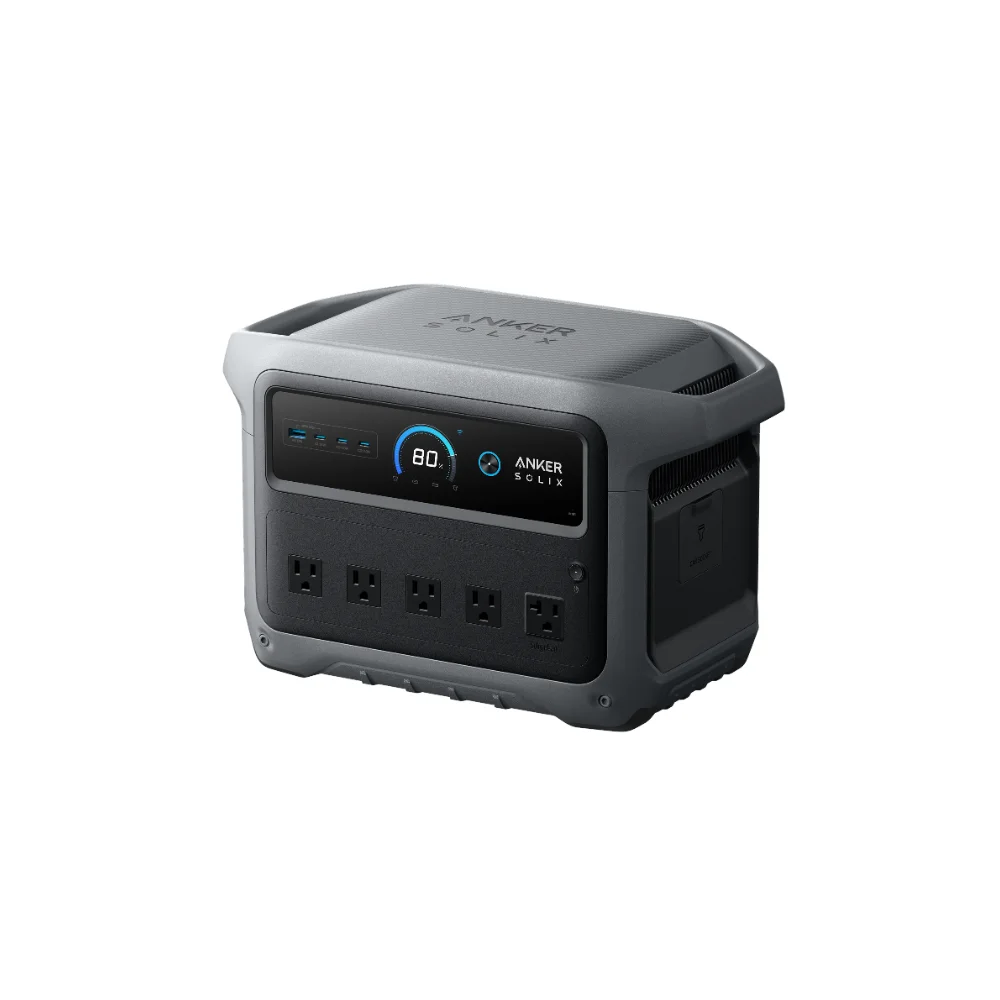
The Anker SOLIX C1000 Gen 2 is a good match for this profile: 1,024Wh of capacity, 2,000W AC output for the rare high-draw accessory, and — notably for creators — a full recharge in about 49 minutes, plus the port variety to handle cameras, a laptop, and phones without juggling. Check current price on Outbound Power →
My Take
I don’t think creators need the biggest power station on the market — they need one that matches how they actually work: quick to recharge, easy to carry, and built around fast USB-C charging rather than raw wattage for appliances. If your shoots are mostly gear-charging rather than running heavy equipment, it’s worth resisting the urge to over-buy capacity you won’t use.
Building a Backup Plan for Paid Shoots
For hobby content, a dead battery is an inconvenience. For paid client work, it’s a missed deadline or a reshoot you have to eat the cost of — which changes how much redundancy is worth building in. A second, smaller power bank as backup for just the camera and audio recorder (the two failures that actually kill a shoot) costs relatively little and removes the single point of failure a lone power station represents. Treat charging your main unit to 100% the night before any paid shoot as a non-negotiable part of your prep checklist, the same way you’d check memory card space or camera battery levels.
Field and Studio Setups: Two Different Problems
Location shooting and home studio work put different demands on a power station, even though both fall under “content creation.” On location — a day of vlogging, a run-and-gun shoot, or filming away from reliable outlets — weight and port variety matter most, since you’re carrying the unit and topping off gear between setups rather than running it continuously. In a home studio, the calculation shifts toward pure sine wave output quality and sustained runtime, since you’re often running lighting, an audio interface, and a computer simultaneously for hours, and cheap modified-sine-wave power can introduce audible hum into sensitive audio gear or behave unpredictably with certain power supplies. If you’re unsure why that distinction matters, our explainer on pure sine wave vs. modified sine wave power covers exactly what changes for electronics that are sensitive to power quality.
Monitoring Battery Level Without Interrupting a Shoot
One underrated feature for creators specifically: an app or Bluetooth interface that lets you check remaining capacity without walking over and physically checking the unit, which matters more than it sounds like when you’re mid-take or the power station is tucked out of frame. Being able to glance at a phone and see you’re at 15% before a battery genuinely dies mid-recording — losing footage or forcing an awkward reshoot — is worth factoring into which unit you buy, not just its raw capacity. Our comparison of app and Bluetooth controls across brands breaks down which manufacturers actually deliver a reliable remote-monitoring experience versus a buggy afterthought app.
Travel and Airline Considerations for Working Creators
If your content work involves regular travel — festival coverage, destination shoots, or just filming while on the road — airline lithium battery rules apply to your power station the same way they apply to spare camera batteries, just at a larger scale. Most airlines allow carry-on power stations up to 100Wh without special approval, with some permitting up to 160Wh with advance airline sign-off, and capacity above that generally isn’t permitted for air travel at all. If flying with your gear regularly is part of the job, factor that ceiling into your capacity decision rather than buying the largest unit available and discovering the limitation at airport security.
FAQ
Do content creators need a big power station?
Usually not. Most creator gear (cameras, laptops, lights, drones) draws far less than appliances, so a mid-capacity unit with strong USB-C output is often a better fit than a large, heavy unit built for home backup.
What’s more important: capacity or port count?
For gear-charging use cases, port variety and fast USB-C PD output usually matter more day-to-day than maximizing total watt-hours.
Can I charge camera batteries and a laptop at the same time?
Most modern power stations can, but check how output is shared across ports when multiple devices are plugged in simultaneously — some units reduce per-port speed under multiple loads.
Will a power station keep my gear running through a full day of shooting?
For most creator loads (cameras, a laptop, lights, a monitor), a mid-capacity unit in the 500-1,000Wh range comfortably covers a full shoot day with normal use. Continuous high-draw lighting setups or long-duration audio recording push that estimate down, so match capacity to your specific gear list rather than a generic “full day” assumption.
Does running an audio interface off a power station introduce noise?
With a genuine pure sine wave unit, generally no — the output is clean enough that most audio gear behaves the same as it would on wall power. This is specifically where a modified-sine-wave budget unit can cause audible problems, which is why sine wave type matters more for creators than for most other power station buyers.
Is it worth buying a power station specifically for content creation, or just using whatever camping unit I already own?
If your existing unit already has strong USB-C PD output, a clean sine wave, and decent app monitoring, there’s no need to buy a second one just for creator work. The gap usually shows up when someone’s existing unit was bought for camping or home backup and optimized for raw capacity over the port quality and monitoring features that actually matter for gear charging on set.