
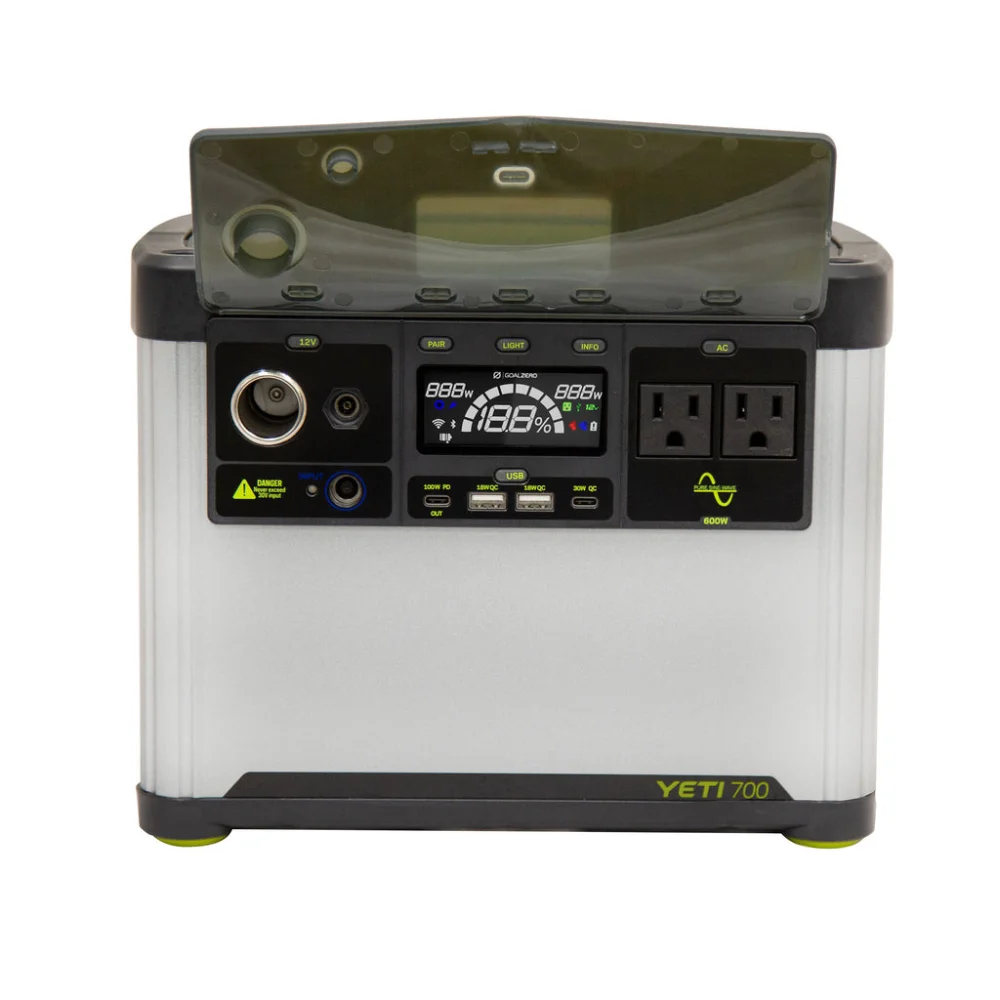

Goal Zero was one of the original names in portable power, and for a while it felt like the brand had fallen behind newer competitors on price and charging speed. The Yeti 700 is part of Goal Zero’s answer to that criticism: a compact, mid-capacity unit built around a modern LiFePO4 battery instead of the older chemistry that used to hold the brand back. The question worth answering isn’t whether Goal Zero still exists — it’s whether the Yeti 700 gives you a real reason to pick it over the Jackery, Bluetti, and EcoFlow units that now dominate this price range.
How We Evaluated This Review
This review is based on Goal Zero’s published specifications and product documentation for the Yeti 700, cross-checked against verified owner feedback and competitive spec comparisons against similarly priced units from Jackery, Bluetti, and EcoFlow. We have not physically tested this specific unit ourselves. Where we’re making a comparative judgment rather than restating a manufacturer spec, we say so directly. Our full editorial approach is outlined on our About page.
Goal Zero Yeti 700 at a Glance
- Capacity: 677Wh (LiFePO4)
- AC output: 600W continuous, 1,000W surge
- AC recharge speed: roughly 105 minutes from empty to full
- Solar recharge: about 8 hours with a 100W panel
- Cycle life: rated for 4,000+ charge cycles to 80% capacity
- USB-C output: up to 166W combined
- 12V output: up to 182W combined
- Street price: roughly $699, with retailer sales occasionally pushing it toward $600
What’s Actually New Here
The move to LiFePO4 is the headline spec, and it matters more than it might seem. Older Goal Zero units used lithium NMC cells that degraded noticeably faster and carried a smaller safety margin. A 4,000-cycle rating puts the Yeti 700 in line with, and in some cases ahead of, competing units from Jackery and Anker in the same capacity class. Goal Zero has also kept its interface simple — a small screen and physical buttons rather than an app-only control scheme — which some buyers will genuinely prefer.
Build Quality and Interface
Goal Zero\u2019s hardware feel is a genuine strength worth calling out on its own: the casing, buttons, and port covers have a sturdier, more deliberate feel than some budget competitors, and the simple screen-plus-buttons interface means there is nothing to set up or pair before the unit works. For buyers who find app-dependent power stations frustrating, that straightforward physical interface is a real, if modest, selling point independent of the output and pricing gap versus newer competitors.
Where It Falls Behind
The honest comparison isn’t flattering on every front. At 600W continuous output, the Yeti 700 is noticeably underpowered next to similarly priced competitors that push 800-1,000W continuous in the same capacity range. The 105-minute AC recharge time is respectable but not class-leading, and Goal Zero’s ecosystem of expansion batteries and solar panels is smaller and pricier than what Bluetti or Jackery now offer.
Solar Recharge in Practice
Goal Zero rates the Yeti 700 at roughly 8 hours to full with a 100W solar panel under good conditions, which is a reasonable but not class-leading figure for this capacity tier. Real-world solar recharge time depends heavily on panel angle, sun hours, and cloud cover, so treat that 8-hour figure as a best-case number rather than a guarantee. Pairing it with a larger panel than 100W will speed up the recharge proportionally, up to the unit\u2019s input ceiling.
Real-World Runtime
677Wh translates to roughly this in everyday use:
| Appliance / Load | Typical draw | Approx. runtime |
| CPAP machine | ~40W average | 2-3 nights |
| Laptop | ~65W average | ~10 full charges |
| Smartphone | ~12W average | 40-50 charges |
| Small 12V cooler | ~60-70W | 8-10 hours of continuous run time |
| Mini fridge (cycling compressor) | ~100W average | ~5-6 hours |
Those numbers make it a legitimate weekend-camping and light-emergency unit, but not a replacement for a fridge-and-medical-device backup plan during a multi-day outage.
How It Compares to Other Reviews on This Site
Against Jackery’s Explorer 1000-series units, the Yeti 700’s 600W continuous output and 677Wh capacity land it in a smaller, lower-output tier — Jackery’s comparable-price units generally push more continuous wattage. It’s also worth reading our Goal Zero vs Jackery brand comparison for a broader look at how the two brands stack up beyond this single model. Against larger modular systems like the Bluetti AC500 + B300K, the Yeti 700 isn’t really a competitor — it’s a much smaller, single-purpose unit aimed at light camping and small-device backup rather than home circuits.
Who Should Buy the Yeti 700
- Existing Goal Zero owners who want a compatible, simple-to-use addition to their setup
- Buyers who specifically prefer physical button controls over app-dependent units
- Light campers who mainly need to keep phones, lights, and small electronics charged
Who Should Skip It
- Anyone who wants the most output-per-dollar in this capacity class — look at the Jackery Explorer 1000-series or Bluetti AC70 instead
- Buyers planning to expand capacity later, given Goal Zero’s thinner expansion ecosystem
- Anyone who needs to run higher-draw appliances above 600W continuously
Strengths and Weaknesses, Beyond the Spec Sheet
Pros: Modern LiFePO4 chemistry with strong cycle-life rating, simple physical-button interface, established brand with a long history in the category, solid build quality typical of Goal Zero’s lineup.
Cons: Lower continuous output than similarly priced competitors, slower recharge than class leaders, smaller and pricier expansion ecosystem, less aggressive pricing than newer entrants targeting the same capacity range.
The core tension with the Yeti 700 is that Goal Zero’s brand heritage and build quality are real, but they’re competing against brands that have moved faster on price-to-output ratio over the past few years. A buyer who values the simpler control scheme and doesn’t need maximum output-per-dollar will likely be satisfied. A buyer purely optimizing for specs and value will generally find a better deal elsewhere in this capacity class.
Warranty and customer support are areas where Goal Zero\u2019s long track record still counts for something — the brand has been in this category longer than Dabbsson and several other newer entrants, with an established RMA process. That longevity does not offset the output and pricing gap versus Jackery or Bluetti, but it is a real factor for buyers who weigh brand stability heavily, particularly for a device meant to be reliable during an actual emergency rather than a convenience purchase.
My Take
Goal Zero deserves credit for modernizing its battery chemistry, and the Yeti 700 is a perfectly capable unit on its own terms. But “capable” isn’t the same as “competitive,” and at this price point the Yeti 700 is asking to be judged against units with meaningfully higher output and faster charging. Unless you’re already in the Goal Zero ecosystem or specifically want its simpler control scheme, I’d point most buyers toward a same-capacity Bluetti or Jackery unit instead.
Frequently Asked Questions
Is the Goal Zero Yeti 700 worth buying in 2026?
It’s a solid, simple-to-use unit with a modern LiFePO4 battery, but it’s not the strongest value in its capacity class. Buyers without existing Goal Zero gear will typically get more output and faster charging for similar money from Jackery or Bluetti.
How long does the Goal Zero Yeti 700 last on a full charge?
Depending on what you’re running, expect anywhere from a full day of light electronics use down to a few hours if you’re running higher-draw devices near its 600W continuous limit.
Can the Yeti 700 be expanded with extra batteries?
Goal Zero’s expansion options are more limited and generally pricier than what competitors offer, which is one of the bigger trade-offs of staying in its ecosystem.
Does the Yeti 700 work with third-party solar panels?
Yes, as long as they’re compatible with Goal Zero’s input connector and voltage range, though its own Boulder and Nomad panels are the simplest plug-and-play option.
Why doesn’t this review link to a place to buy the Yeti 700?
Goal Zero currently isn’t available through either of the affiliate partners we work with (Outbound Power and Jackery’s own store), so we’re not able to link a verified, tracked purchase option for this specific model. If that changes, we’ll update this review with a working link rather than pointing you to an unverified third-party seller.
How does the Yeti 700 compare to Goal Zero\u2019s older models?
The switch to LiFePO4 chemistry is the biggest improvement over older Goal Zero units, which generally used NMC cells with shorter cycle life and a smaller safety margin. If you own an older Yeti and are deciding whether to upgrade, the battery chemistry alone is a meaningful reason to consider it, even setting aside the output and pricing concerns relative to competitors.